Newsom Commutes All 548 California Death Sentences
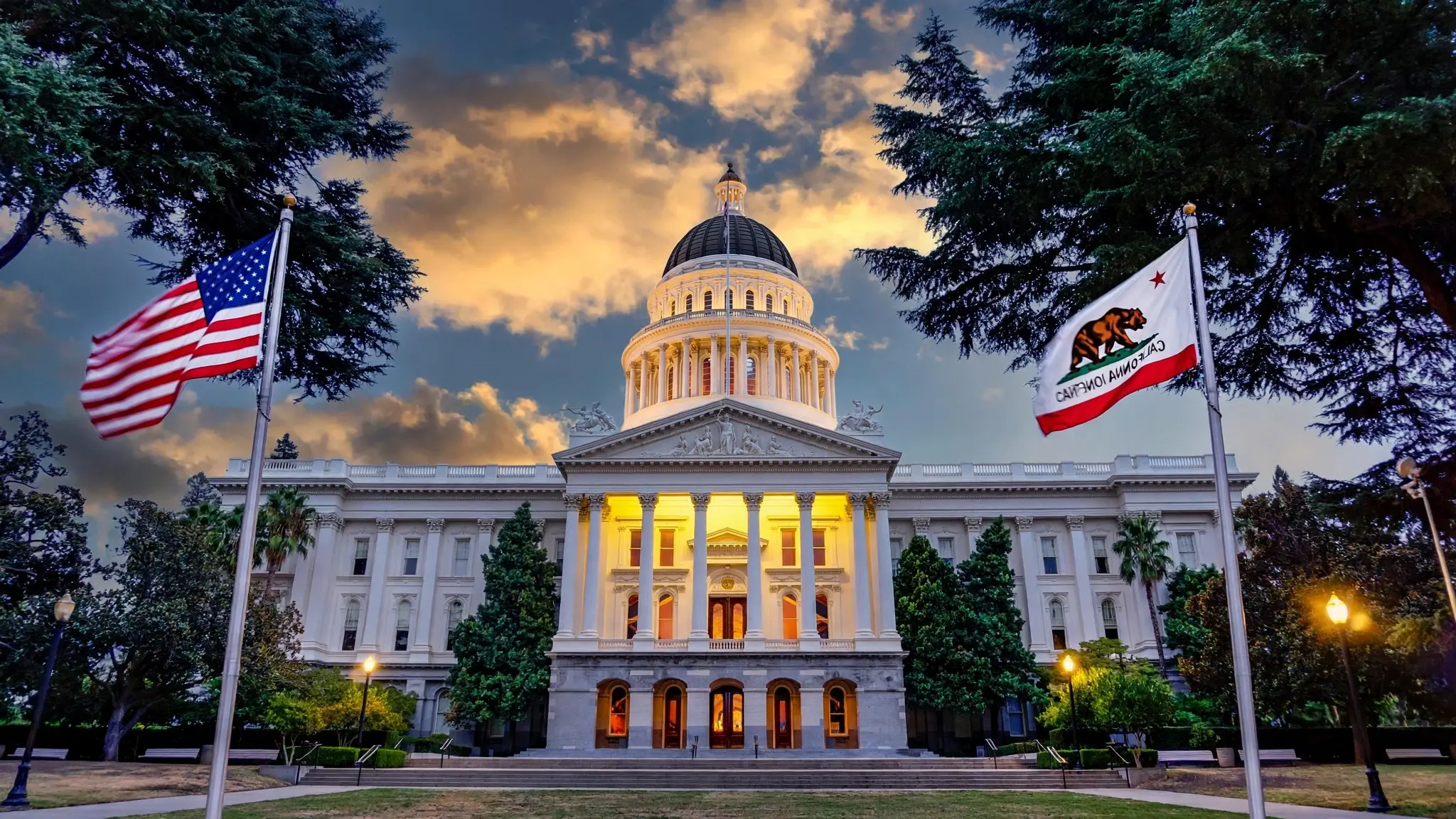
California Governor Gavin Newsom announced on Thursday 5 November 2026 that he will commute the death sentences of all 548 people on California's death row to life imprisonment without the possibility of parole. The Catholic Mobilizing Network calls it the largest commutation in world history, and the largest mass clemency in American history.
Five hundred and forty-eight lives, changed by a single signature. Men and women who went to sleep on death row will now, if the commutations are finalised, live out their lives in prison instead of facing execution. No governor in American history has ever done anything on this scale, and no country has ever seen a commutation this large.
A Catholic Governor's Case Against the Death Penalty
Newsom, who identifies as Catholic, set out his reasons in a letter addressed to "All Californians". In it, he wrote: "I firmly believe that state-sanctioned killing is incompatible with California's values, undermines the foundations of our legal system, and diminishes each of us." It is a moral argument, not a legal one, and he made no attempt to hide that.
Life without parole, he wrote, is "the most severe punishment I can lawfully impose". He was clear that the men and women concerned will not walk free. They will die in prison, but as he put it, "not by our hand", and the distinction matters to him, because it is the heart of his decision.
Newsom also refused to sort the condemned into categories, sparing some and not others. To distinguish among offenders, he argued, would "create two classes of murder victims", as though some lives taken were worth more than others. Every family that lost someone, in his view, deserves the same justice, which meant an all-or-nothing decision, and he chose all.
The Catholic Response
The Catholic Mobilizing Network, which campaigns against the death penalty, welcomed the announcement warmly. Its executive director, Krisanne Vaillancourt Murphy, called it "an incredibly encouraging and historic witness for life and human dignity". She added that the decision shows "justice can be rooted in mercy and restoration instead of death and retribution".
Her words echo the teaching of the Catholic Church. The Catechism of the Catholic Church states that the death penalty is "inadmissible because it is an attack on the inviolability and dignity of the person". Newsom's decision puts that teaching into practice on a scale no American governor has attempted before, and Catholic campaigners have noticed.
American Catholics have been a visible force in public life this year, from the pews to the ballot box, as the exit polls showed in Latest: Catholics and Nones Powered Democrats Historic 2026 Midterm Win Exit Polls Show. Newsom's decision is the latest reminder that Catholic teaching still shapes the country's biggest moral debates.
The reaction matters because the death penalty debate in America has long divided Christians. Some point to Scripture and tradition in its defence, others to the same sources in opposition. What is not in dispute is that the Catholic Church's official teaching now stands firmly against it, and this week a Catholic governor acted on that teaching in the most dramatic way possible.
Twenty Years Without an Execution, $6 Billion Spent
The numbers behind California's death penalty tell their own story. The state has not executed anyone in 20 years. Since 1978, it has spent $6 billion on the death penalty system while carrying out just 13 executions, roughly $460 million per execution, for a punishment that has barely been used in a generation.
Newsom imposed a moratorium on executions in 2019, early in his first term as governor. His second and final term ends in January 2027, which gives this decision the feel of a closing statement: a governor using his last months in office to settle a question he has wrestled with for years. The commutations are his answer, delivered in full.
The scale of the decision reaches beyond California. It reduces the death-row population of the entire United States by nearly 30 per cent in a single stroke. For a country where the death penalty remains legal in many states, that is a shift in the national picture, not just a Californian one.
What Happens Next
The commutations are not yet final for everyone. About two-thirds of them must be reviewed by the California Supreme Court before they become final, a safeguard built into the state's constitution for cases of this kind. That review is a legal formality in most cases, but it means the process will take some time to complete.
Victims' familes will have mixed feelings, and honest reporting should say so. For some, the news that a killer will never be executed will feel like justice denied. For others, the end of decades of appeals, hearings, and uncertainty may bring a kind of relief, though Newsom's letter was addressed to all Californians and will land hardest on the families who lost loved ones, whose voices deserve to be heard in the weeks ahead.
The decision also raises a question for the rest of America. If the largest state in the country, with the largest death row, can walk away from executions entirely, what does that mean for the states that still carry them out? Other governors will be asked, and other legislatures will debate it, because California has set a precedent that cannot be ignored, whether other states follow it or not.
Faith and freedom have crossed paths in American public life before, sometimes in hopeful ways. The release of a Sudanese Christian from prison after more than a year, reported in Amin Ismail Freed From Kobar Prison in Sudan After More Than a Year But Still Not Safe in Khartoum, and the freedom of Christians jailed for worship in India, in 13 Christians Freed in Rajasthan Today After 4 Months in Prison for Worship Event, were both reminders that mercy can still break through. This week, mercy broke through in California too, in a form no one expected.
For now, the 548 men and women on California's death row wait for the courts to finish their work. Their sentences have been commuted in the governor's order, and their lives will not end at the hands of the state. What remains is the slower work of the law, and the longer, harder work of a state deciding what justice means when it no longer includes killing.
The question Newsom has posed to America is simple, and it will not go away. If life without parole is the most severe punishment the law allows, and if the state can protect its people without taking a life, then why take one at all? California has answered, and the rest of the country is still deciding.
Frequently Asked Questions
On 5 November 2026, Governor Gavin Newsom announced he will commute the death sentences of all 548 people on California's death row to life imprisonment without the possibility of parole.
The Catholic Mobilizing Network calls it the largest commutation in world history and the largest mass clemency in US history. It reduces the American death-row population by nearly 30 per cent.
In a letter to "All Californians", he wrote that state-sanctioned killing "is incompatible with California's values, undermines the foundations of our legal system, and diminishes each of us".
Not yet for everyone. About two-thirds of the commutations must be reviewed by the California Supreme Court before they become final.
The Catechism of the Catholic Church states the death penalty is "inadmissible because it is an attack on the inviolability and dignity of the person".
🔔 Don't Miss the Next Story!
Get breaking Christian news on your phone before everyone else — allow notifications when prompted, or join our newsletter below!
But the most surprising part of this story is yet to come — keep reading.
🙏 Have a Testimony to Share?
Has God done something amazing in your life? Or want us to cover a specific story? Send your testimony or story request via WhatsApp — your story could encourage thousands!
💬 Comments
Share your thoughts below. Be kind and respectful. If this story touched you, let us know in the comments!