13 Christians Freed in Rajasthan Today After 4 Months in Prison for Worship Event
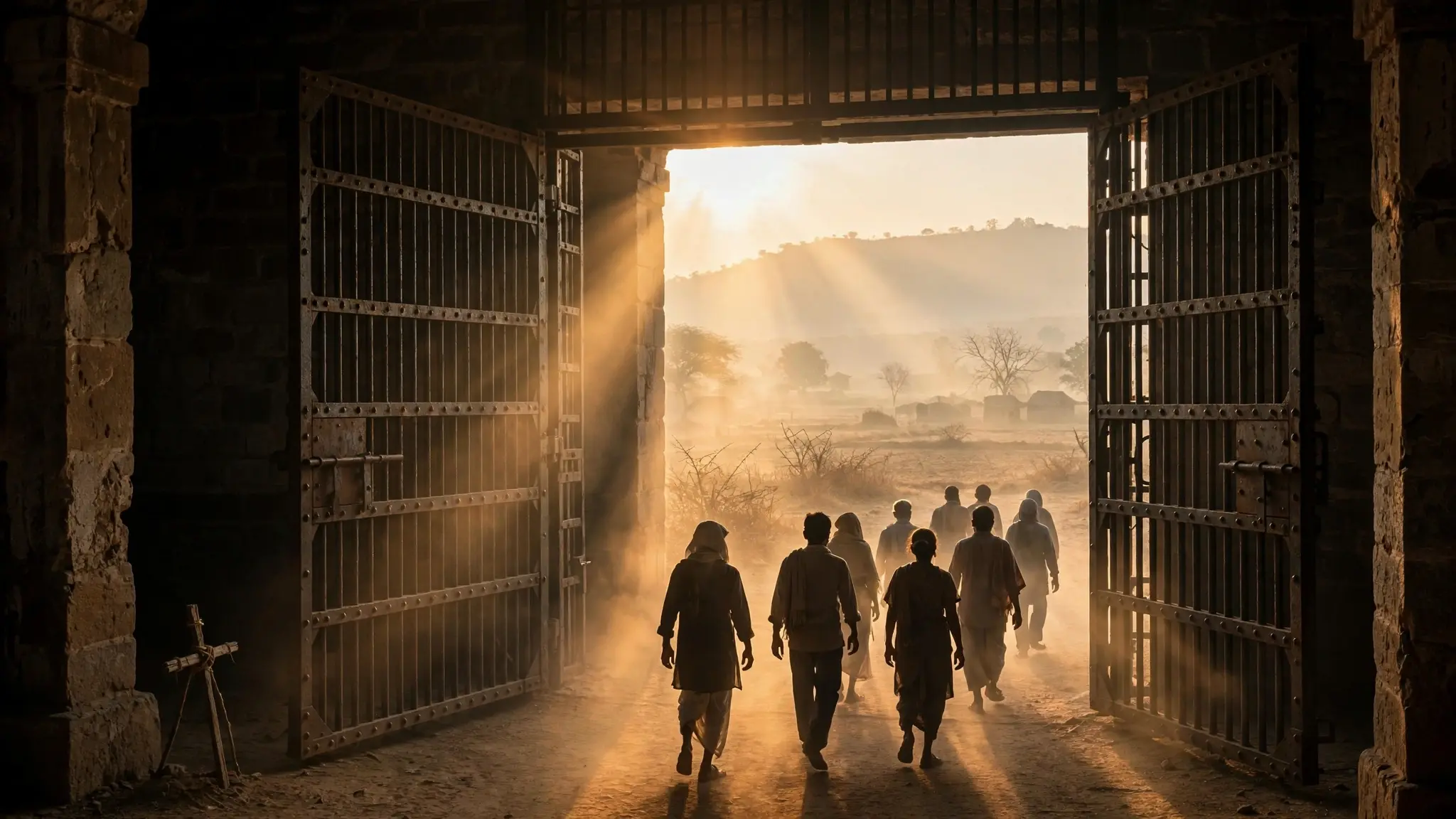
Thirteen people spent four months in an Indian prison for the "crime" of attending a worship convention. No one was charged with violence. No one was accused of theft or any ordinary crime.
This week, a pastor and twelve fellow believers walked out of prison in Rajasthan, India, granted bail at last — and their families finally got them home.
Their release was confirmed by Open Doors' local partner in India, Suraj Thakur. "We praise God that a pastor and 12 fellow believers have been granted bail and released after spending four months in prison," Thakur said.
What Happened at the Rajasthan Worship Convention in June
It began in June 2026, at a three-day worship convention in Rajasthan. Believers had gathered for prayer, singing, and teaching — the kind of event Christians hold all over the world without a second thought. Then a Hindu extremist group raided the gathering.
What happened next turned the victims into the accused. Instead of being protected by police, the thirteen Christians attending the event were arrested and thrown into prison. They were falsely accused of trying to force tribal people to convert to Christianity — a charge that has become painfully familiar to India's Christian minority.
Think about that for a moment. People show up to worship, extremists storm the event, and it is the worshippers who end up in cells.
According to Open Doors reporting, the thirteen stayed behind bars for four months before bail was granted this week, around October 19.
Four Months in Prison for Worship
Four months is a long time to be locked up for praying. These believers missed festivals, missed family milestones, missed ordinary Sundays with their congregations. The pastor was separated from the flock he shepherds, and twelve ordinary beleivers were pulled out of their jobs, their homes, and their children's lives.
Stories like this one keep surfacing across the world. Just this month we reported on the split verdict for two Christian brothers in Pakistan, where one was freed and the other kept on death row on essentially the same evidence — a case that left advocates stunned (see Pakistan Upholds Death Sentence of Christian Qaisar Ayub for Blasphemy). In Nigeria, the toll is measured in lives lost rather than years served, with thousands of Christians killed for their faith (see 3,490 Christians Murdered in Nigeria Alone: 2026 World Watch List Exposes).
The thirteen in Rajasthan were never accused of harming anyone. Their imprisonment rested on an accusation of forced conversion — the charge that keeps India's anti-conversion laws busy, and the one Christian leaders say is used again and again to harass believers who simply shared their faith.
"We praise God that a pastor and 12 fellow believers have been granted bail and released after spending four months in prison. Their release is a great reason to give thanks to God and a reminder of His faithfulness." — Suraj Thakur, Open Doors local partner in India
Rajasthan's Anti-Conversion Law and the Targeting of Christians
Rajasthan is one of a growing number of Indian states that have implemented anti-conversion laws. On paper, these laws are meant to prevent coercion in matters of faith. In practice, Open Doors and other observers report they are often used to target and harass Christians — turning worship gatherings into legal traps and giving extremist groups a ready-made accusation to shout.
The pattern is hard to miss once you have seen it a few times. A worship event is disrupted. The accusation of forced conversion follows.
Believers are detained while the actual attackers face no consequences. We have seen churches torched in Nigeria while attackers walked free (see Night Raid in Adamawa: Church Torched, Elderly Christian Killed as Village Sleeps), and Christians driven from their homes in Myanmar (see Myanmar Junta Turns Churches Into Military Bases as Christians Flee).
In Rajasthan, the question now is whether the false accusation against these thirteen will be dropped entirely. Bail is not acquittal. The believers are home with their families, but the case that put them in prison may still be hanging over them — and the justice they recieved so slowly is exactly where prayer is needed most.
A Reason to Rejoice — and Keep Praying
Let us not miss the joy in this story. Thirteen families got their people back this week. Children who went four months without a parent got to run into their arms.
A pastor got to go home to the people he loves. That is worth celebrating loudly.
"While many Christians continue to endure long periods of imprisonment for their faith, we rejoice with these brothers as they return to their families and communities." — Suraj Thakur, Open Doors local partner in India
Thakur's words point to the bigger picture that should not be lost. Many Christians across India and beyond are still sitting in cells for the same reason these thirteen were — their faith. The thirteen are free, but they are the exception that proves how long believers wait: four months for a bail hearing on an accusation that never had evidence behind it.
So what happens next for these thirteen Christians in Rajasthan? Will the charges be dropped, or will they live under the shadow of a trial for years to come?
And how many more worshippers across India are one raid away from the same four months in a cell? The answers will come slowly — but the Church in India is watching, and the world should be too.
Frequently Asked Questions
They are a pastor and twelve fellow believers who attended a three-day worship convention in Rajasthan, India, in June 2026. They were arrested after a Hindu extremist group raided the event and spent four months in prison before being granted bail around October 19, 2026.
They were falsely accused of trying to force tribal people to convert to Christianity. According to Open Doors reporting, anti-conversion laws in Rajasthan are often used to target and harass Christians, turning worship gatherings into legal traps.
Anti-conversion laws, adopted by a growing number of Indian states including Rajasthan, are meant to prevent forced religious conversions. In practice, observers report the laws are frequently misused to accuse Christians of coercion simply for preaching or gathering for worship, giving extremist groups a ready accusation to use.
They have been granted bail and released to their families, according to Open Doors. Bail is not the same as acquittal — the charges may still hang over them, so the case bears continued watching and prayer.
Pray for the thirteen as they rebuild their lives, for the charges against them to be dropped, for Christians gathering under anti-conversion laws across India, and for protection for pastors and believers who keep worshiping despite the risk.
🔔 Don't Miss the Next Story!
Get breaking Christian news on your phone before everyone else — allow notifications when prompted, or join our newsletter below!
But the most surprising part of this story is yet to come — keep reading.
🙏 Have a Testimony to Share?
Has God done something amazing in your life? Or want us to cover a specific story? Send your testimony or story request via WhatsApp — your story could encourage thousands!
💬 Comments
Share your thoughts below. Be kind and respectful. If this story touched you, let us know in the comments!