Alabama Votes 63% for School Prayer in Constitution
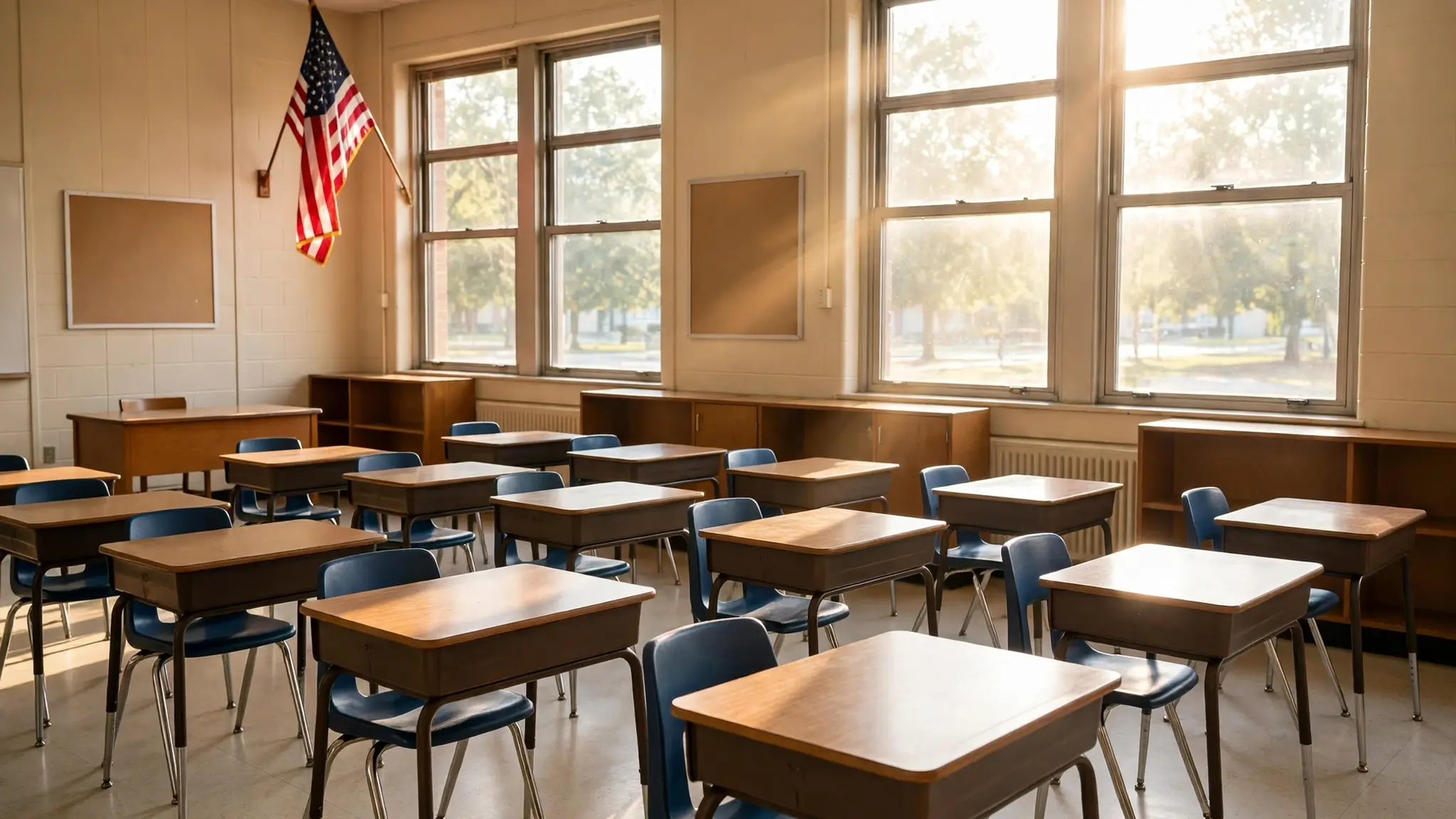
Alabama voters passed Constitutional Amendment 3 on Tuesday 3 November 2026, with 63 percent of the vote, requiring public schools to recite the Pledge of Allegiance daily and authorising student-led prayer. The result was confirmed on Wednesday 4 November, and the measure now sits in the Alabama state constitution.
The number is the story. Nearly two out of every three Alabama voters said yes, and the Associated Press count shows 974,660 votes in favour against 582,925 opposed, which works out to 62.6 percent.
What the amendment does is straightforward. Public schools must recite the Pledge of Allegiance at the start of each school day. Local school boards must adopt policies authorising student-initiated, student-led prayer. And students can opt out of the prayer or the Pledge if they choose.
A Forty-Year Fight Comes Full Circle
To understand why this vote matters, you have to go back to 1981. That year, Alabama passed a moment-of-silence law for public schools. Four years later, in 1985, the US Supreme Court struck it down. For Alabama voters who wanted prayer in schools, that defeat has hung over the state ever since.
Tuesday's vote does not erase the 1985 ruling, but it changes the ground under it. The Supreme Court struck down a statute passed by the legislature. Now the voters themselves have written prayer and the Pledge into the state constitution. That is a different kind of statement, and it is much harder to undo.
The amendment also arrives in a year when Alabama has already moved in the same direction. In April 2026, Governor Kay Ivey signed a law requiring Ten Commandments displays in classrooms. Taken together, the two moves show a state that is steadily putting faith back into the public square, one law at a time.
What Happens in Classrooms Now
The practical effect starts with the school boards. Each local board must now adopt a polciy that authorises student-led prayer, and every public school must build the daily Pledge into its morning routine. Alabama already had a law requiring the Pledge, so for many schools that part changes little on the surface.
The new part is the prayer. The key word in the amendment is student-led. The prayer must be initiated and led by students, not by teachers or administrators. That distinction is deliberate, and it is the line the amendment's supporters believe keeps it on the right side of the Constitution.
Students who do not want to take part do not have to. The amendment gives every student the ability to opt out of the prayer or the Pledge, and no child can be forced to pray. That opt-out matters, because it is the protection that keeps a majority vote from becoming a mandate on every single child.
Not everyone is celebrating. Groups like the Freedom From Religion Foundation opposed the amendment before Election Day, arguing that it blurs the separation of church and state. Their concern is that even student-led prayer, backed by a constitutional amendment and a school board policy, can feel like pressure to a child who would rather sit it out. The debate over where encouragement ends and coercion begins is far from settled, and the courts may yet have a say.
The result also fits a wider pattern in American public life, where faith and politics keep meeting at the ballot box. Catholics and religiously unaffiliated voters shaped the 2026 midterms in ways that surprised many observers, as reported in Latest: Catholics and Nones Powered Democrats Historic 2026 Midterm Win Exit Polls Show. Alabama's vote shows the other side of that same coin: in a deeply religious state, voters are using the ballot to put their faith into law.
And the story does not stop at the school gate. The same week Alabama voted, a Jesus statue was decapitated at a war memorial church in Warrington, England, in an attack police are treating as a hate crime, covered in Warrington Jesus Statue Decapitated at War Memorial as Police Treat Attack as Hate Crime. One country votes prayer into its constitution while another investigates an attack on a statue of Christ. The contrast says something about how differently faith is treated in different corners of the English-speaking world.
For the churches behind many of these campaigns, the stakes are practical as well as legal. Fuller pews mean fuller offering plates, and a recent study found American faith communities could gain billions from more consistent giving, as reported in Today: Churches Could Gain $30 Billion a Year If Giving Became Consistent, Study Finds.
What Comes Next for Alabama Schools
The amendment is now part of the Alabama constitution, but the work of putting it into practice is only beginning. School boards across the state's 67 counties must write and adopt their prayer policies, and each school must work out how student-led prayer looks in a real morning assembly. Those policies will be watched closely, by supporters and critics alike.
Legal challenges are a real possibility. The Freedom From Religion Foundation and other groups have fought school prayer cases for decades, and a constitutional amendment does not automatically end that fight. If a case reaches the courts, judges will have to decide whether student-led prayer, authorised by the state constitution, is different enough from the teacher-led prayer the Supreme Court has struck down before.
For now, though, the voters have spoken, and they spoke clearly. Sixty-three percent is a landslide by any measure, and it sends a message that goes beyond Alabama. In a country where the role of faith in public schools has been argued over for generations, one state has settled the question at the ballot box, at least for now. Whether the courts agree, and whether other states follow Alabama's lead, is the question that will shape the next chapter. The morning Pledge will be recited in Alabama classrooms tomorrow, and the prayer that follows it will be led by the students themselves.
Frequently Asked Questions
Constitutional Amendment 3, which requires public schools to recite the Pledge of Allegiance daily and authorises student-led prayer, passed with 63 percent of the vote according to The New York Times, as reported by Reason.
The Associated Press count shows 974,660 votes in favour and 582,925 against, which works out to 62.6 percent yes, rounding to 63 percent.
Yes. The amendment gives students the ability to opt out of prayer or the Pledge of Allegiance, and no student can be forced to take part.
Alabama's 1981 moment-of-silence law was struck down by the US Supreme Court in 1985, a defeat that Tuesday's vote now answers at the ballot box.
In April 2026, Governor Kay Ivey signed a law requiring Ten Commandments displays in classrooms.
🔔 Don't Miss the Next Story!
Get breaking Christian news on your phone before everyone else — allow notifications when prompted, or join our newsletter below!
But the most surprising part of this story is yet to come — keep reading.
🙏 Have a Testimony to Share?
Has God done something amazing in your life? Or want us to cover a specific story? Send your testimony or story request via WhatsApp — your story could encourage thousands!
💬 Comments
Share your thoughts below. Be kind and respectful. If this story touched you, let us know in the comments!