US Church Attendance Rises 65 to 70 After 25 Years
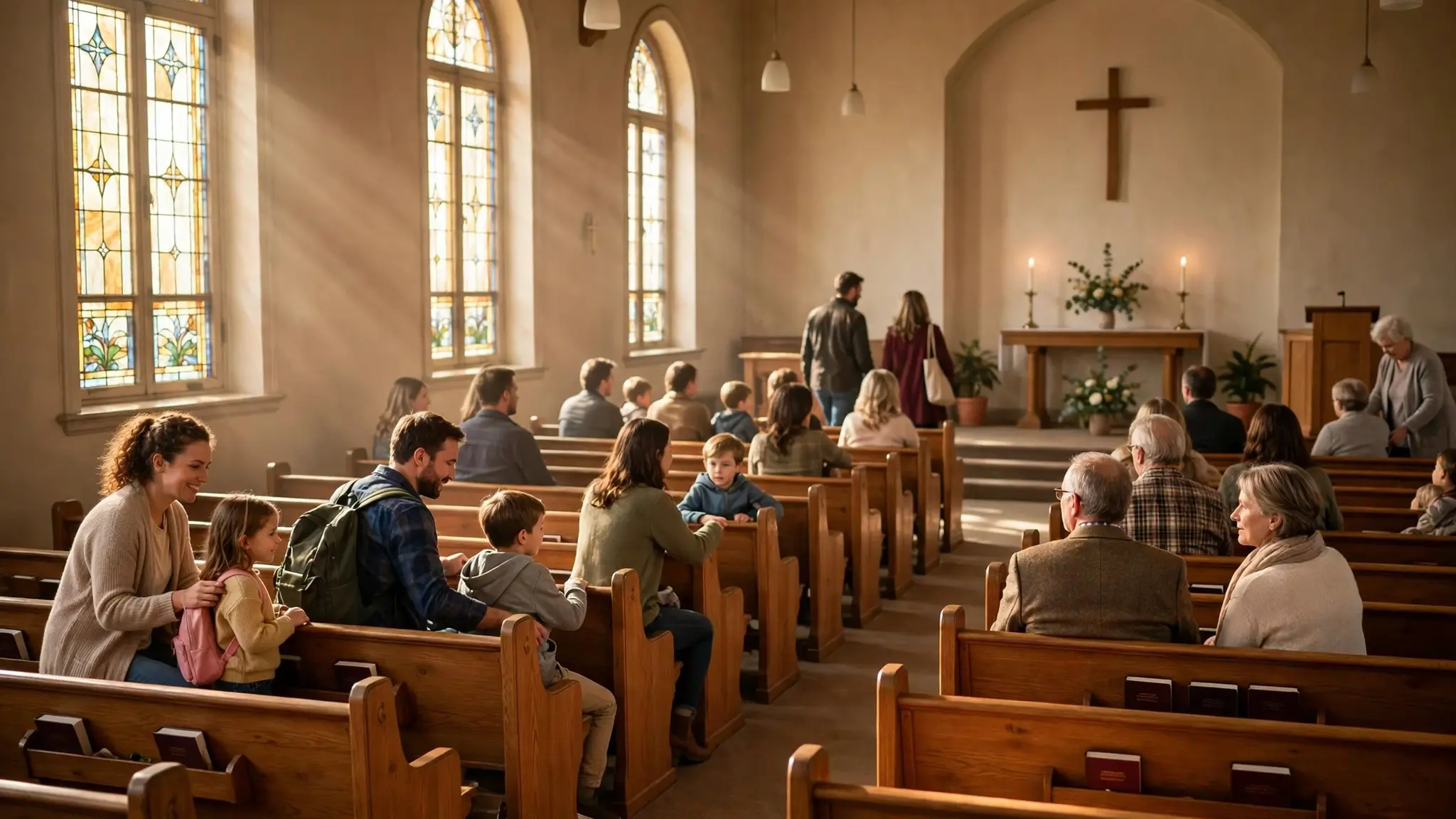
A new analysis by retired Hartford Institute director Scott Thumma, published 3 November 2026, finally explains why American church attendance has started growing again. Median in-person worship attendance at US congregations has risen from 65 to 70, the first increase in 25 years, according to the 2025 Faith Communities Today (FACT) survey of nearly 7,500 congregations. The rebound, Thumma finds, is driven by midsize evangelical churches that stopped shrinking between 2023 and 2025.
That last sentence is the news. The 65-to-70 figure itself was first reported back in April 2026, when Religion News Service covered the FACT survey. What is fresh is Thumma's answer to the question everyone asked in April: why did it happen? His analysis, presented at the Society for the Scientific Study of Religion, points to a specific group of churches, and the answer is more surprising than most people expected.
Five extra people per church does not sound like much. Across roughly 375,000 US congregations, though, it adds up to about 2 million more people in worship. That is the scale of what has happened, and it is the first time in a quarter of a century that the national median has moved in this direction.
The Midsize Churches That Stopped Shrinking
Thumma's finding is precise. The rebound comes from midsize evangelical churches, the ones with 51 to 100 attenders and those with 101 to 250. These are not the megachurches with thousands in the pews, and they are not the tiny chapels with a dozen faithful. They are the ordinary churches in the middle, and between 2023 and 2025 they stopped shrinking.
That matters because the middle is where American churchgoing lives. A church of 80 people that gains five new faces has grown by more than six percent. Multiply that across thousands of congregations and the national median starts to move. Thumma himself was struck by how big the shift is: he said it would have taken closing 50,000 to 60,000 of the smallest churches to move the median that far.
Think about what that means. The rise did not come from shutting small churches and counting only the big ones. It came from real churches, in real towns, holding on to their people and then adding a few more. The growth is modest at the level of a single congregation, and it is enormous when you add it all up.
Not Every Church Is Sharing the Rise
The good news is not spread evenly. Mainline churches kept declining, and Catholic and Orthodox congregations stayed flat. As Thumma put it, "evangelicals are where the story is." The rebound belongs to one part of the American Church, and the rest is still waiting for its turn.
That split tells its own story about where American Christianity is heading. Evangelical churches, often smaller and more locally rooted, have found a way to draw people back after the pandemic years. Mainline churches, with older congregations and deeper declines, have not yet found the same footing. Catholic and Orthodox parishes, meanwhile, are holding steady rather than growing or shrinking.
The contrast with other recent numbers is striking. In Belgium, adult baptisms hit a nine-year high even as Sunday attendance fell sharply, a story covered in Belgium Adult Baptisms Hit Nine-Year High at 534. In America, the picture is different: attendance itself is rising, and it is rising in the pews of midsize evangelical churches. Two countries, two different kinds of hope.
There is another American contrast worth noting. A recent Lifeway Research quiz found that two-thirds of American churchgoers failed a Bible knowledge test, with an average score of just 51, as reported in Two-Thirds of Churchgoers Fail Bible Quiz as Average Score Hits 51. More people are coming to church, but the quiz suggests many of them are still learning the basics of the faith. Growth in numbers and growth in knowledge are not the same thing, and the American Church now faces both challenges at once.
Is This a Revival or a Recovery?
Thumma's own framing is careful. He asks whether this is a post-pandemic church revival, and his analysis suggests something real is happening, even if it is not yet a sweeping revival. The churches that grew did so by stopping their decline first, and then by adding people slowly, week by week.
That slow, steady pattern may be the most encouraging part of the story. A sudden spike can fade as fast as it arives. A halt in decline, followed by modest growth across thousands of ordinary churches, looks more like a foundation than a fad. The midsize evangelical church that adds five people and keeps them has done something real, and it has done it without a famous preacher or a viral moment.
Money may play a part in what happens next. A recent study found that American faith communities could gain up to $30 billion a year if more donors gave consistently, a story told in Today: Churches Could Gain $30 Billion a Year If Giving Became Consistent, Study Finds. Growing congregations with fuller pews have more to work with, and the question is whether the new attenders become givers, volunteers and leaders, or simply faces in the crowd.
What happens next is the question Thumma's analysis leaves open. Will the midsize evangelical rebound spread to mainline churches, or will the gap keep widening? Will the five extra people per church become ten, or will the growth level off? And will the churches that are growing find a way to teach the faith to the new faces in their pews? The median moved from 65 to 70 after 25 years of standing still or falling. The next survey will tell us whether that was the start of something, or just a brief pause in a longer decline.
Frequently Asked Questions
Median in-person worship attendance at US congregations rose from 65 to 70, the first increase in 25 years, according to the 2025 Faith Communities Today survey of nearly 7,500 congregations.
Thumma's analysis, published 3 November 2026, explains WHY attendance rose: midsize evangelical churches with 51 to 100 and 101 to 250 attenders stopped shrinking between 2023 and 2025. The 65-to-70 finding itself was first reported in April 2026.
Across roughly 375,000 US congregations, five extra people per church means about 2 million more people in worship.
Midsize evangelical churches drove the rebound. Mainline churches kept declining, and Catholic and Orthodox congregations stayed flat. As Thumma put it, "evangelicals are where the story is".
Thumma said it would have taken closing 50,000 to 60,000 of the smallest churches to move the median that far, so the rise reflects real growth rather than a statistical trick.
🔔 Don't Miss the Next Story!
Get breaking Christian news on your phone before everyone else — allow notifications when prompted, or join our newsletter below!
But the most surprising part of this story is yet to come — keep reading.
🙏 Have a Testimony to Share?
Has God done something amazing in your life? Or want us to cover a specific story? Send your testimony or story request via WhatsApp — your story could encourage thousands!
💬 Comments
Share your thoughts below. Be kind and respectful. If this story touched you, let us know in the comments!