1,600-Year-Old Papyrus May Hold Lost Sermon on Jesus
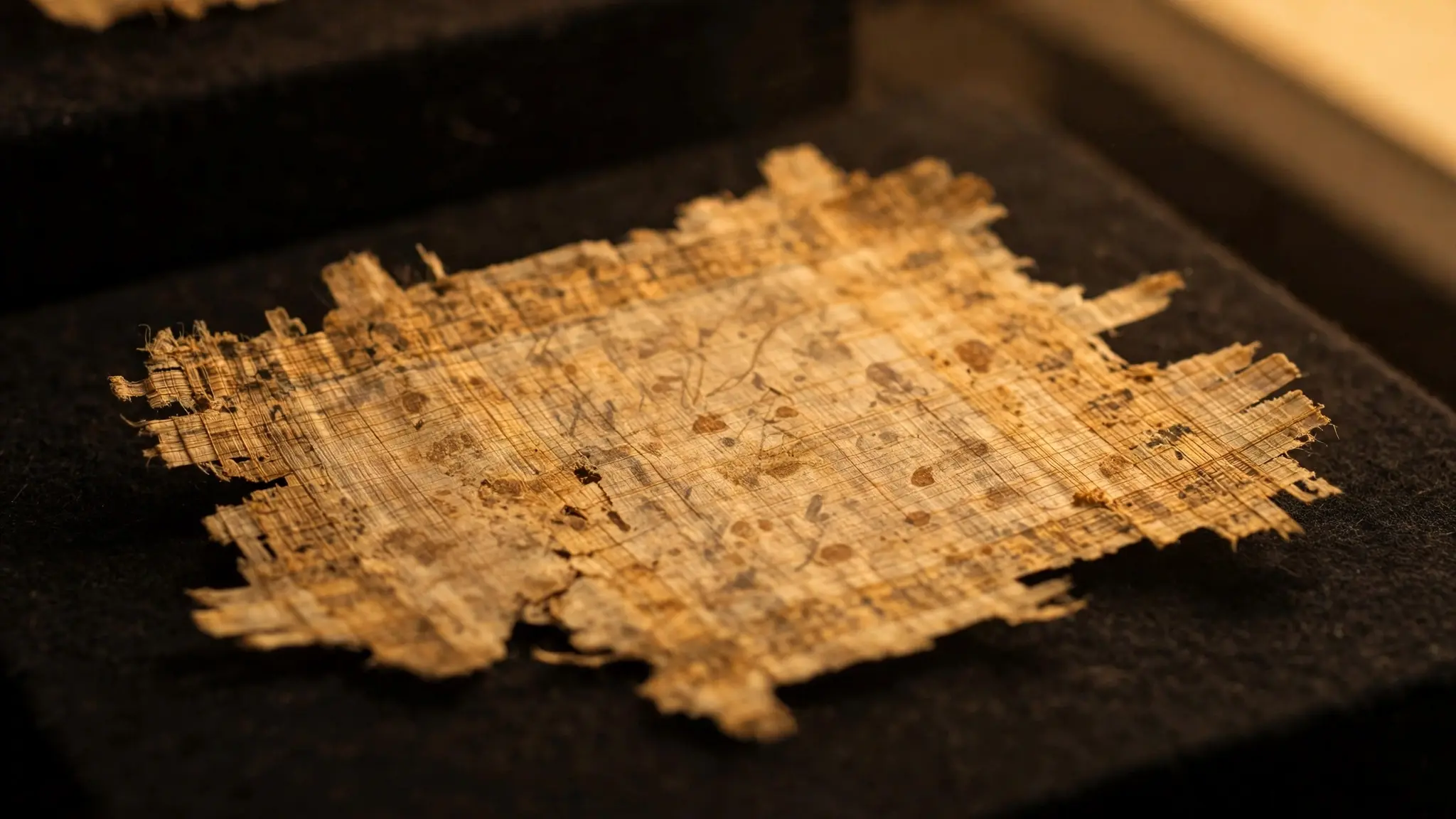
A Greek papyrus fragment measuring just 2 by 3 inches, held among unpublished papyri at the Austrian National Library in Vienna, may preserve a previously unknown account of Jesus' descent into Hades and resurrection. University of Athens researchers Amphilochios Papathomas and Marianna Thoma deciphered the fragment, and their findings were published in January in the academic journal Tyche. The story was reported widely on 5 November 2026, which is why it is in the news now, but the research itself is not new.
Picture the object itself. A scrap of papyrus smaller than a credit card, its ink faded, its edges torn, sitting unread among thousands of other fragments in a library archive for centuries. And on that scrap, words about the most mysterious hours in the Christian story: the time between the Cross and the empty tomb, when Jesus, according to the ancient faith, descended into the realm of the dead and came back again.
What the 1,600-Year-Old Papyrus Says About Jesus
The fragment likely dates to the fourth or fifth century, making it about 1,600 years old. Scholars suspect it comes from a sermon written in Greek-speaking Egypt, possibly by a church father, though a hymn or a biblical commentary remains possible. The tentative translation reads "…alone (?) he who descended (into Hades) ascended again (?)…", which the researchers understand as meaning that only Jesus, and no one else, went into Hades and returned through his resurrection.
That single idea, if the reading is right, is the heart of the fragment. It is not a story about a journey, or a description of what Hades looked like. It is a claim about who Jesus is: the one who went down into death itself and came back up again, alone, because no one else could.
For Christians who recite the ancient creed about Christ descending to the dead, the words on this scrap would have sounded familiar. For scholars, they may be a voice from the early Church that nobody knew existed.
Who Found the Fragment and When
It is important to be honest about the timeline, because the headlines can be misleading. The research by Papathomas and Thoma was published in January in Tyche, a respected academic journal. The wide press coverage arrived on 5 November, almost a year later, when the story was picked up and shared around the world.
This is not a discovery made this week. It is a discovery made months ago that has only now reached the public, and it should be reported that way.
The researchers compared the wording on the fragment with passages attributed to Eusebius, the great church historian of the fourth century, and with Christian hymns describing the Saviour descending into the regions of death. The matches they found are what make the fragment so interesting. The words echo language the early Church used when it sang and preached about the resurrection, and that echo is what suggests the scrap may be part of a sermon rather than a stray note.
Why the Descent Into Hades Matters
The idea at the centre of the fragment has deep roots in the New Testament. The first letter of Peter speaks of Christ being put to death in the flesh but made alive in the spirit, and going to preach to the spirits in prison (1 Peter 3:18–20).
The letter to the Ephesians says that he who descended is the very one who ascended, and that he descended into the lower parts of the earth (Ephesians 4:8–10). These are the passages Christians have turned to for nearly two thousand years when they ask what happened between Good Friday and Easter Sunday.
For the early Church, the answer mattered enormously. If Jesus truly descended into Hades, then death itself had been entered and defeated from the inside, and no place, not even the realm of the dead, was beyond his reach.
The fragment, if it is what the researchers suggest, may be one more early voice saying exactly that. It is a small voice, and a broken one, but it is speaking about the biggest claim in the Christian faith.
What Scholars Still Do Not Know
Honesty demands a caution, and the researchers themselves would insist on it. Much of the manusript is missing, and parts of the wording are uncertain, which is why the translation carries question marks.
The fragment may be a sermon, but it may also be a hymn or a commentary, and nobody can yet say which. The identification of the text as an account of the descent into Hades is a suggestion, not a settled fact, and other scholars will now test it, challenge it, and argue over it, as they should.
That is how this kind of work goes. A fragment is found, a reading is proposed, and then the slow work of checking begins. Sometimes the reading holds up and a lost text comes back to life.
Sometimes it falls apart under closer inspection, and the scrap goes back to being a mystery. Either way, the process is worth watching, because the stakes are real: a new piece of evidence about how the earliest Christians spoke of the resurrection.
Other discoveries from the ancient world have shown how much can hide in a fragment. The Archaeologists Identify Early Christian Church Near Venice Known Only From St Jerome Letters report showed how a site known only from old letters could be found in the ground, and the Mel Gibson Asks Churches to Pray Ahead of The Resurrection of the Christ Release in May 2027 report showed how much the hours between the Cross and the empty tomb still grip the imagination of believers today. The portrayal of Jesus on screen has kept the same questions alive for modern audiences, as the Jonathan Roumie Faith 2026: What The Chosen's Jesus Would Do If Christ Returned Tonight report shows.
The fragment now sits in Vienna, under museum light, waiting for the next scholar to look at it with fresh eyes. The translation may be refined, the identification may be confirmed or overturned, and the sermon it may contain may turn out to be something else entirely.
But for now, a scrap of papyrus smaller than a credit card has reminded the world of a question the Church has asked for sixteen centuries: what did Jesus do in the hours when the tomb was sealed? The answer may be lying in a library drawer, waiting to be read.
Frequently Asked Questions
A Greek papyrus fragment measuring just 2 by 3 inches, held among unpublished papyri at the Austrian National Library in Vienna, which may preserve an unknown account of Jesus' descent into Hades and resurrection.
The findings by University of Athens researchers Amphilochios Papathomas and Marianna Thoma were published in January in the academic journal Tyche. The story was reported widely on 5 November 2026.
The tentative translation reads "…alone (?) he who descended (into Hades) ascended again (?)…", understood as meaning only Jesus went into Hades and returned through his resurrection. Much of the manuscript is missing and parts of the wording are uncertain.
No. Scholars suspect it is a sermon from Greek-speaking Egypt, possibly by a church father, but a hymn or biblical commentary remains possible.
1 Peter 3:18–20 and Ephesians 4:8–10, which speak of Christ preaching to the spirits in prison and descending into the lower parts of the earth before ascending.
🔔 Don't Miss the Next Story!
Get breaking Christian news on your phone before everyone else — allow notifications when prompted, or join our newsletter below!
But the most surprising part of this story is yet to come — keep reading.
🙏 Have a Testimony to Share?
Has God done something amazing in your life? Or want us to cover a specific story? Send your testimony or story request via WhatsApp — your story could encourage thousands!
💬 Comments
Share your thoughts below. Be kind and respectful. If this story touched you, let us know in the comments!