House of Mercy Church Fined $1,200 a Day Over Homeless Camp
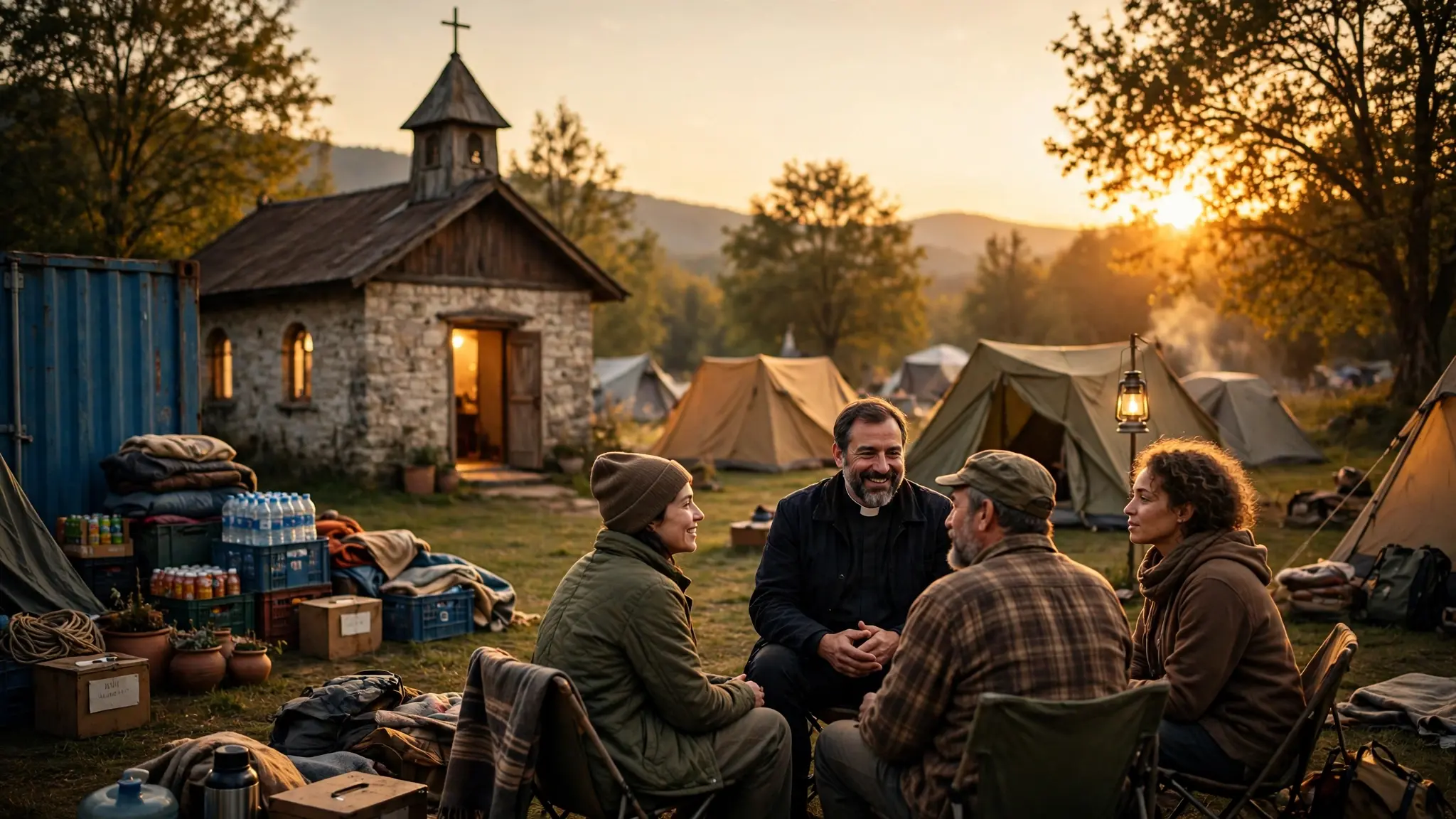
House of Mercy Church in Lawrence, Massachusetts, is dismantling the tent community where about 60 homeless people had been living on church property, after the city ordered the church to shut it down or face $1,200 in daily fines. The independent, nondenominational church received a cease-and-desist order over alleged zoning violations, and the tents are coming down while the church figures out what comes next for the people who slept in them.
Sixty people. Twenty-six tents. One fine that ticks up by $1,200 every single day. And a pastor who says he could not look away.
The $1,200-a-Day Order
Last week, the city's inspectional services department told the self-described "homeless church" it faced four violations of local ordinances and state law. Officials issued a $1,200 fine and scheduled a reinspection for Tuesday, with the threat of $1,200 in daily fines hanging over the church if the encampment stayed up.
The camp itself was modest but organised. It had 26 tents and two shipping containers being converted into temporary housing, according to MassLive and WBZ NewsRadio. The church also runs a social-services nonprofit offering meals, showers and employment assistance, and the camp sat on church property, where the congregation believed it was doing what a church is supposed to do.
Pastor Roger Farah acknowleged the encampment was not the ideal solution. But he said he felt a duty to act anyway, and his words have travelled far beyond Lawrence since the story broke.
"Someone Needs to Fight for Those Who Cannot Fight"
"As a Christian, as a lover of God, someone needs to fight for those who cannot fight for themselves."
That is how Farah explained why the church opened its land to people with nowhere else to sleep. The church asked for donations in a social media post to help pay the $1,200 in fines, and the post carried the same spirit as the pastor's words.
"We really want to find a way to work with the city and continue to help our homeless friends living in tents to better their lives through stability, services, and by continuing to provide them with a safe place to sleep."
The church is not asking the city to look the other way. It is asking to work together, to find a way the camp — or something like it — can keep going within the rules.
The City's Case: Health and Safety
Lawrence Mayor Brian De Peña defended the order as a health-and-safety matter, not a judgment on the church's motives. "Humanitarian intentions do not exempt any organization, property owner, or individual from complying with applicable public safety requirements," he said.
The mayor said the city's homeless population had grown to more than 400 people, and the city spent over $1.9 million responding to homelessness-related conditions and incidents in the 2026 fiscal year. From the city's side, the camp was one more unregulated site in a problem that is already straining its budget and its services.
That is the tension at the heart of this story. A church sees 60 neighbours sleeping rough and opens its gates. A city sees a site without the permits, sanitation and oversight its ordinances require, and a fine schedule that does not pause for good intentions.
Kassy Gallant: "I Can Wake Up, I Can Shower"
For the people who lived in the camp, the argument is not abstract at all. Kassy Gallant, 37, who describes herself as a drifter, said the camp gave her something she had not had in a long time: stability.
"I can wake up, I can go to the bathroom, I can shower, I can feed myself. I'm very, very, very appreciative."
Her words are the quiet centre of the whole dispute. A bathroom. A shower. A meal. A safe place to sleep. Those are the things the camp provided, and the things its residents now stand to lose while the church and the city argue over ordinances.
The church's nonprofit already offers meals, showers and employment assistance to people in need, and the camp grew out of that same work. It was never meant to be permanent, Farah has said — but for the people living there, it was the closest thing to a home they had.
A Petition to Change the Law
On 6 November, a petition was launched calling on Lawrence to amend its no-tent ordinance so that managed shelter communities on private property can operate when they provide sanitation, lighting, oversight and links to services. The petition describes the camp as a "safe, well-lit, organized space on private property," and it asks the city to draw a line between a chaotic encampment and a managed one.
That distinction is where this story may be decided. If the city accepts that a church-run site with sanitation, lighting and oversight is different from an unregulated camp, then House of Mercy and others like it could keep going under new rules. If it does not, the tents come down and 60 people scatter back onto the streets of a city that already counts more than 400 homeless residents.
Churches across America are watching cases like this one closely, because the question reaches far beyond one town in Massachusetts. When a congregation opens its land to the homeless, is it breaking the law or living out its faith? And when a city enforces its ordinances, is it protecting public safety or pushing vulnerable people further from help?
The reinspection is set for Tuesday. By then, the camp will be gone or the church will be counting another $1,200. Either way, the people who slept in those 26 tents will still need somewhere to go, and the question Pastor Farah asked — who fights for those who cannot fight for themselves — will still be waiting for an answer.
Churches Standing in the Gap Across America
House of Mercy is not the only congregation stepping into the space between need and official help. Churches across the country keep finding ways to serve their neighbours, from Today: Churches Could Gain $30 Billion a Year If Giving Became Consistent, Study Finds to US Church Attendance Rises 65 to 70 After 25 Years, and the picture is one of congregations doing more, not less, even as the challenges grow. In Britain the trend runs the same way, as UK Church Attendance Rises for Fifth Straight Year as Bishops Gather shows, while communities rally to save the buildings themselves, as in Wamphray Church Saved: Community Buys Church in the Glen After Raising More Than £45000 and Pagosa Springs Flooding: Colorado Church House on Half Its Foundation as River Crests Below Forecast.
Pastors carry the weight of these moments personally, from Church Honours Pastor Robert Guanco After Festival Death to Pastor Mike Stone Daughter Sarah Dies at 19 After 12 Weeks in Hospice Care, and congregations face their own hard seasons too, as in Ohio Megachurch Fires Pastor Lonnie Snell for Misconduct. Yet the crowds keep gathering, from 80,000 Christians Pack AT&T Stadium for Night of Prayer: Is America Waking Up? to 700 Students Receive Christ at Appalachian State as Campus Revival Spreads, and from Mississippi Church Baptizes 59 After August Revival Reaches College Campus to Doctor Turned Evangelist's Tent Revival Baptizes 3,000 in One Year.
What happens on Tuesday in Lawrence will not settle the bigger question. But it will decide, for about 60 people, whether the church that took them in gets to keep helping — or whether the tents come down and the search for somewhere safe starts all over again.
Frequently Asked Questions
The city of Lawrence, Massachusetts, says the church's homeless tent camp on church property violates local ordinances and state law. The church received a cease-and-desist order citing four violations, a $1,200 fine, and the threat of $1,200 in daily fines if the camp stayed up.
About 60 homeless people lived in the encampment, which had 26 tents and two shipping containers being converted into temporary housing. The church also runs a nonprofit offering meals, showers and employment assistance.
Pastor Farah said he felt a duty to act: "As a Christian, as a lover of God, someone needs to fight for those who cannot fight for themselves." He acknowledged the encampment was not the ideal solution.
A petition launched on 6 November calls on Lawrence to amend its no-tent ordinance so managed shelter communities on private property can operate when they provide sanitation, lighting, oversight and links to services.
Mayor Brian De Peña said the city's homeless population had grown to more than 400 people, and the city spent over $1.9 million responding to homelessness-related conditions and incidents in the 2026 fiscal year.
🔔 Don't Miss the Next Story!
Get breaking Christian news on your phone before everyone else — allow notifications when prompted, or join our newsletter below!
But the most surprising part of this story is yet to come — keep reading.
🙏 Have a Testimony to Share?
Has God done something amazing in your life? Or want us to cover a specific story? Send your testimony or story request via WhatsApp — your story could encourage thousands!
💬 Comments
Share your thoughts below. Be kind and respectful. If this story touched you, let us know in the comments!