Today: Churches Could Gain $30 Billion a Year If Giving Became Consistent, Study Finds
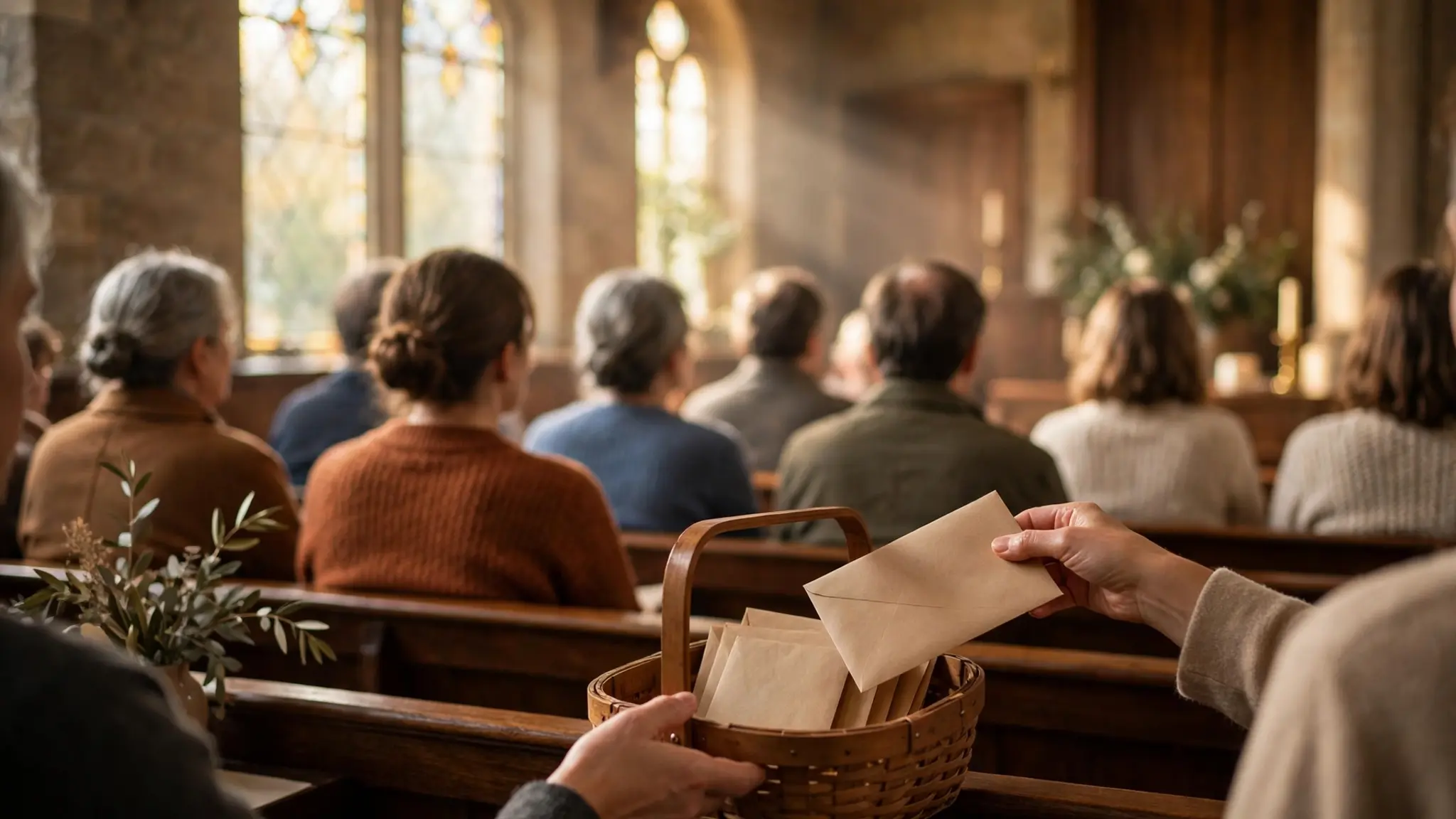
She means to give every month. The envelope is ready on the first Sunday, the intention is real on the second, and then life happens — a bill, a trip, a week missed — and by the third Sunday the gift has quietly slipped away untill next month.
That donor, multiplied millions of times, is the story of a new report that puts a price on good intentions. Faith communities across the United States could generate up to $30 billion more in donations annually by creating more consistent givers, according to a report released by Givelify Philanthropic Research & Insights.
The 2026 Giving in Faith report, produced with support from the Lake Institute on Faith & Giving, part of the Indiana University Lilly Family School of Philanthropy, studies the religious charitable sector, which receives more than $150 billion annually. Even modest increases in consistent giving, defined as giving that occurs monthly for most months, “could meaningfully expand what congregations are able to sustain within their communities,” the researchers write.
The headline gap is stark. Only about 27.4% of congregants fit the definition of a consistent giver, according to the study, yet they account for some 81% of giving in churches. Church leaders, asked to guess, estimated that more than half of their congregations qualify.
The $30 Billion Consistency Shortfall
“Consistent givers are the financial backbone of their congregations, accounting for more than 81% of the total amount given. Yet they represent only a minority of faith-based donors,” the researchers explain. “While most donors aspire to give more consistently, they struggle to translate those intentions into a sustained giving habit, a phenomenon known as the intention-action gap.”
The second gap is perception. “When asked to estimate what percentage of their congregation give consistently, church leaders reported an average of 53%, nearly double the observed rate of 27.4%,” the researchers add. Overestimating consistent giving, they warn, could mean missed chances to help donors build steadier habits.
Together, the intention-action gap and the church leader perception gap form what the report calls the consistency shortfall. The report estimates that this shortfall represents a potential financial impact of $25 to $30 billion annually across the religious charitable sector, including an estimated $50,000 in additional annual income for a typical congregation, according to The Christian Post.
Givelify’s own summary of the report puts the same point in congregational terms. For a typical congregation with 65 attendees, greater giving consistency could translate into tens of thousands of additional contributions annually to support food pantries, shelter for the unhoused, tutoring programs, and other forms of community outreach.
What Counts as Consistent Giving
The report’s first job was to settle a definition, because churches, donors and researchers had all meant different things by “regular” giving. Its operational definition is a pattern of giving that occurs one or more times a month for most months — in practice, one or more times a month in at least nine of 12 months.
The numbers behind the report are large. In early 2026, researchers surveyed 894 Christian church leaders and 1,987 Christian faith-based donors across the United States, according to Givelify. They also analysed giving patterns from 1,719,069 donors who contributed 60,549,332 donations totalling $7.2 billion to 47,506 churches through the Givelify platform.
The study then sorted givers into four groups, and the labels read like a small portrait gallery of a congregation. Devoted givers give consistently, want to give even more and are the most likely to trust their church, according to The Christian Post.
Steady givers also give consistently but are satisfied with their current giving and less likely to connect it to spiritual growth. Awakening givers want to give consistently but often face financial barriers, while unengaged givers score lowest on religiosity and trust in their church.
Opportunity, Intention and Action
The report suggests that if faith leaders want to create more consistent givers, they must bridge the consistency shortfall by moving donors through three phases of what it calls the Consistent Giving Model: Opportunity, Intention and Action. The model is the report’s answer to the donor who means well on Sunday and forgets by Tuesday.
Repeated cycles of giving, reinforced over time, can turn generosity into a lasting habit rooted in a donor’s faith, according to the report. Researchers suggest that faith leaders should abandon one-size-fits-all approaches to encourage giving in favour of tailored engagement strategies.
Faith leaders were also urged to use technology to reinforce rather than replace donors’ intentions. The report points to leaders’ roles in teaching about generosity, modelling giving, sharing the impact of contributions and expressing gratitude to strengthen lasting habits.
A field experiment in the report tested that idea directly. Faith-based donors who used Givelify’s Champions of Good program, a faith-informed digital giving experience built on habit formation and reinforcement, increased both the frequency and total amount of their giving relative to a matched group of donors who did not use the program.
The report also found that most donors don’t use automatic recurring giving, often because of financial constraints or beliefs about giving as a spiritual practice. Recurring giving works best for donors who already give consistently and can afford to automate it, the researchers said — a reminder that no system can accomodate a gift a household cannot afford.
Readers can see what congregational giving makes possible in Wamphray Church Saved: Community Buys Church in the Glen After Raising More Than £45000, where a community’s gifts bought its own building. The Texas faith story of the week is James Talarico Wins Texas Senate Seat as First Democrat Since 1988, and a very different picture of American church life is Breaking: Pastor Adam Hamilton Wins Kansas Senate Seat First Democrat Since 1932.
What the report leaves hanging is the quiet question behind every offering basket passed down a pew. The money is not missing because people stopped caring — the report says most donors want to give more — but because caring has never been the hard part, and the next gift, the one that actually arrives, is where the $30 billion is waiting.
Frequently Asked Questions
Up to $30 billion more annually across the United States religious charitable sector, according to the 2026 Giving in Faith report, with an estimated $50,000 in additional annual income for a typical congregation.
Giving one or more times a month for most months — in practice, one or more times a month in at least nine of 12 months, according to the report’s operational definition.
Only about 27.4%, according to the study, although they account for some 81% of giving in churches, while church leaders estimated an average of 53%.
The gap between donors’ intentions to give consistently and their actual giving, combined with church leaders’ overestimation of consistent giving, which together leave up to $30 billion unrealised each year.
Givelify Philanthropic Research & Insights, a research initiative of the online and mobile donation platform Givelify, with support from the Lake Institute on Faith & Giving, based on surveys of 894 church leaders and 1,987 donors plus giving data from 47,506 churches.
🔔 Don't Miss the Next Story!
Get breaking Christian news on your phone before everyone else — allow notifications when prompted, or join our newsletter below!
But the most surprising part of this story is yet to come — keep reading.
🙏 Have a Testimony to Share?
Has God done something amazing in your life? Or want us to cover a specific story? Send your testimony or story request via WhatsApp — your story could encourage thousands!
💬 Comments
Share your thoughts below. Be kind and respectful. If this story touched you, let us know in the comments!