🎧 Listen to This Story (Audio Mode)
Saved for offline reading — text only; photos need the internet.
Justice Alito Says Free Speech, Religious Liberty and Racial Equality Must Be Preserved
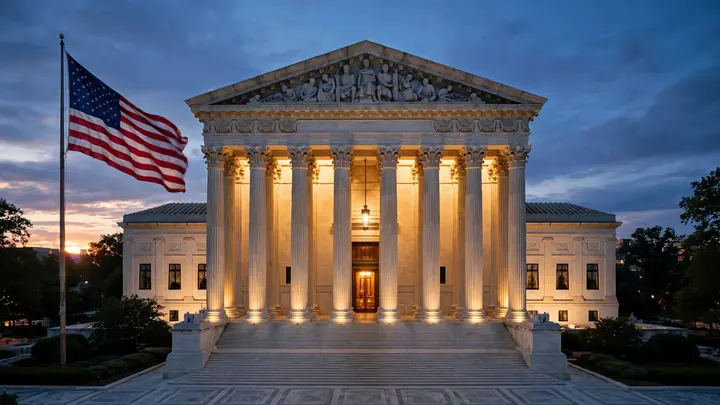
Supreme Court Justice Samuel Alito, 76, told a Washington audience on Thursday 12 November 2026 that Americans must hold fast to three principles to preserve the republic: robust free speech, religious liberty and racial equality. He was speaking in a fireside chat with Mollie Hemingway, editor-in-chief of The Federalist, at the Federalist Society's Antonin Scalia Memorial Dinner during its National Lawyers Convention in Washington, D.C. His words came one week after the 3 November 2026 midterm elections, in which Democrats won both chambers of Congress.
Forty-two House seats and eight Senate seats. That is what Republicans lost in the midterms, with the Alaska Senate race still uncalled when Alito spoke.
The new Congress now holds the power of the purse over every branch of goverment — including, as Alito pointed out, the power to defund the Supreme Court itself. It was against that backdrop that a sitting justice chose to name the three principles he believes hold the republic together.
Justice Alito Religious Liberty: Central to Human Dignity
On religion, Alito was direct. "Religious liberty is central to human dignity," he said, adding: "I think that we have placed religious liberty on a sounder footing than it was on 20, 25 years ago."
The claim is a striking one from a justice who has spent two decades on the Court watching religious liberty cases come and go. Twenty-five years ago, he argued, the law gave believers less protection than it does today. The Court's recent decisions have, in his view, put that protection on firmer ground — and he made clear he believes that ground must be defended, not taken for granted.
Print it, pray through it, and share it with your family or small group.
He said Americans of many faiths — and of none — will not be able to get along "amicably, productively" without respecting everybody's right to follow the religion of their choosing. It was a practical argument as much as a principled one: a country as religiously diverse as America cannot function if its people, seperated by belief and background, cannot live side by side with each other's beliefs.
Alito Free Speech and Racial Equality: MLK's Dream
Alito named robust free speech first among his three principles, and racial equality alongside it. To make the point about equality, he invoked the Rev. Martin Luther King Jr.'s speech at the Lincoln Memorial, and its hope that children would one day be judged by the content of their character rather than the colour of their skin.
The reference was deliberate. King spoke at the Lincoln Memorial in 1963, and his words have become the shared language of American aspiration across every political divide. By reaching for them, Alito was saying that the principle of racial equality is not the property of one party or one movement, but a promise the whole country made to itself — and one it must keep.
The three principles, taken together, form a picture of the republic as Alito sees it: a place where people can speak freely, worship freely, and be judged on who they are. Lose any one of them, his argument runs, and the other two start to fall. Voters in Alabama showed the same instinct at the ballot box when they voted 63 per cent for school prayer in the state constitution, as reported in Alabama Votes 63% for School Prayer in Constitution.
Alito Warns Congress Could Defund Supreme Court
Alito also warned that Congress holds the power to defund the Supreme Court, and he stressed the importance of judicial independence. The warning was not abstract. With a newly elected Congress that flipped both chambers in the midterms, the balance of power in Washington has shifted, and the Court's funding — like its jurisdiction — ultimately rests on decisions made by the legislature.
His point was about the structure of the republic, not about any single bill. A court that depends on Congress for its budget can be pressured through that budget, and a justice who has watched that dynamic for twenty years was telling a room full of lawyers that the independence of the judiciary is not guaranteed by the Constitution alone. It has to be respected by the people who hold the purse strings.
The warning carries weight because the Court is about to decide cases that touch the very principles Alito named. Texas recently asked the Supreme Court to skip a Ten Commandments case, as reported in Texas Asks Supreme Court to Skip Ten Commandments Case as Incoming Attorney General Nathan Johnson Refuses to Defend SB 10. And in Virginia, a court let a McLean Bible Church lawsuit continue, as reported in Virginia Court Lets McLean Bible Church Lawsuit Continue.
Religious Freedom Cases Before the Supreme Court
The Court is set to rule this term in at least two religious-freedom cases: St. Mary Catholic Parish v. Roy and Grand v. City of University Heights. In October it also agreed to hear Association for Education Fairness v. Montgomery County Board of Education. The St. Mary case, which concerns a Colorado Catholic preschool, has already drawn wide attention, as reported in Latest: St. Mary v. Roy — Supreme Court to Decide if Colorado Can Block Catholic Preschools (2026).
🙏 Did this part inspire you?
Alito did not discuss the cases in detail — a sitting justice does not preview rulings from a dinner stage — but the timing of his speech, days after the midterms and weeks before the Court's term gathers pace, gives his words about religious liberty a particular edge. The principles he named are the same ones the Court will soon be applying.
The speech was, in the end, a warning and an encouragement at once.
The republic, Alito argued, rests on three things: the freedom to speak, the freedom to worship, and the equality of every person before the law. Hold fast to them, he said, and the republic endures. Let them slip, and it does not.
In West Virginia, a court recently blocked 33 churches from leaving the United Methodist Church, as reported in West Virginia Court Blocks 33 Churches Leaving UMC Today — a reminder that questions of faith and law are being decided in courtrooms across the country, not only in Washington.
What Alito's Speech Means for Religious Liberty in 2026
The dinner is over, the midterms are counted, and the Court's term is under way. What remains is the question Alito put to his audience: whether Americans will hold fast to free speech, religious liberty and racial equality when it costs them something, or only when it is easy.
The cases on the Court's docket this term will test that question in law. The new Congress will test it in politics. And the answer, as Alito framed it, will decide more than the fate of any one case — it will decide what kind of republic America still is.
Frequently asked questions
Supreme Court Justice Samuel Alito, 76, told a Washington audience that Americans must hold fast to three principles to preserve the republic: robust free speech, religious liberty and racial equality. He spoke in a fireside chat with Mollie Hemingway at the Federalist Society's Antonin Scalia Memorial Dinner during its National Lawyers Convention.
He said: "Religious liberty is central to human dignity" and "I think that we have placed religious liberty on a sounder footing than it was on 20, 25 years ago." He added that Americans of many faiths, and none, cannot get along "amicably, productively" without respecting everybody's right to follow the religion of their choosing.
He invoked the Rev. Martin Luther King Jr.'s Lincoln Memorial speech and its hope that children would be judged by the content of their character, presenting racial equality as one of the three principles Americans must preserve.
Alito warned that Congress holds the power to defund the Supreme Court and stressed judicial independence. His remarks came one week after the 3 November 2026 midterms, in which Democrats won both chambers of Congress, with Republicans losing 42 House seats and 8 Senate seats.
The Court is set to rule this term in at least two religious-freedom cases: St. Mary Catholic Parish v. Roy and Grand v. City of University Heights. In October it also agreed to hear Association for Education Fairness v. Montgomery County Board of Education.
🙏 Did this part inspire you?
Print it, pray through it, and share it with your family or small group.
🔔 Don't Miss the Next Story!
Get breaking Christian news on your phone before everyone else — allow notifications when prompted, or join our newsletter below!
But the most surprising part of this story is yet to come — keep reading.
🙏 Have a Testimony to Share?
Has God done something amazing in your life? Or want us to cover a specific story? Send your testimony or story request via WhatsApp — your story could encourage thousands!
💬 Comments
Share your thoughts below. Be kind and respectful. If this story touched you, let us know in the comments!