Supreme Court Leans to Catholic Schools in Colorado Case
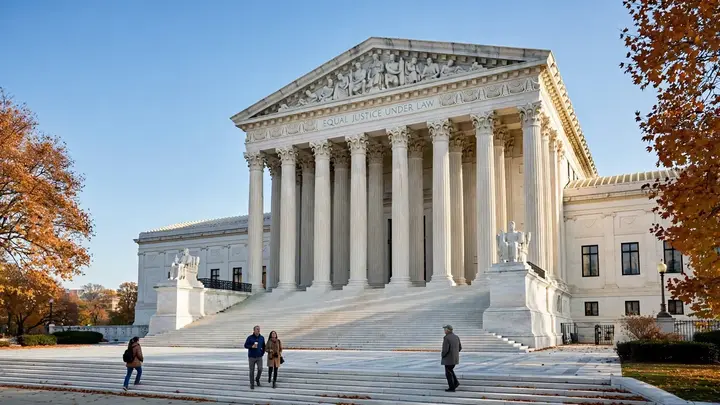
On Tuesday 3 November 2026, Election Day, the U.S. Supreme Court heard two hours of oral arguments in St. Mary Catholic Parish v. Roy, a case about whether Colorado can shut Catholic preschools out of its taxpayer-funded Universal Preschool Program. Press coverage after the argument read the conservative majority as sympathetic to the Catholic schools, though the Court has not ruled and a decision is not due until the end of June 2027.
The question before the justices is narrow, but the stakes reach far beyond Colorado. The state pays parents up to about $6,000 per child to choose any participating preschool, yet it bars Catholic preschools from the program because they refuse to adopt a nondiscrimination rule covering sexual orientation and gender identity. Around 1,500 children across at least 30 Catholic preschools are affected.
Chief Justice John Roberts set the tone early. He compared the case to Carson v. Maine, the Court's 2022 ruling that a state cannot exclude religious schools from a public benefit simply because they are religious.
Who Brought the Case Against Colorado
The challengers are the Archdiocese of Denver, St. Mary Catholic Parish in Littleton, St. Bernadette Catholic Parish in Lakewood, and parents Daniel and Lisa Sheley. They are represented by Becket, the religious-liberty law firm, and the Trump administration supports their case. The lower courts sided with Colorado, which is why the preschools are now asking the Supreme Court to step in, and why families across the state are waiting to recieve an answer.
The complaint was filed back in August 2023, and the Court agreed to hear the case in April 2026. For three years, Catholic families in Colorado have been told they can have the state's preschool money or their faith's teaching on marriage and sexuality, but not both. The Sheleys and the parishes say that choice itself is the problem.
Colorado's rule requires participating schools to promise "equal opportunity" enrolment regardless of the sexual orientation or gender identity of the child or the family. The Catholic preschools say they cannot make that promise in good conscience, because their faith teaches that marriage is between a man and a woman and that the schools exist to pass that faith on to children. They do not ask for special treatment, their lawyers argue.
The Conservative Majority Signals Sympathy
Justices Thomas, Alito, Gorsuch, Kavanaugh and Barrett all signalled sympathy for the challengers during the two hours of argument. The pattern was familiar to anyone who has watched this Court handle church-state cases in recent years. The conservative justices pressed Colorado's lawyer on why a state that funds secular preschools, including ones with their own admissions rules, draws the line at Catholic ones.
The questioning was sharpest when the justices turned to the practical effect of the rule. If a Catholic preschool must promise to enrol any child regardless of the parents' sexual orientation or gender identity, does that not force the school to set aside its religious mission in its own classrooms? Colorado's answer, that the state is free to set the terms of its own program, did not seem to satisfy the majority.
The Flashpoint Exchange With Justice Sotomayor
The most heated moment of the morning came from Justice Sonia Sotomayor, who put the moral question directly to the challengers' lawyer, Nicholas Reaves of Becket.
Sotomayor asked whether Catholic schools would turn away a child because the parents are gay, and Reaves replied that if it was a sincere religious exercise, he thought it would be permitted, according to the Christian Post's account of the hearing.
The exchange captured the whole case in two sentences. Sotomayor was asking whether religious freedom can justify turning a child away. Reaves was answering that a Catholic school's right to live its faith does not disappear the moment a family walks through the door.
What a Ruling Could Mean for Religious Schools
If the Court sides with the Catholic preschools, the effect will ripple well beyond Colorado's borders. States across the country run similar programs with nondiscrimination strings attached, and a ruling here would tell them those strings cannot exclude religious schools. Schools that stayed out rather than compromise their teaching would suddenly have a door open to them.
If the Court sides with Colorado instead, the message would be equally clear: a state can fund preschool for everyone except the schools whose faith will not bend to the state's rules. Religious schools would face a choice between their convictions and public money, and many would choose their convictions, leaving their families to pay the full cost of a Catholic education on their own.
Either way, the case is the latest chapter in a long argument about what religious freedom means when the government is footing the bill. The Court has moved steadily toward the view that the state cannot use its money to punish belief, and the signals from 3 November suggest that movement is continuing, as church leaders in other countries have discovered when courts weigh in on faith and public life, as in Pope Leo Tells Milei to Safeguard Democracy in Argentina. Church leaders elsewhere have faced similar moments when a single decision reshaped a whole communion, as reported in Pope Leo Accepts Bangued Bishop Jaucian Resignation.
What Happens Next Before June 2027
For now, the 1,500 children in Colorado's Catholic preschools wait. Their parents chose those schools because they wanted their children taught in the faith, and they will keep paying, or keep waiting, until the Court decides whether the state has to help. The parishes will keep their doors open either way.
They have been teaching children in Colorado for generations, and a funding fight will not close them, just as faith communities elsewhere keep serving through hardship, as when Father Connolly Runs NYC Marathon, Raises $135,000.
The justices will now spend months deliberating, drafting and arguing among themselves before a decision is handed down by the end of June 2027. That is a long time for families making preschool choices today, and it is a long time for a legal question that has already been argued three times over in the lower courts. Whether the signals from 3 November become a ruling is a question only the justices can answer, and they will not answer it until next summer, when the future of faith-based preschool in America is finally decided.
Frequently Asked Questions
It is a U.S. Supreme Court case about whether Colorado can bar Catholic preschools from its taxpayer-funded Universal Preschool Program because they refuse to adopt a nondiscrimination rule covering sexual orientation and gender identity.
No. The Court heard two hours of oral arguments on 3 November 2026. Press coverage after the argument read the conservative majority as sympathetic to the Catholic schools, but a decision is not due until the end of June 2027.
An estimated 1,500 children across at least 30 Catholic preschools in Colorado are affected. The program pays up to about $6,000 per child.
The Archdiocese of Denver, St. Mary Catholic Parish in Littleton, St. Bernadette Catholic Parish in Lakewood, and parents Daniel and Lisa Sheley. The Trump administration supports them.
She asked whether Catholic schools would turn away a child because the parents are gay, according to the Christian Post's account of the hearing. Becket counsel Nicholas Reaves replied that if it was a sincere religious exercise, he thought it would be permitted.
🔔 Don't Miss the Next Story!
Get breaking Christian news on your phone before everyone else — allow notifications when prompted, or join our newsletter below!
But the most surprising part of this story is yet to come — keep reading.
🙏 Have a Testimony to Share?
Has God done something amazing in your life? Or want us to cover a specific story? Send your testimony or story request via WhatsApp — your story could encourage thousands!
💬 Comments
Share your thoughts below. Be kind and respectful. If this story touched you, let us know in the comments!