🎧 Listen to This Story (Audio Mode)
Saved for offline reading — text only; photos need the internet.
Ghana Catholic Bishops Demand State of Emergency on Illegal Mining Galamsey in Closing Plenary Communique
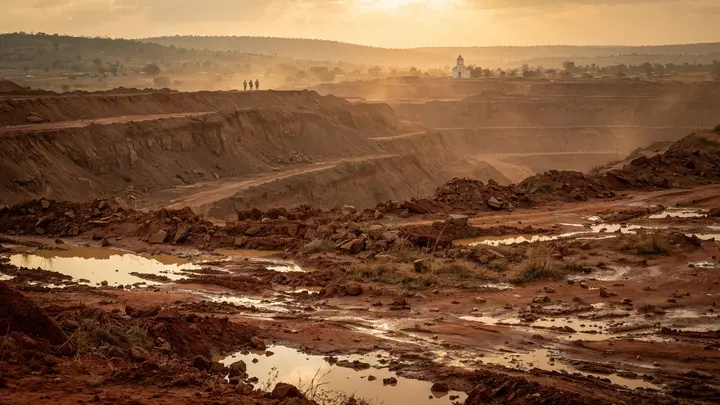
The Ghana Catholic Bishops' Conference has asked President John Dramani Mahama to declare a targeted state of emergency in the areas worst affected by illegal mining, known locally as galamsey. The demand came in the communique issued on Friday 13 November 2026 at St Paul Cathedral, Konongo-Mampong, at the close of the bishops' annual Plenary Assembly. The bishops said the government's interventions so far "are not producing the desired, promised and expected end of the menace."
That sentence is the sharpest thing the bishops have said about galamsey in years. It does not accuse the government of doing nothing. It says something harder to answer: that what has been done has not worked, and that the time for ordinary measures has passed.
Ghana Catholic Bishops Galamsey State of Emergency
Galamsey is the local name for illegal and irresponsible mining, and it has scarred farmland, forests and water sources across Ghana for years. The bishops are not asking for a nationwide emergency. They want a targeted one, declared in the places where the damage is worst, where the pits are deepest and the destruction hardest to reverse.
The word "targeted" matters. It is a call for emergency powers aimed at the worst-hit areas, not a blanket crackdown on the whole country — a word chosen carefully, and a measure of how seriously they take the crisis.
The demand was the headline of a communique that covered far more than mining. But galamsey came first in the reporting, and for good reason. It is the issue on which the bishops judged the government's record most bluntly, and the one on which they asked for the strongest remedy available.
Print it, pray through it, and share it with your family or small group.
Ghana Bishops Communique November 2026 Jamasi
The communique closed an assembly that ran from 3 to 14 November at the Divine Providence Pastoral Centre in Jamasi, in the Ashanti Region. The bishops gathered under the theme "Communion, Participation and Mission: Preparing the Catholic Church in Ghana for Her 150th Anniversary in 2030." The document was signed by the conference president, Bishop Matthew Kwasi Gyamfi of Sunyani.
The assembly had opened days earlier at Our Lady of Grace Senior High School in Mamponteng, where Bishop Gyamfi told the gathering that the Church's mission is not the preserve of bishops and priests alone, as reported in Ghana Bishops Call All Baptized to Share Church Mission. The closing communique was the other end of that same meeting: the moment when talk turned into a written list of demands, and the first name on that list was the president of Ghana.
Matthew Kwasi Gyamfi Ghana Bishops Plenary
Bishop Gyamfi is the voice the conference chose to carry this message. As president of the Ghana Catholic Bishops' Conference and Bishop of Sunyani, his signature sits at the bottom of the communique, and his name is the one attached to its toughest lines.
He led an assembly that spent eleven days in Jamasi weighing the state of the Church and the state of the country. The 150th anniversary in 2030 gave the meeting its theme, but the communique shows the bishops were looking at the present as much as the future.
The bishops' words on galamsey carry weight precisely because they come from men who live with the consequences. Their dioceses sit in the mining regions. Their parishes drink the water and farm the soil.
When they say the menace has not ended, they are not quoting a report. They are describing home.
Beyond Galamsey: Drugs, School Abuse and Bawku
The communique did not stop at mining. The bishops also raised the alarm over drug trafficking and substance abuse, over abuse in schools, and over the conflicts troubling parts of the country, including Bawku. Each of those lines is a wound the bishops named in public, in one document, on one day.
The pattern will be familiar to anyone who follows the Church in West Africa. Bishops across the region have become some of the clearest voices naming violence and its cost, as reported in Latest: US House Hearing Finds Nigeria Accounts for 72% of Christian Killings Worldwide. Ghana's bishops are now speaking in that same register: naming what is broken, plainly, and asking the state to act.
The same bluntness runs through the communique's treatment of the conflicts. The bishops did not dress the situation up. They named Bawku alongside the other troubles, and put all of it in front of the country at once — an enviroment where ordinary people pay the price for problems nobody has fixed.
What Is Galamsey?
Galamsey is illegal small-scale mining, carried out without licences and without regard for the land or water it damages. It is a livelihood for many poor Ghanaians, and a disaster for the communities that live around the pits. That tension is exactly why it has been so hard to stop, and why the bishops felt a state of emergency was the only honest ask left.
Successive governments have launched operations against it, seized equipment and made arrests. The bishops' verdict is that none of it has ended the menace. Their communique does not pretend otherwise, and it does not offer the goverment an easy way out.
🙏 Did this part inspire you?
Ghana Catholic Bishops Anti-LGBTQ Bill Parliament
The communique also turned to Parliament, urging it to handle any further consideration of the Human Sexual Rights and Family Values Bill — the anti-LGBTQ+ bill — with urgency, constitutional fidelity and legislative diligence. Parliament rescinded the bill on 10 November, just three days before the communique was issued.
That timing is striking. The bishops issued their call days after the bill was set aside, and they still pressed Parliament to treat whatever comes next with urgency and care.
They did not ask for haste alone. They asked for diligence and fidelity to the constitution alongside it — bishops speaking plainly to those in power, in the same spirit as the message Pope Leo XIV sent to the bishops of France this month, as reported in Pope Leo XIV Letter French Bishops Lourdes Holiness Youth Abuse Victims November 3 2026.
The message to lawmakers was clear enough: do not let the matter drift, and do not handle it carelessly. The bishops want the issue dealt with properly, and they want it dealt with soon.
Ghana's Catholics will recognise the setting, too. The Ashanti Region has hosted some of the country's largest recent gatherings of faith, as reported in Love Ghana Festival Today: Evangelist Andrew Palau Leads Kumasi Gospel Crusade to Reach 2 Million. The bishops chose Jamasi, in that same region, to say some of the hardest things they have said all year.
As of 14 November, no response from President Mahama or the government to the state-of-emergency call had been reported. The bishops have now said what they believe must happen. The question that hangs over Ghana this weekend is whether the president agrees — and whether the emergency they asked for will ever be declared.
Frequently asked questions
The Ghana Catholic Bishops' Conference asked President John Dramani Mahama to declare a targeted state of emergency in the areas worst affected by illegal mining, known locally as galamsey. The demand was made in their closing plenary communique of 13 November 2026.
Galamsey is the local name for illegal and irresponsible mining in Ghana. It is carried out without licences and damages farmland, forests and water sources. The bishops said government interventions so far "are not producing the desired, promised and expected end of the menace."
The communique was issued on Friday 13 November 2026 at St Paul Cathedral, Konongo-Mampong, at the end of the bishops' annual Plenary Assembly, held 3–14 November at the Divine Providence Pastoral Centre, Jamasi, in the Ashanti Region. It was signed by conference president Bishop Matthew Kwasi Gyamfi of Sunyani.
The bishops urged Parliament to handle any further consideration of the Human Sexual Rights and Family Values Bill with urgency, constitutional fidelity and legislative diligence. Parliament had rescinded the bill on 10 November 2026, three days before the communique.
No response from President Mahama or the government had been reported as of 14 November 2026. The bishops also raised alarm over drug trafficking and substance abuse, school abuse and conflicts including Bawku.
🙏 Did this part inspire you?
Print it, pray through it, and share it with your family or small group.
🔔 Don't Miss the Next Story!
Get breaking Christian news on your phone before everyone else — allow notifications when prompted, or join our newsletter below!
But the most surprising part of this story is yet to come — keep reading.
🙏 Have a Testimony to Share?
Has God done something amazing in your life? Or want us to cover a specific story? Send your testimony or story request via WhatsApp — your story could encourage thousands!
💬 Comments
Share your thoughts below. Be kind and respectful. If this story touched you, let us know in the comments!