Latest: St. Mary v. Roy — Supreme Court to Decide if Colorado Can Block Catholic Preschools (2026)
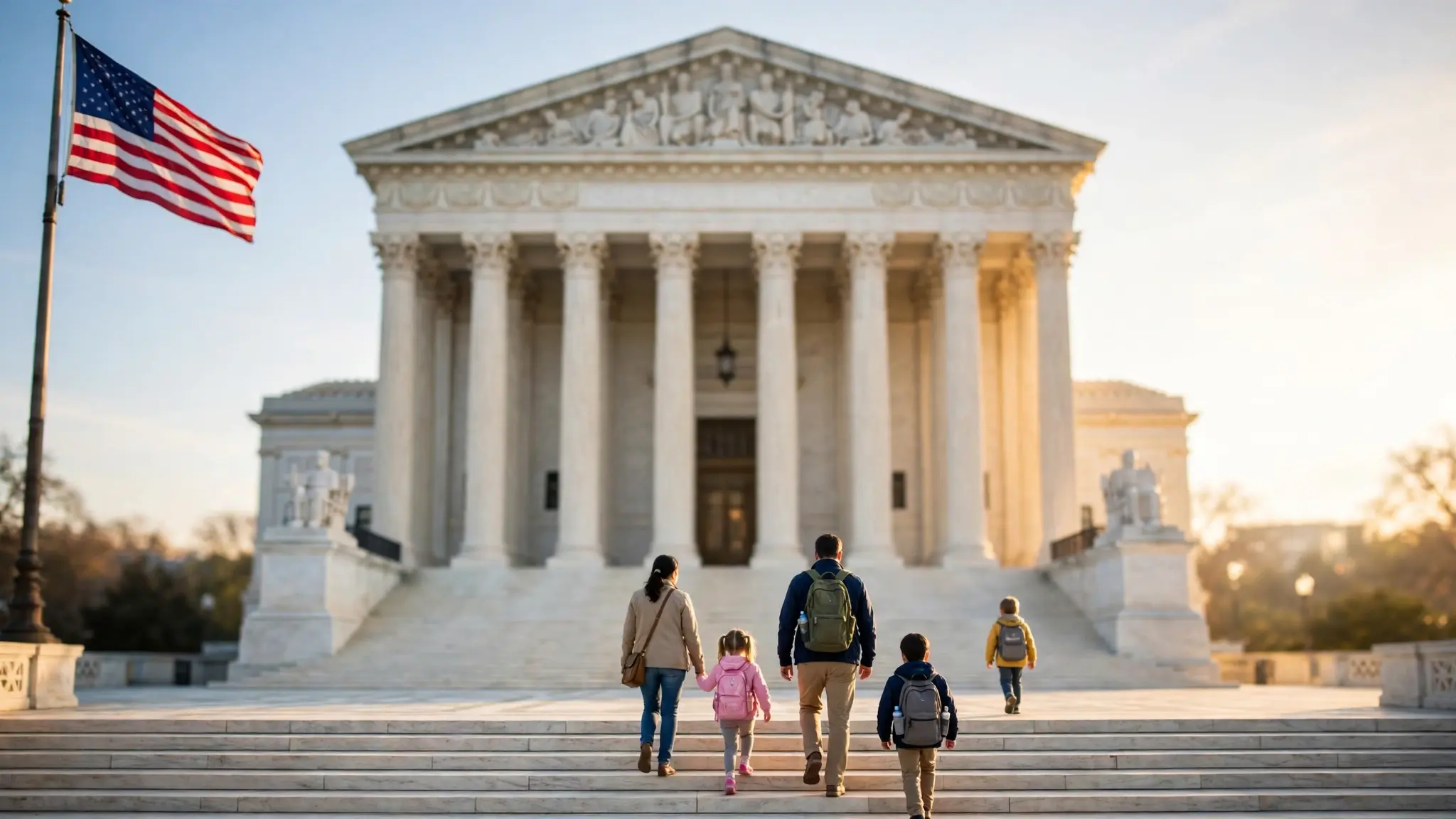
On the same day America votes in its midterm elections, nine justices in Washington will take up a question that could reshape religious freedom for a generation: can a state offer public money to preschools — and then shut the door on the Catholic ones?
On November 3, 2026, the U.S. Supreme Court will hear oral arguments in St. Mary Catholic Parish v. Roy, a case that pits two Catholic parishes in the Archdiocese of Denver against the state of Colorado over its universal preschool program. The stakes go far beyond preschool. The ruling will help decide when, and under what conditions, religious schools may receive public support in America.
The two parishes — St. Mary in Littleton and St. Bernadette in Lakewood — are represented by Becket, the religious-liberty law firm. Their argument is simple and sharp: Colorado built a program open to public, private and faith-based preschools, then told the Catholic schools they cannot participate unless they compromise what the Church teaches about marriage and gender. "It is undisputed that these preschools would otherwise be eligible" providers, the schools told the Court. "They are excluded solely because of their religious exercise."
The Program and the Rule That Sparked the Fight
Colorado's universal preschool program gives parents funding — more than $6,000 per eligible child — to send their four-year-old to the preschool of their choice, public or private, including faith-based schools. To join, a school must agree to give every child an equal opportunity to enrol and receive services regardless of race, religious affiliation, sexual orientation, gender identity and other categories.
The Catholic preschools say they cannot sign that. The Archdiocese of Denver does not recognise same-sex relationships or transgender status; its guidance directs schools to treat enrolled four-year-olds in accordance with their biological sex, and both parishes ask enrolling families to be supportive of the Catholic faith. For the archdiocese, signing Colorado's agreement would mean pretending to be something it is not.
Colorado answers that the preschools are not being asked to do anything special — just to follow the same antidiscrimination rules every other participating school follows. In the state's March 2026 filing, Colorado put it bluntly: the schools "seek an exemption from this law to allow them to receive public funding while turning away preschoolers because of their, or their parents', gender identity or sexual orientation."
How We Got to the Supreme Court
The case began in federal district court in 2023, when the two parishes, the archdiocese and two parents challenged the rule. They lost. In September 2025, the Tenth Circuit Court of Appeals upheld the district court, finding that Colorado's nondiscrimination requirement "exists in harmony with the First Amendment" — it applies neutrally, the court said, and was not designed to target religious entities.
In April 2026, the Supreme Court agreed to hear the parishes' appeal. The justices will now decide a question that has divided lower courts: when a govnerment opens a public funding program to private institutions, can it demand that religious participants check their beliefs at the door?
The case arrives with heavyweight backing on both sides. The parishes are supported by the U.S. Department of Justice, amicus briefs from 21 Republican-led states and 43 members of Congress, the U.S. Conference of Catholic Bishops, the Southern Baptist Convention, the Church of Jesus Christ of Latter-day Saints, the Lutheran Church–Missouri Synod, the National Association of Evangelicals and the Union of Orthodox Jewish Congregations. Colorado's side includes the ACLU of Colorado, Lambda Legal and Americans United for Separation of Church and State.
Why This Case Could Redraw the Church-State Line
Legal analysts see St. Mary v. Roy as the next chapter in a run of cases that have steadily expanded the free-exercise clause — from Fulton v. City of Philadelphia, which protected a Catholic foster agency's right to operate by its beliefs, to Kennedy v. Bremerton, which defended a coach's right to pray on the field. Each decision has loosened the old rigid "wall of separation" in favour of what the justices call a historically grounded understanding of religious liberty.
The question here is sharper than in those cases, because it involves taxpayer dollars. The Court's fundamental question, as religion-law professors frame it: "When state governments extend taxpayer dollars to private institutions, particularly religious ones, can they require those institutions to follow basic antidiscrimination rules?" A win for the parishes would establish that states cannot use nondiscrimination conditions to screen religious schools out of neutral funding programs. A win for Colorado would cement the opposite — that taking the money means accepting the state's terms, faith notwithstanding.
For churches watching from the pews, the practical stakes are enormous. Dozens of states run programs that funnel public money to private providers — in preschool, school choice and childcare. Whichever way the Court rules next summer, the ripple effects will reach every faith-based school that takes a public dollar.
Election Day at the High Court
There is no escaping the symbolism of the date. November 3 is Election Day in the 2026 midterms — and inside the marble building on First Street, lawyers will be arguing over whether Catholic doctrine still has a place in American public life. The Trump administration has already picked its side, with the Justice Department backing the parishes.
Whatever the outcome, the case has already done something useful: it has forced a public, honest debate about a question the country keeps circling. Is religious freedom something you can carry into the public square — into schools, programs and the marketplace — or something you must leave at the door when public money is on the table?
The nine justices will give their answer next summer. America's churches will be living with it long after that. For now, all eyes are on November 3 — and on two small parish preschools in Colorado that refused to sign.
Frequently Asked Questions
Two Catholic parishes in the Archdiocese of Denver — St. Mary in Littleton and St. Bernadette in Lakewood — are challenging Colorado's rule that bars them from the state's universal preschool program (worth over $6,000 per child) because they will not sign a nondiscrimination agreement covering sexual orientation and gender identity.
Oral arguments are set for November 3, 2026 — Election Day. The Court granted certiorari in April 2026 after the Tenth Circuit upheld Colorado's rule in September 2025. A decision is expected by the end of the Court's term next summer.
The Archdiocese of Denver does not recognise same-sex relationships or transgender status and asks families to be supportive of the Catholic faith. Colorado says the schools "seek an exemption" to receive public funding while turning away children based on their or their parents' gender identity or sexual orientation.
The parishes are backed by the U.S. Department of Justice, 21 Republican-led states, 43 members of Congress, the USCCB, the Southern Baptist Convention, the LDS Church and others. Colorado is supported by the ACLU of Colorado, Lambda Legal and Americans United for Separation of Church and State.
For more on faith and the courts, see School District Pays $275,000 After Telling Students to Seal Bibles in Envelopes and McLean Bible Church Lawsuit Continues After Virginia Supreme Court Dismisses Appeal. On conscience rights in medicine, read Illinois Judge Shields Christian Doctors From Assisted Suicide Law, and on the battle over public money see Breaking: 9 Major US Banks Debanked Christians and Conservatives, Federal Probe Finds.
🔔 Don't Miss the Next Story!
Get breaking Christian news on your phone before everyone else — allow notifications when prompted, or join our newsletter below!
But the most surprising part of this story is yet to come — keep reading.
🙏 Have a Testimony to Share?
Has God done something amazing in your life? Or want us to cover a specific story? Send your testimony or story request via WhatsApp — your story could encourage thousands!
💬 Comments
Share your thoughts below. Be kind and respectful. If this story touched you, let us know in the comments!