Archaeologists Identify Early Christian Church Near Venice Known Only From St Jerome Letters
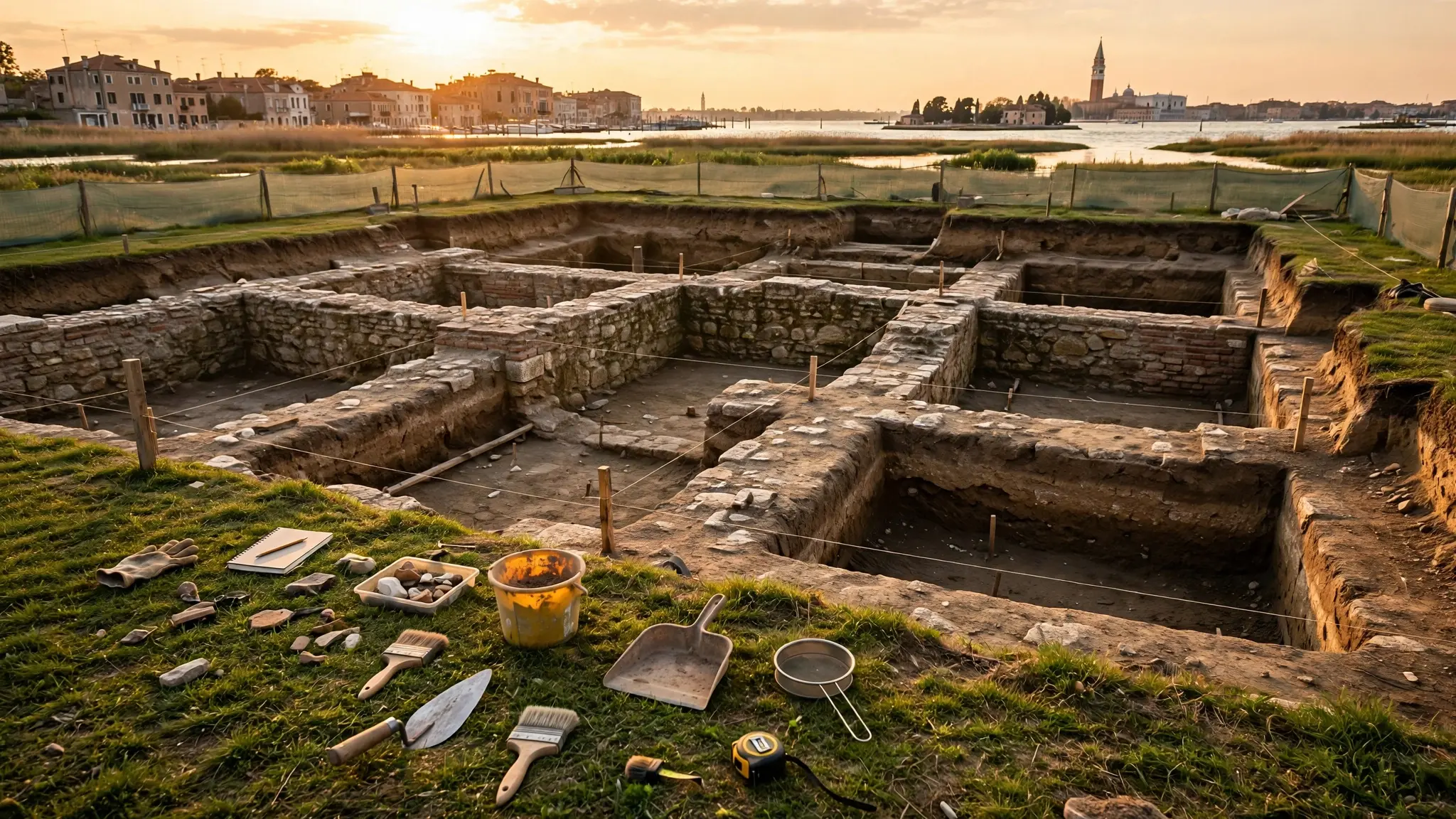
For more than sixteen centuries, the church existed only in letters. St Jerome wrote about it in the year 396, and readers ever since have known its name without knowing its place, until a team digging in the soil near Venice found the stones that matched the words.
Archaeologists from Ca Foscari University of Venice have identified the likely site of an early Christian church and a nearby bishop's palace in ancient Altino, near Venice. The identification was announced on 15 October 2026, after excavations in September and October 2026 and evidence gathered in 2025.
Altino was a Roman city, and its church was known mainly through historical accounts. St Jerome described it in a letter written in AD 396, his Letter 60 to Nepotian, written about Heliodorus, the first bishop of Altino, and that letter has carried the memory of the church across the centuries.
The church the team found is a rectangular hall measuring about 98 feet by 66 feet. It has no apse, it faces east, and it was founded in the late fourth century or the first half of the fifth century, placing it among the earliest Christian buildings in the region.
Altino Church Discovery: St Jerome Letter 60 and the First Bishop Heliodorus
Excavation director Diego Calaon put the importance of the find in plain terms, and his words are the ones the whole announcement turns on. Written sources had always said a church and a bishop's palace must have stood at Altino, and now the ground itself has answered.
For the first time, we can say with a very high degree of confidence where the church and the bishop's palace of Altino stood. Written sources told us they must have existed; now we have archaeological evidence.
That statement came from Diego Calaon, the excavation director, and it was reported in the coverage of the announcement. The confidence he claims is high, and the word likely still sits in front of the identification, because archaeology speaks in degrees of certainty rather than in absolutes.
Beside the church stood the bishop's palace, a large porticoed building to the east. It was probably two storeys high, it held mosaics, and it may have held privileged burials, and its scale says something about the standing of the bishop in a city that was already old when the church was built.
The foundations of both buildings were largely made from paving stones pulled from Roman roads. The people who built a Christian city did not start with empty ground, and the stones under their feet had already carried Roman traffic before they carried a church.
Early Christian Church in the Venetian Lagoon: What the Excavation Found
In the sixth and seventh centuries, a portico and a cemetery with brick-lined graves were added to the site. A small container decorated with a cross was found among the later remains, a quiet object that says more about daily faith than any grand inscription could.
The work was carried out with the Altino Archaeological Park and the National Archaeological Museums of Venice and the Lagoon. The dig in September and October 2026 built on evidence from 2025, and each season has tightened the picture of a site that was used, changed, and added to over centuries.
Calaon also spoke about the wider story of Altino and its move toward Torcello and Venice. He said the transition was a long managed transformation rather than a sudden flight, and that reading changes the old picture of a city emptied in panic.
That longer view echoes in other church stories reported this month, where old buildings and living congregations meet. Readers can compare the New York church that sold air rights for 23.9 million dollars to build a Fifth Avenue tower, and the possible Eucharistic miracle in Guatemala that drew thousands as the Church launched an investigation.
The history of the wider Church is also in the news through Pope Leo XIV saying there is no such thing as a holy war at the Assisi peace meeting, and through the Archbishop of Canterbury hosting South Sudan church leaders at Lambeth Palace.
Was the Altino Church the First in the Venetian Lagoon?
The Altino church may be the first church in the Venetian Lagoon, but only if the fifth-century chronology is confirmed. That conditional stays attached to the claim in the reporting, and this article keeps it attached too, because a first is a large claim to make from stones alone.
A church without an apse, facing east, built from reused Roman road stones, tells its own story about the christain community that raised it. They were building inside a Roman city, with Roman materials, and they turned those materials toward a new kind of gathering that the city had not seen before.
St Jerome's letter gave the church a bishop, Heliodorus, and a place in the written record. The excavation gives it foundations, a neighbour in the bishop's palace, and a cemetery where later generations buried their dead beside it, and the two kinds of evidence now stand side by side.
The dig will go on, and each new season may shift the dating, add a room, or settle whether the fifth-century chronology holds. The stones are still in the ground near Venice, the letter is still on the page from the year 396, and the question of what stood first in the lagoon is still open, waiting for the next trench to answer it.
Frequently Asked Questions
Archaeologists identified the likely site in ancient Altino, near Venice, close to where the bishop's palace also stood.
The church was known mainly through historical accounts, including St Jerome's description in his Letter 60 to Nepotian, written in AD 396 about Heliodorus, the first bishop of Altino.
They found a rectangular hall about 98 feet by 66 feet, with no apse and facing east, founded in the late fourth century or first half of the fifth century, plus a large porticoed bishop's palace to the east with mosaics.
The excavation was led by Diego Calaon of Ca Foscari University of Venice, working with the Altino Archaeological Park and the National Archaeological Museums of Venice and the Lagoon.
It may be the first church in the Venetian Lagoon, but only if the fifth-century chronology is confirmed, so the claim remains conditional.
🔔 Don't Miss the Next Story!
Get breaking Christian news on your phone before everyone else — allow notifications when prompted, or join our newsletter below!
But the most surprising part of this story is yet to come — keep reading.
🙏 Have a Testimony to Share?
Has God done something amazing in your life? Or want us to cover a specific story? Send your testimony or story request via WhatsApp — your story could encourage thousands!
💬 Comments
Share your thoughts below. Be kind and respectful. If this story touched you, let us know in the comments!