🎧 Listen to This Story (Audio Mode)
Saved for offline reading — text only; photos need the internet.
Today: Jordan Sentences Three Men to Death for Karak Church Attack That Killed Nine
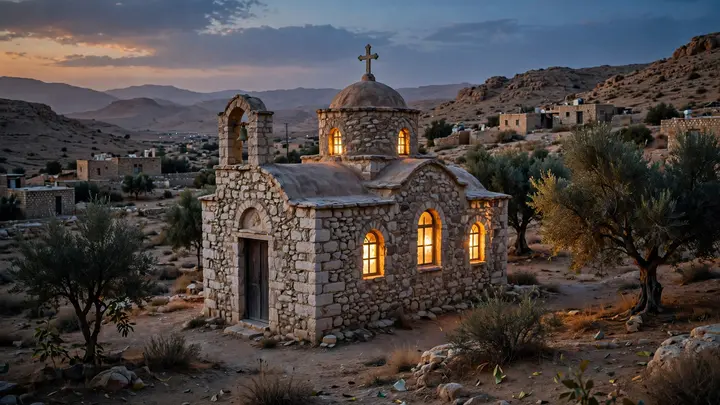
Jordan's State Security Court sentenced three men to death by hanging on Sunday, 15 November 2026, for carrying out the gun attack on a funeral at St George's Greek Orthodox Church in the village of Hamoud, in Karak governorate, that killed nine people and wounded 25 others on 23 October. The court convicted the men of terrorist acts resulting in death, weapons offences, conspiracy to commit terrorist acts and promoting the ideology of a terrorist group, according to the state news agency Petra. The sentences are not yet final: they are subject to appeal and automatic review by the Court of Cassation.
Three weeks ago, mourners had gathered in a small stone church to bury one of their own. Gunmen opened fire during the funeral, turning a service of grief into a massacre in a country where attacks on Christians are rare. On Sunday, bells rang at St George's after the sentences were announced, a sound that carried both relief and sorrow across the village.
Karak Church Attack Verdict: Three Men Sentenced to Death by Hanging
The Jordanian military said in a statement on Sunday that the State Security Court had issued its ruling sentencing to death "the three criminals who carried out the terrorist attack" at the Greek Orthodox church. The court found them guilty of committing terrorist acts resulting in death on nine seperate occasions under Jordan's Anti-Terrorism Law, as well as possessing weapons and ammunition for terrorist purposes.
Print it, pray through it, and share it with your family or small group.
Authorities said the three men — two Jordanian brothers and a relative by marriage — fled after the attack and were arrested three days later, on 26 October, after a shootout at an abandoned house in Karak, as reported in Jordan Church Attack Today: Three Arrested After Nine Christians Killed in Karak. Prosecutors had charged them with terrorism-related offences on 3 November, and the trial moved fast by the standards of a case this grave, reaching a verdict in under a month.
Two further defendants each received six-year prison terms after one charge against them was reclassified as possession of a firearm, according to counsel for the victims' families. The investigation has not fully closed: Jordan's interior minister said inquiries were still ongoing, a reminder that the courtroom verdict is one step in a longer search for answers about how the attack was planned.
The speed of the trial stands in sharp contrast to the slow healing facing Hamoud. Nine families are still counting their dead, and 25 wounded people are still recovering from injuries suffered in a place that should have been safe, as thousands mourned the victims at funerals that drew crowds from across the region, as reported in Jordan Church Attack Funerals Today: Thousands Mourn 8 Victims in Hamoud October 2026. Justice, for them, will be measured in more than a sentence handed down in Amman.
St George Greek Orthodox Church Hamoud: A Funeral Turned Into a Massacre
The attack took place on 23 October, when gunmen stormed a funeral at St George's Greek Orthodox Church in Hamoud village, in the southern governorate of Karak. Nine people were killed and 25 others wounded, in what officials and reporters described as a rare attack on Jordan's Christian minority. The gunmen opened fire as mourners gathered, and the shock rippled far beyond the village.
Jordan is a country where Christians and Muslims have lived side by side for centuries, and the attack on a funeral — a moment when even enemies are meant to lay down their weapons — struck at something deeper than a single congregation. It was an attack on the shared understanding that the dead are honoured, not hunted, and that a church is a place of refuge.
That is why the response reached beyond the courtroom. After the attack, Jordan launched airstrikes on southern Syria against groups it linked to the church attack, and churches and communities across the country held vigils for the dead. The grief in Hamoud was not carried by Christians alone, as shown when Jordanian Christians and Muslims lit candles together after the funerals, as reported in Jordan Christians and Muslims Light Candles Together After Karak Church Funerals as Suspects Named.
The funerals themselves drew thousands of mourners to Hamoud, a village that had never expected to become a name known around the world. People came to bury their neighbours, and they stayed to stand with families who had lost almost everything in a single afternoon.
Jordan Christians Karak: What Happens Next After the Death Sentences
The death sentences must now go through automatic review by the Court of Cassation, Jordan's highest court of appeal, and no date has been set for that review or for any execution. The ruling is the State Security Court's decision, not the end of the legal process, and the men's lawyers can still appeal.
For the families in Hamoud, the next chapter is not a legal one. It is the slow work of rebuilding a congregation that buried nine of its own in a single day, and of deciding how to mark Christmas when the pews hold empty spaces. The church's bells rang on Sunday, but the sound that matters most now is the quieter one: neighbours showing up, week after week, refusing to let fear empty the church.
🙏 Did this part inspire you?
Christians in Jordan have long lived as a small minority in a Muslim-majority country, and the attack tested a coexistence that most Jordanians take pride in. The verdict sends a clear message that the state will punish attacks on churches with its harshest penalty. Whether that message brings lasting safety for the country's Christians is a question only the coming months can answer, and the families of Hamoud will be watching closely. The world will be watching with them, because what happens next in this small desert village will say a great deal about whether a funeral can ever again feel safe in Jordan.
Frequently asked questions
On 15 November 2026, Jordan's State Security Court sentenced three men to death by hanging for the 23 October attack on St George's Greek Orthodox Church in Hamoud, Karak. Authorities identified them as two Jordanian brothers and a relative by marriage, arrested on 26 October after a shootout at an abandoned house.
Nine people were killed and 25 others were wounded when gunmen opened fire during a funeral at St George's Greek Orthodox Church in Hamoud village on 23 October 2026, in a rare attack on Jordan's Christian minority.
The court convicted them of carrying out terrorist acts resulting in death, possessing weapons and ammunition for terrorist purposes, conspiracy to commit terrorist acts and promoting the ideology of a terrorist group, under Jordan's Anti-Terrorism Law.
No. The sentences are subject to appeal and automatic review by the Court of Cassation, Jordan's highest court of appeal. No date has been set for that review or for any execution, and investigations into the attack are still ongoing.
Three suspects were arrested on 26 October, thousands attended the funerals in Hamoud, Christians and Muslims lit candles together for the victims, and Jordan launched airstrikes in southern Syria against groups it linked to the attack.
🙏 Did this part inspire you?
Print it, pray through it, and share it with your family or small group.
🔔 Don't Miss the Next Story!
Get breaking Christian news on your phone before everyone else — allow notifications when prompted, or join our newsletter below!
But the most surprising part of this story is yet to come — keep reading.
🙏 Have a Testimony to Share?
Has God done something amazing in your life? Or want us to cover a specific story? Send your testimony or story request via WhatsApp — your story could encourage thousands!
💬 Comments
Share your thoughts below. Be kind and respectful. If this story touched you, let us know in the comments!