Latest: Jordan Arrests Three Over Deadly Karak Church Attack
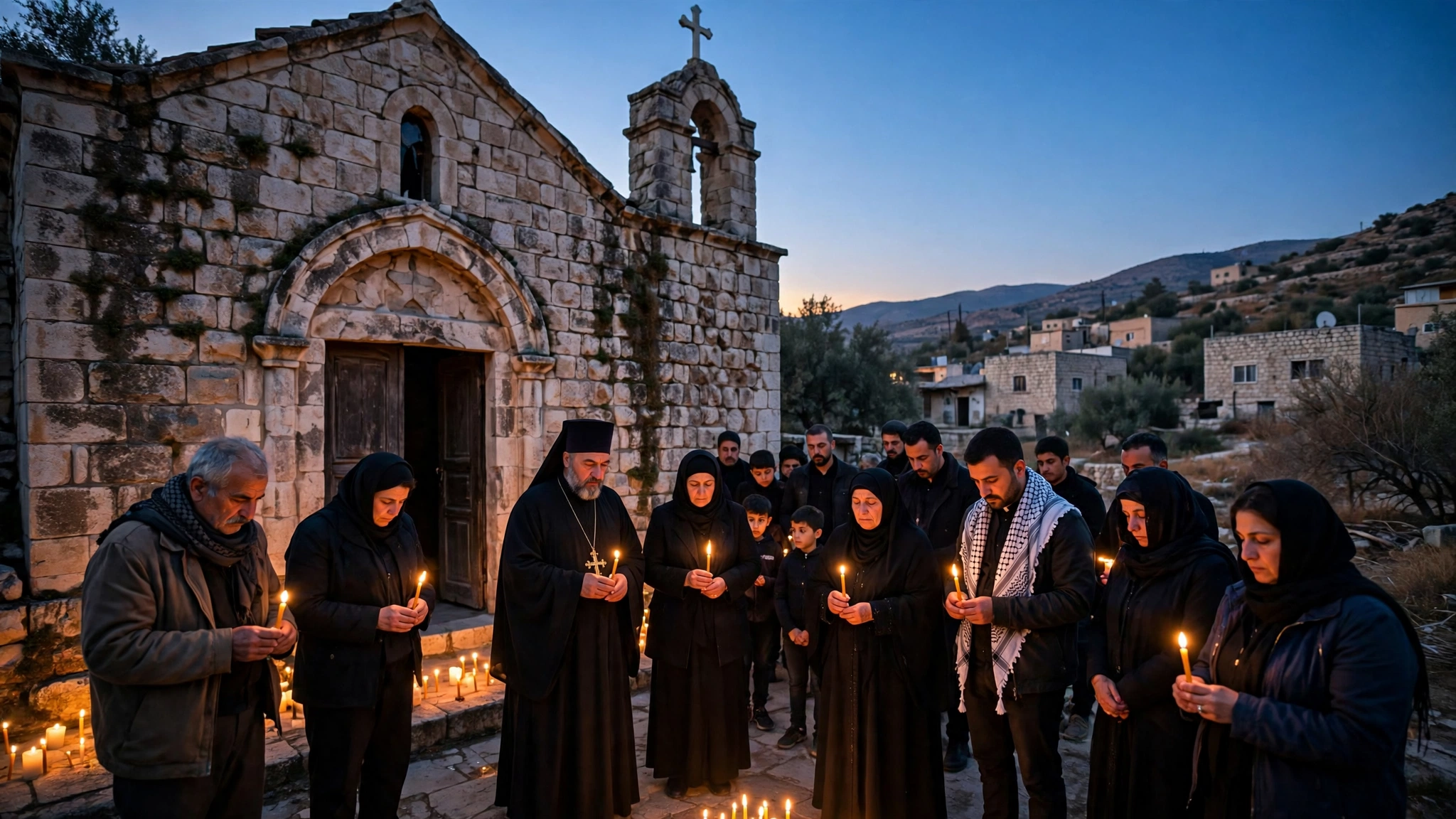
At noon on Saturday, church bells rang in unison across Jordan for people most of the country had never met. They were ringing for nine Christians shot dead during a funeral in a small village church — and by Monday morning, three suspects were in custody.
Jordanian security forces arrested the three men early on Monday, October 26, 2026, after finding them hiding in an abandoned house. Jordan's Public Security Directorate said the suspects refused to surrender and opened fire on security forces, who returned fire and arrested all three after they were wounded. No security personnel were injured, and firearms and ammunition were seized.
The arrests came three days after gunmen opened fire during a funeral at St George's Church in the village of Hamoud, in Karak governorate about 100 kilometres south of Amman. Nine people were killed and dozens wounded in what King Abdullah II has called terrorism. The death toll was revised upward from seven to nine on Saturday as the scale of the attack became clear.
One man who lived through the shooting gave the attack its human face. Dr Sayel al-Khaitan, a doctor who was inside the church when the gunfire began, described what happened in blunt terms.
It is a criminal, dark, spiteful, Daesh-style attack. It was likely that we would have fallen as martyrs in the massive attack, but, by a miracle, we survived.
That word — miracle — keeps appearing in the accounts from Hamoud, from people who walked out of a church where others did not. The attack took place during a funeral, a gathering meant for grief, and turned it into a second tragedy. Workers were still cleaning the last traces of blood from the church floor the next day when visitors began arriving to stand with the village.
Jordan Church Attack Arrests: Three Suspects Found in Abandoned House
Jordan's Interior Minister Mazen Al-Faraya said the attackers were extremists, but added that it was too early to determine whether they had links to known groups inside or outside Jordan. No group has claimed responsibility for the attack. The Public Security Directorate's statement did not identify the suspects' affiliation.
The arrest operation ended a manhunt that had stretched across the weekend. Checkpoints were set up south of Amman on the main motorway leading to Karak, while security forces and armoured vehicles moved through the remote and desert areas around the village. On Sunday, security forces were stationed at churches across the country during services, in an unusual tightening of security at Christian sites.
King Abdullah II visited the wounded in hospital on Friday, dressed in military fatigues, and spoke with them to check on their condition. He vowed that the attack would be met with force and that those responsible would face a crackdown. The king said the shooting would not undermine national unity, a message echoed by officials across the kingdom.
Jordan's Awqaf Ministry added its voice on Sunday. Secretary-General Ismail Al-Khatba said the attack came as a shock to all Jordanians and represented an assault on societal security, tolerance and peaceful coexistence. He said the relationship between Muslims and Christians in Jordan is deeply rooted, and that such acts would fail to weaken the awareness, unity and cohesion of Jordanian society.
Hamoud St George Church Attack Funerals: Hundreds Bury Eight Victims
On Sunday, hundreds of Jordanians from across the kingdom attended a funeral service at the same church in Hamoud, honouring eight of the nine victims. The bells that had rung in mourning at noon on Saturday gave way to a quieter grief: familes burying their dead in the village where they had worshipped. It was not immediately known why only eight of the nine were buried at that service.
At the main Orthodox church in Amman on Sunday, many people attended mass despite the fear, with an armoured vehicle stationed at the entrance. One priest who conducted the service summed up the mood of a congregation refusing to hide.
The attack does not dissuade anyone, it makes us stronger.
Pope Leo XIV also prayed for the victims after the Angelus on Sunday, October 25, asking the faithful to remember those killed and wounded in the attack on St George's Orthodox Church. The prayer linked Hamoud to a wider week of mourning, as the pontiff also appealed for an end to hostilities in Yemen and invited prayer with leaders gathering in Assisi.
The funerals and the arrests sit side by side in this story, and that matters. Grief without justice curdles into anger, and arrests without grief feel hollow. Hamoud got both in the same weekend: its dead buried with honour, and its attackers — whoever they turn out to be — facing the law rather than vanishing into the desert.
Jordan Christians Karak Attack: What Happens Next
For readers following attacks on Christian communities elsewhere, the Jordan story echoes a painful pattern seen in recent weeks, from the Intersociety report on thousands of Christians killed across Africa in 2026 to the attack on a Christian village in Syria and the report on 500 million Christians facing restricted Bible access. What sets Hamoud apart is the speed of the response: arrests within three days, a king at a hospital bedside, and a country publicly refusing to be divided.
Questions remain, and they are serious ones. Who were the three men found in that abandoned house, and who sent them?
Why was a funeral targeted, and what did the attackers hope to break by striking a village church in Karak, an area with a long Christian presence? Jordan's authorities have promised that anyone involved will be held to account, but the answers will come from an investigation that has only just begun.
For now, the people of Hamoud have buried their dead, and the men accused of killing them are in custody. The bells that rang across Jordan on Saturday have gone quiet — but the question they asked has not: what will the trial reveal about who wanted this village to bleed, and whether anyone else was behind them?
Frequently Asked Questions
Gunmen opened fire during a funeral at St George's Church in Hamoud, Karak governorate, on October 23, 2026, killing nine people and wounding dozens (The National News).
Three suspects were arrested early on October 26, 2026, after being found hiding in an abandoned house; they opened fire on security forces, were wounded, and were arrested with firearms seized (The National News, Petra).
King Abdullah II visited the wounded in hospital, called the attack terrorism, and vowed a crackdown, while security was tightened at churches across the country for Sunday services (The National News, Khaleej Times).
Hundreds attended a funeral service at the same church in Hamoud on Sunday, October 25, honouring eight of the nine victims (The National News).
No. Jordan's interior minister said the attackers were extremists but that it was too early to determine links to known groups, and authorities have not identified the suspects' affiliation (The National News).
🔔 Don't Miss the Next Story!
Get breaking Christian news on your phone before everyone else — allow notifications when prompted, or join our newsletter below!
But the most surprising part of this story is yet to come — keep reading.
🙏 Have a Testimony to Share?
Has God done something amazing in your life? Or want us to cover a specific story? Send your testimony or story request via WhatsApp — your story could encourage thousands!
💬 Comments
Share your thoughts below. Be kind and respectful. If this story touched you, let us know in the comments!