Jordan Church Attack: Gunmen Kill 9 at Funeral in Karak as Christians Bury Their Dead October 2026
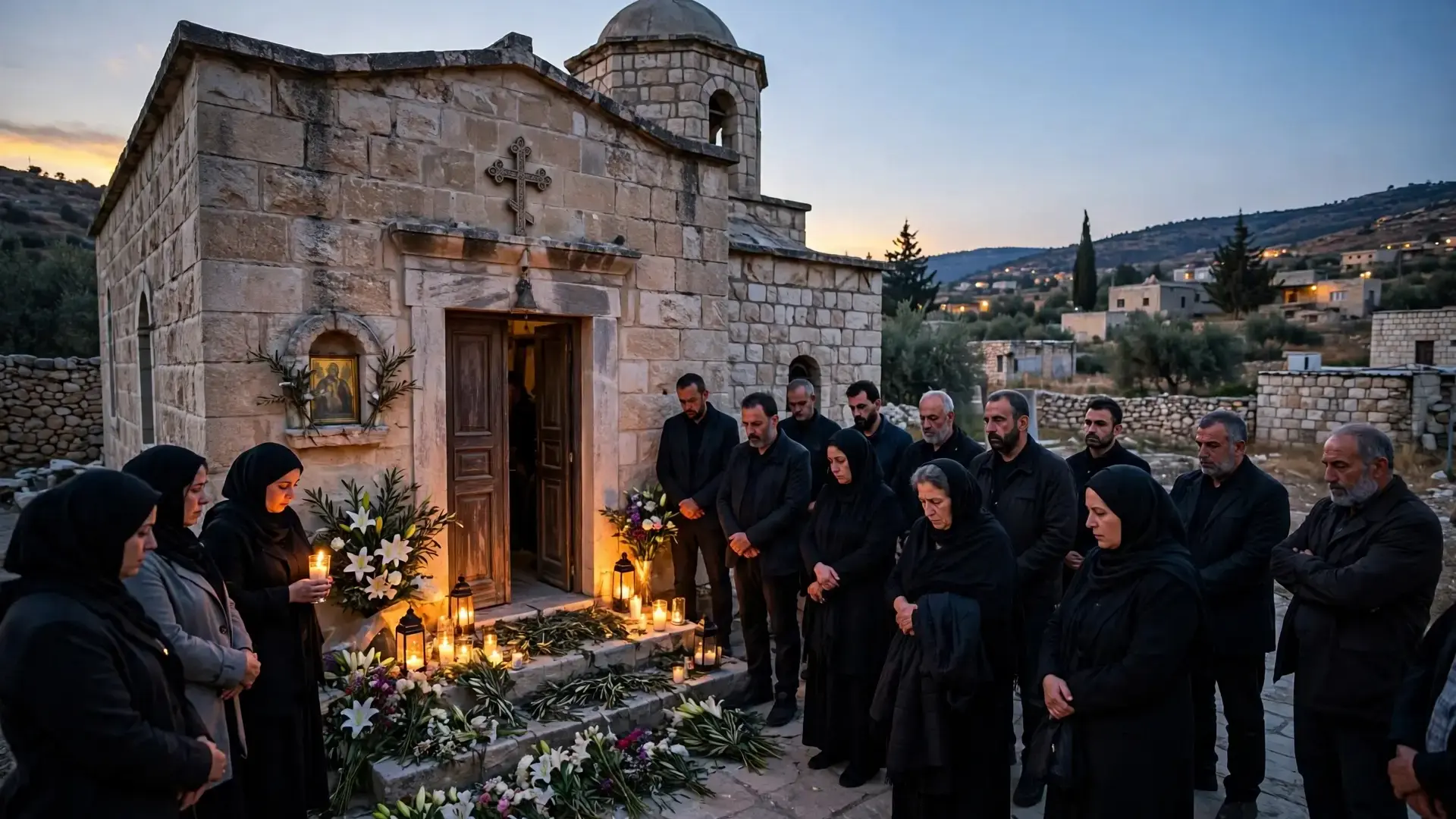
The hymns had barely begun when the shooting started. Inside St George's Greek Orthodox Church in the village of Hamoud, in Karak governorate, between 150 and 200 mourners had gathered on Friday, October 23, 2026, to bury one of their own. Fifteen minutes into the funeral service, gunmen opened fire, and a house of mourning became a scene of panic, blood, and running feet.
People dived beneath the pews. Parents shielded their children with their bodies.
Others ran for the exits as screams filled a room built for prayer. Witnesses said the shooting went on for several minutes, and at least one account said the attackers fled in a pickup truck, still firing as they left.
By Saturday, Jordan's authorities had revised the death toll from seven to nine, with 34 others wounded. Jordan's Ministry of Health figures reported through Al Jazeera had earlier put the toll at eight dead and dozens injured, a reminder of how fast the numbers moved in the first hours after the attack. What did not change was the shock: an attack on a Christian funeral, in a country where Christians have long lived alongside their Muslim neighbours, is vanishingly rare.
Jordan Church Funeral Attack Karak: What Happened at St George's Church
St George's sits in Hamoud, a village in Karak governorate about 100 kilometres south of Amman. Karak has one of Jordan's larger Christian concentrations, and the funeral that Friday was an ordinary community occasion until it was not. Security forces later said they were hunting three gunmen, and checkpoints went up south of Amman on the main motorway leading to Karak.
King Abdullah II moved fast. He visited the wounded in hospital on Friday, spoke with them to check on their condition, and offered condolences to the families of the dead. He said those behind the attack would face the harshest penalties, and he ordered a review of the country's security procedures for responding to terrorist attacks.
Those behind the attack will face the harshest penalties.
Jordan declared three days of national mourning. It was a striking gesture for a kingdom that has prided itself on sheltering Christians, and it told the grieving families something simple: the whole country was standing with them, not just their own village.
Jordan Church Attack Victims: Nine Dead and Dozens Wounded in Karak
The human cost kept growing through the weekend. On Saturday, the death toll was revised upward to nine, and hundreds of people gathered to bury the victims, though it was not immediately clear why only eight of the nine were buried in Hamoud. Armoured vehicles and gendarmerie officers moved into the surrounding desert areas as the search for the three gunmen widened.
For the familes, the numbers were never just numbers. Each victim had come to that church to mourn someone else, and each family now faced a second funeral of its own. That cruelty, mourning interrupted by murder, is what made this attack feel so personal across Jordan's Christian community and far beyond it.
Churches across the region answered in the oldest way they know. Patriarchs and heads of churches in Jerusalem condemned what they called a grave crime against humanity and a blatant violation of sacred religious and human values, and they called on churches across the region to ring their bells at noon on Saturday in solidarity.
This terrorist act is a grave crime against humanity, a blatant violation of all sacred religious and human values.
Their statement praised King Abdullah II and the Jordanian public for rejecting the attack, and it carried a message of unity that mattered in a tense region: Muslims and Christians in Jordan, the patriarchs said, are united in a spirit of brotherhood that no gunman can break.
Christians in Jordan After Karak Attack: Defiant Sunday Worship
Then came Sunday, and with it the answer the attackers probably did not expect. Security forces were stationed at churches across Jordan during Sunday services, in an unprecedented tightening of security at Christian sites. At the main Orthodox church in Amman, an armoured vehicle stood at the entrance, and still the pews filled.
The attack does not dissuade anyone, it makes us stronger.
Those were the words of one of the priests who conducted the Sunday service in Amman, and they captured the mood of a community refusing to hide. People came to worship knowing exactly what had happened two days earlier in Karak, and they came anyway. Fear was present, but it was not in charge.
Pope Leo XIV added his voice on Sunday, offering prayers for the victims. His prayer joined a wave of solidarity that had already crossed borders, from Jerusalem's patriarchs to ordinary Christians around the world who had watched the news from Karak with horror. The Catholic world has been following the pope's own difficult October closely, from his recovery after lung surgery and the Assisi gathering he had to miss, and his prayer for Karak landed in that same season of suffering and resolve.
The attack also sits inside a wider, painful pattern for Christians in the Middle East, where worshippers have too often paid a price for gathering. Readers following that story will recognise the same questions in other recent gatherings of believers under pressure and in reports of faith under fire around the world. What makes Karak different is Jordan itself: a country long seen as a refuge, now forced to ask how safe its churches really are.
Jordan Church Shooting Investigation: Three Gunmen Still at Large
As the weekend closed, the hardest questions were still unanswered. None of the three assailants had been captured, and authorities had not publicly identified them or established a motive. Security forces continued to search remote and desert areas around Karak, and the checkpoints on the road south from Amman stayed in place.
For the people of Hamoud, the immediate future is measured in hospital visits, funerals, and the slow work of comforting children who hid under pews. The community's grief is fresh, its anger is real, and its determination to worship openly has already been tested and proven in a single Sunday.
And the question now hangs over every church door in Jordan: when the bells ring next Sunday, will the armoured vehicles still be there, will the gunmen be caught, and will a congregation that buried its dead with such courage find that its country can keep its promise that this will never happen again.
Frequently Asked Questions
Gunmen opened fire during a funeral service at St George's Greek Orthodox Church in Hamoud village, Karak governorate, on Friday, October 23, 2026, killing nine people and wounding 34 others (The National News; Al Jazeera).
Authorities initially reported seven dead, then revised the toll to nine on Saturday, with 34 wounded. Al Jazeera, citing Jordan's Ministry of Health, earlier reported eight dead and dozens injured (The National News; Al Jazeera).
No. Security forces were still searching for three gunmen as of Sunday, October 25, 2026, with checkpoints south of Amman and armoured vehicles stationed at churches during Sunday services (The National News; Al Jazeera).
He visited the wounded in hospital, offered condolences to victims' families, said the attackers would face the harshest penalties, ordered a review of security procedures, and Jordan declared three days of national mourning (Al Jazeera; The National News).
Patriarchs and heads of churches in Jerusalem condemned the attack and called on churches across the region to ring their bells at noon on Saturday in solidarity, while Pope Leo XIV offered prayers for the victims on Sunday (MENAFN/Petra; The National News).
🔔 Don't Miss the Next Story!
Get breaking Christian news on your phone before everyone else — allow notifications when prompted, or join our newsletter below!
But the most surprising part of this story is yet to come — keep reading.
🙏 Have a Testimony to Share?
Has God done something amazing in your life? Or want us to cover a specific story? Send your testimony or story request via WhatsApp — your story could encourage thousands!
💬 Comments
Share your thoughts below. Be kind and respectful. If this story touched you, let us know in the comments!