Ghana Bishops Call All Baptized to Share Church Mission
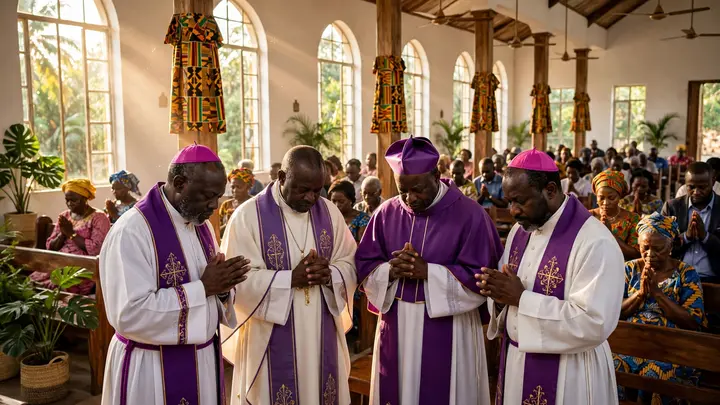
The 2026 Plenary Assembly of the Ghana Catholic Bishops' Conference opened on Monday, 9 November 2026, at Our Lady of Grace Senior High School in Mamponteng, in the Diocese of Konongo-Mampong, with a call for every baptized Christian to take part in the life and mission of the Church. The assembly, held under the theme "Communion, Participation and Mission: Preparing the Catholic Church in Ghana for Her 150th Anniversary", runs until Saturday, 14 November, and it is using the milestone to ask a hard question: what kind of Church will Ghana's Catholics be when they mark 150 years in 2030?
One hundred and fifty years is a long time for a Church to look back on, and the bishops opened their meeting by looking at the men who started it. In May 1880, two priests of the Society of African Missions, Fathers Auguste Moreau and Eugene Murat, arrived in Elmina to establish the modern Catholic mission in Ghana. They endured malaria, cultural differences, tribal conflicts, slavery and limited amenities, and many of the early missionaries lost their lives. The bishops' message this week is that the best way to honour those men is not a party, it is to keep doing what they did.
"The 2026 Plenary Assembly of the Ghana Catholic Bishops' Conference (GCBC) has opened with a call for all the baptized to take part in the life and mission of the Catholic Church, and with concerns about illegal mining, corruption and constitutional reform," ACI Africa reported on 10 November. The assembly is being held at Our Lady of Grace Senior High School in Mamponteng, Konongo-Mampong Diocese.
Ghana Bishops 150th Anniversary: Mission Belongs to All the Baptized
The keynote address came from the conference president, Most Rev. Matthew Kwasi Gyamfi, Bishop of Sunyani. His message was direct: the responsibility of evangelisation and service is not limited to bishops, priests and consecrated persons. Through Baptism and Confirmation, he said, every baptized Christian shares in Christ's prophetic, priestly and kingly mission, and the gifts each person recieves are meant for building up the Church and serving the world.
"The Church's mission is not the exclusive preserve of Bishops, Priests and Consecrated Persons," Bishop Gyamfi said in his address at the opening ceremony. He explained that while communion establishes the identity of the faithful as one People of God, participation gives practical expression to the shared responsibility that flows from that identity. It is a theological point with a practical edge: if the mission belongs to everyone, then everyone has to show up.
The Apostolic Nuncio to Ghana, Archbishop Julien Kaboré, carried the same message in his address, read at the opening session. He described the anniversary theme as meaningful, and challenged the Church to use the 150th anniversary for more than celebrations. The best way to honour the missionaries, he said, is to continue their work with zeal, renewing the Church's missionary commitment rather than simply marking the date.
Youth Exodus and Illegal Mining on the Bishops' Agenda
Not every message from the assembly was celebratory. Bishop John Opoku-Agyemang of Konongo-Mampong, the host bishop, raised the alarm over a youth exodus from the Church, warning that young people are drifting away from Church activities after receiving the sacrament of confirmation, and that Catholic identity is eroding in the Church's schools. He said those concerns must sit at the centre of the 150th anniversary preparations, because a milestone that only looks backwards is a missed chance.
The bishops are also turning their attention outward, to the country around them. The protracted Bawku conflict, security vulnerabilities along Ghana's borders, drug trafficking and substance abuse are among the national issues before the assembly, along with illegal mining, known locally as galamsey, corruption and constitutional reform. Bishop Opoku-Agyemang named corruption, political misrule and growing poverty alongside the mining crisis, and the traditional ruler of Mampong, Daasebre Osei Bonsu III, urged the Church to sustain its prophetic voice and champion ethical leadership.
That prophetic voice has been the Ghanaian Church's habit for decades. The bishops' communiqués on national issues are read far beyond Catholic circles, and the Mamponghene praised them for objective analysis devoid of political interests. He cited Our Lady of Grace Senior High School, the venue of the assembly itself, as an example of the Church's contribution to holistic and quality education, and said the 150-year presence was an opportunity to renew the Church's commitment to shaping the country's spiritual, moral and social direction.
Golden Jubilee and the Road to 2030
One proposal before the assembly looks beyond the 150th anniversary to another milestone: the Ghana Catholic Bishops' Conference is expected to deliberate on moving the climax of celebrations marking the 50th anniversary of diplomatic relations between the Holy See and Ghana to 2027, so it coincides with Ghana at 70. The Golden Jubilee of Holy See-Ghana relations is a reminder that the Church in Ghana no longer depends on Rome, as Bishop Gyamfi put it in a homily at St Paul's Cathedral, Mampong, on Sunday, 8 November: the Church has grown into a mature, self-sustaining body.
The same week brought a reminder of the Church's place in Ghanaian life from an unexpected direction. The Mampongteng Local Council of Churches called on Christian denominations to deepen their cooperation in promoting peace, justice and moral discipline, and the Chief Imam of Mamponteng called for stronger Christian-Muslim unity ahead of the Catholic Church's 150th anniversary. The assembly is a Catholic meeting, but its echoes are reaching across the whole religious landscape of the region.
The assembly closes on Saturday, 14 November, at the Divine Providence Pastoral Centre in Jamasi. What it will produce is still to come: the bishops' final communiqué, their position on the Bawku conflict and illegal mining, and their plan for the road to 2030. But the opening days have already set the question that will follow the Church in Ghana for the next four years: the missionaries of 1880 gave their lives to plant this Church, the bishops of 2026 say the mission now belongs to every baptized person, and the young people drifting away after confirmation will decide whether that call is answered or ignored.
Frequently asked questions
It is the annual plenary meeting of the Ghana Catholic Bishops' Conference, held 9–14 November 2026 at Our Lady of Grace Senior High School, Mamponteng, Konongo-Mampong Diocese, under the theme "Communion, Participation and Mission: Preparing the Catholic Church in Ghana for Her 150th Anniversary".
In 2030, dating back to May 1880, when two Society of African Missions priests, Fathers Auguste Moreau and Eugene Murat, arrived in Elmina to establish the modern Catholic mission.
GCBC President Bishop Matthew Kwasi Gyamfi said the Church's mission is not the exclusive preserve of bishops, priests and consecrated persons: through Baptism and Confirmation, every baptized Christian shares in Christ's mission.
The Bawku conflict, border security, drug trafficking and substance abuse, illegal mining known as galamsey, corruption, poverty and constitutional reform.
Host Bishop John Opoku-Agyemang raised the alarm over a youth exodus, warning that young people disengage from Church activities after confirmation and that Catholic identity is eroding in the Church's schools.
🔔 Don't Miss the Next Story!
Get breaking Christian news on your phone before everyone else — allow notifications when prompted, or join our newsletter below!
But the most surprising part of this story is yet to come — keep reading.
🙏 Have a Testimony to Share?
Has God done something amazing in your life? Or want us to cover a specific story? Send your testimony or story request via WhatsApp — your story could encourage thousands!
💬 Comments
Share your thoughts below. Be kind and respectful. If this story touched you, let us know in the comments!