Saint Nicholas Relic Stolen, Burned and Crushed in France
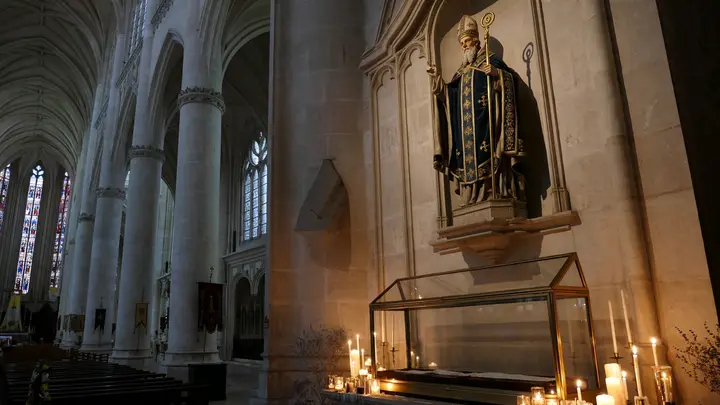
A bone fragment venerated as a relic of St Nicholas was stolen from the Basilica of Saint-Nicolas-de-Port in France between 28 and 31 October 2026, and the suspect arrested by French police admitted breaking the protective glass case, stealing the fragment, then burning and crushing the bones. The basilica's priest reported the theft to police in Dombasle-sur-Meurthe on 2 November, and the suspect appeared before the Judicial Court of Nancy, where he was found legally responsible after a psychiatric evaluation.
Think about the object at the centre of this story. A small fragment of bone, kept beneath a statue of the saint since the early 2000s, honoured by pilgrims who travel to this basilica in Lorraine, about 12 kilometres southeast of Nancy, because St Nicholas is the 4th-century Bishop of Myra who inspired Santa Claus.
For centuries, believers have come to venerate what remains of him. One man walked in, broke the glass, and decided it should be destroyed.
The timing makes the loss sharper. The desecration comes just weeks before the basilica's great St Nicholas celebrations: the annual torchlight procession on 5 December and the Feast of St Nicholas on 6 December. The town's biggest days of the year will now begin with an empty case beneath the statue.
Saint Nicholas Relic Stolen From Basilica in France
The theft took place sometime between 28 and 31 October at the Basilica of Saint-Nicolas-de-Port in Meurthe-et-Moselle, in the Lorraine region of eastern France. The basilica's priest discovered the loss and reported it to police in Dombasle-sur-Meurthe on 2 November, and French police arrested a suspect at his home.
The basilica is no ordinary parish church. It has been a place of pilgrimage to St Nicholas for centuries, drawing the faithful from across France and beyond, especially in the weeks before his feast day. Attacks on sacred objects hit such places hard, and this is not the first time a French church has had to reckon with desecration, as the vandalised shrine in Bengal showed this month in Mother Mary Grotto Vandalised in Bengal's Raidighi Village.
What the police found when they arrested the suspect left little room for doubt about what had happened. The man admitted breaking the protective glass case and stealing the fragment, and he admitted what he did with it afterwards. There was no claim of theft for profit, no attempt to sell the relic, and no mystery about where it went.
Suspect Admits Burning and Crushing the Bones
The suspect told police he burned and crushed the bones, saying he acted from a "desire to destroy" and viewed the veneration of relics as "fetishism" and idol worship. It was not a crime of greed but of conviction: a man who believed the object should not exist, and took it on himself to end its existence.
He appeared before the Judicial Court of Nancy and was found legally responsible after a psychiatric evaluation. That finding matters, because it means the court treated the act as a deliberate choice by a man who understood what he was doing, not as the deed of someone beyond responsibility.
The parish now faces the question every community faces after a desecration: how to respond to a man who attacked what they hold sacred. The local bishop has called for prayer, including prayer for the suspect, a response that will look strange to anyone who thinks justice ends at punishment, and familiar to anyone who has watched the Church answer hatred with intercession before, as Ansaru Militants Claim Killing of Muslim Cleric Who Preached Peace With Christians showed in a very different setting.
Principal Relic Safe in the Treasury
Here is the fact that changes the shape of the story. The basilica's heritage association clarified on 7 November that the destroyed fragment was not the principal relic of St Nicholas. The principal relic is kept in an arm-shaped reliquary in the basilica's treasury, and it remains intact.
The destroyed fragment had been displayed beneath a statue of the saint since the early 2000s, and for pilgrims who prayed before it, the loss is real and painful. But the heart of the basilica's treasure, the relic that has drawn pilgrims for centuries, was never in the glass case the theif broke. It was locked away in the treasury, beyond his reach.
That distinction does not undo the crime, and the parish is not pretending otherwise. A sacred object was stolen and destroyed, and the community will feel its absence at the December celebrations. But the desecration failed in its larger aim: the relic it meant to erase is still there, still intact, still waiting for the torchlight procession on 5 December.
Mass of Reparation November 20
The parish will offer a Mass of reparation on Friday 20 November at 8:45 a.m., a liturgy of atonement for the desecration of the basilica. It is the Church's oldest answer to sacrilege: not anger, not revenge, but prayer offered in the place where the offence happened.
The December celebrations will go ahead. The torchlight procession on 5 December and the Feast of St Nicholas on 6 December will bring pilgrims to Saint-Nicolas-de-Port as they always have, and the town that grew up around this basilica will mark its saint's day with the procession, the candles, and the crowds.
One empty case will be there too, beneath the statue, where the fragment used to lie. The faithful who come will see it and remember what occured in the last days of October.
And then they will look toward the treasury, where the principal relic waits in its arm-shaped reliquary, intact, and the procession will go on as it has for centuries. The man who wanted to destroy it is in the hands of the court, and the saint he tried to erase will be celebrated on 6 December, as he always is.
Frequently asked questions
The theft took place between 28 and 31 October 2026 at the Basilica of Saint-Nicolas-de-Port in Meurthe-et-Moselle, Lorraine. The basilica's priest reported it to police in Dombasle-sur-Meurthe on 2 November.
He admitted breaking the protective glass case, stealing the bone fragment, then burning and crushing it, saying he acted from a "desire to destroy" and viewed veneration of relics as "fetishism" or idol worship.
Yes. The basilica's heritage association clarified on 7 November that the destroyed fragment was not the principal relic, which is kept in an arm-shaped reliquary in the treasury and remains intact.
The parish will offer a Mass of reparation on Friday 20 November at 8:45 a.m. The annual torchlight procession takes place on 5 December, followed by the Feast of St Nicholas on 6 December.
In Meurthe-et-Moselle, Lorraine, about 12 kilometres southeast of Nancy, France. St Nicholas was the 4th-century Bishop of Myra who inspired Santa Claus.
🔔 Don't Miss the Next Story!
Get breaking Christian news on your phone before everyone else — allow notifications when prompted, or join our newsletter below!
But the most surprising part of this story is yet to come — keep reading.
🙏 Have a Testimony to Share?
Has God done something amazing in your life? Or want us to cover a specific story? Send your testimony or story request via WhatsApp — your story could encourage thousands!
💬 Comments
Share your thoughts below. Be kind and respectful. If this story touched you, let us know in the comments!