European Evangelicals Stand With Ukraine After Attacks Leave Thousands Without Heating
The European Evangelical Alliance (EEA) has issued a statement expressing "deep sorrow and grave concern over the intensified missile and drone attacks carried out against Ukrainian cities and civilian infrastructure since the beginning of 2026". The alliance, which seeks to represent some 23 million evangelicals across Europe, condemned the deliberate targeting of civilians, homes and energy infrastructure in Kyiv, Odesa, Kharkiv, Dnipro, Sumy and the Lviv region during extreme winter conditions. It called the attacks grave violations of international humanitarian law.
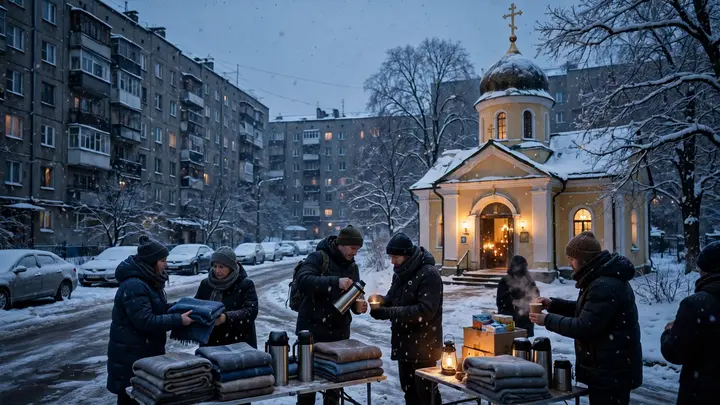
Picture the scene the statement is describing. It is minus 20 degrees in Kyiv. The heating has been off for weeks in tower blocks where families live fifteen floors up. The lights are out, the lifts do not run, and the cold seeps through concrete walls that were never built for a winter like this.
That is what "targeting energy infrastructure" means when winter does the rest. It is not an abstract line in a statement. It is a mother wrapping her children in every blanket in the flat, and a pensioner climbing dark stairs with a torch because the lift stopped days ago.
European Evangelical Alliance Statement on Ukraine
The EEA statement does not hedge. "We unequivocally condemn the deliberate and systematic targeting of civilians, homes, and critical energy infrastructure in cities and regions including Kyiv, Odesa, Kharkiv, Dnipro, Sumy, and the Lviv region […] during extreme winter conditions", it says. For the alliance, those attacks "constitute grave violations of international humanitarian law and fundamental moral principles".
The statement goes further, saying the attacks "stand in direct contradiction to the Gospel of Jesus Christ and to the God-given dignity of every human being". It adds plainly: "War cannot be justified by political ambition, historical narratives, or religious language." That last line matters, because the statement also rejects "any misuse of Christian faith or church authority to legitimize violence, aggression, or domination".
Churches and believers, the EEA says, are "called to be witnesses to truth, peace, justice, and compassion, never accomplices to injustice or terror". It is a line aimed at anyone who would dress up a war in religious language, and it echoes the stand other Christian leaders have taken when faith is used to bless violence, as the US House hearing on the persecution of Christians in Nigeria showed in US House to Hold Hearing on Nigeria Christian Persecution.
Kyiv Minus 20: The Hardest Winter of the War
Evangelical Focus reports that Kyiv has endured weeks of extreme hardship, with attacks on the energy system since 9 January directly affecting electricity supply to the capital and other cities. Temperatures have reached minus 20 degrees. Many people have been without heating for almost the entire month.
Mariana Laskava, who lives in Kyiv and works for the international evangelical organisation Word of Life, told the outlet that this winter is much colder than in recent years. Her family had always managed through winter thanks to electric heating, she said, but now the electricity and heating systems are deliberately bombed in an attempt to demoralise the people. The war is approaching its fourth year, and exhaustion is setting in alongside the cold.
The EEA is "particularly alarmed" that the attacker is "a state holding permanent membership in the UN Security Council, a role that carries responsibility to safeguard peace and protect civilians". The statement warns that "the continued disregard for these responsibilities undermines international order and deepens global insecurity". It is unusual language for a church body, and it is deliberate: the country charged with keeping the peace is, in the alliance's words, the one breaking it.
That alarm is not new for the EEA. Its general secretary, Jan Wessels, visited Kyiv last June, met Prime Minister Denys Shmigal on 24 June, and told Christian leaders there that millions of European evangelicals stood close to the Ukrainian people. He described nightly bombings on the capital that occured during his visit, and the suffering of non-combatant civilians, including women and children, in a trip that gives the statement a personal edge.
What the EEA Is Asking Churches and Governments to Do
The statement calls on "governments and international institutions, including the UN, to condemn the attacks, uphold the UN Charter, and pursue accountability for violations of international law". It does not ask for sympathy. It asks for condemnation, for the Charter to be upheld, and for those responsible to be held to account.
It asks "churches, Christian leaders, and faith communities across Europe and beyond to speak clearly, pray persistently, and act compassionately for Ukraine". Speak, pray, act: three verbs, in that order. The speaking comes first, because silence, the statement implies, is itself a choice. Christian leaders have taken the same public-stand approach on other issues this year, including the 30 leaders who urged UK action on AI killer robots in 30 Christian Leaders Urge UK Action on AI Killer Robots. Christians under pressure in other parts of the world have made the same plea, including the believers in West Bengal who were denied burial and attacked, as reported in West Bengal Christians Denied Burial and Attacked.
Finally, the EEA urges "all people of goodwill to continue humanitarian support and to work toward a just and lasting peace rooted in truth and justice". It stresses its "solidarity with the churches and people of Ukraine, who continue to serve, pray, and hope amid immense suffering". The statement closes with prayer "for an immediate end to the violence and for a future of justice, peace, and restoration for Ukraine and for Europe".
The alliance says it "remains committed to advocating for peace that protects the innocent, confronts evil, and seeks reconciliation without denying truth". That last phrase — reconciliation without denying truth — is the hardest part of the whole statement. It is easy to call for peace. It is harder to insist that peace must not be built on pretending the attacks never happened.
Winter in Kyiv will not wait for diplomacy. The cold is here now, the heating is off now, and the churches that have become shelters, warehouses and volunteer hubs are carrying a load they were never built for. The EEA has said what it believes, clearly and publicly. What happens next depends on whether governments and churches do what the statement asks: speak clearly, pray persistently, and act compassionately, before another cold night passes in the dark.
Frequently asked questions
The EEA expressed "deep sorrow and grave concern over the intensified missile and drone attacks carried out against Ukrainian cities and civilian infrastructure since the beginning of 2026", condemned the targeting of civilians, homes and energy infrastructure, and called the attacks grave violations of international humanitarian law.
Kyiv, Odesa, Kharkiv, Dnipro, Sumy, and the Lviv region. The statement says the targeting of civilians, homes and critical energy infrastructure in those places took place during extreme winter conditions.
Evangelical Focus reports temperatures reaching minus 20 degrees in Kyiv, with attacks on the energy system since 9 January affecting electricity supply. Many people have been without heating for almost the entire month.
The EEA is a network that seeks to represent some 23 million evangelicals across Europe. Its general secretary is Jan Wessels, a pastor from the Netherlands who visited Kyiv in June and met Prime Minister Denys Shmigal.
It calls on governments and the UN to condemn the attacks, uphold the UN Charter and pursue accountability, asks churches to speak clearly, pray persistently and act compassionately, and urges all people of goodwill to continue humanitarian support and work toward a just and lasting peace.
🔔 Don't Miss the Next Story!
Get breaking Christian news on your phone before everyone else — allow notifications when prompted, or join our newsletter below!
But the most surprising part of this story is yet to come — keep reading.
🙏 Have a Testimony to Share?
Has God done something amazing in your life? Or want us to cover a specific story? Send your testimony or story request via WhatsApp — your story could encourage thousands!
💬 Comments
Share your thoughts below. Be kind and respectful. If this story touched you, let us know in the comments!