West Bengal Christians Denied Burial and Attacked
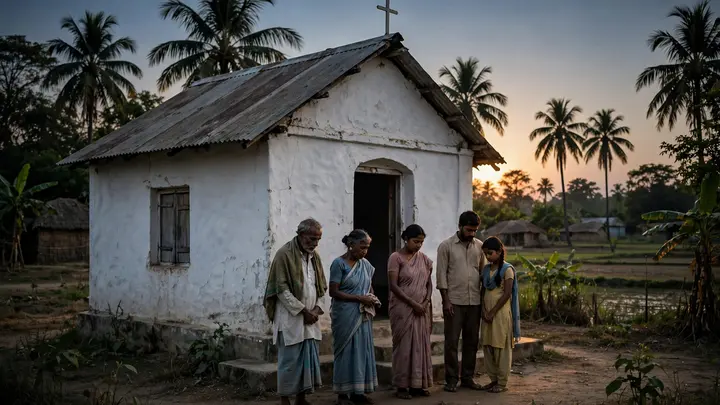
A fact-finding team led by Trinamool Congress MP Sagarika Ghose has reported that Christians across rural West Bengal are being denied burial rights, cut off from water supplies, socially ostracised and intimidated by Hindutva vigilante groups. The findings, reported by The Print on 10 November 2026, describe a pattern of targeting that reaches into the most basic parts of village life: where a family can bury its dead, where it can draw water, and whether it can pray without fear.
Think about what burial means to a grieving family. It is the last act of love for someone who has died, carried out with neighbours standing close and prayers spoken over the grave.
In Paschim Medinipur, that act was torn apart. A buried Christian body was exhumed and forcibly cremated, a desecration that turns grief into humiliation and tells a whole village that even its dead are not safe.
The fact-finding team visited Christian communities across rural districts and heard the same story in different villages: pressure that is rarely a single dramatic event, but a slow squeeze. Water supplies restricted, families cut off from neighbours, threats from vigilante groups that make people think twice before walking to church on a Sunday. It is the kind of intimidation that rarely makes national headlines, which is exactly why a team led by a member of parliament went to look.
Sagarika Ghose Fact-Finding Report West Bengal Christians
Sagarika Ghose, a Trinamool Congress MP, led the team that investigated the targeting of Christian communities across rural West Bengal. Her report, carried by The Print on 10 November, documents denial of burial rights, restrictions on water supplies, social ostracism and intimidation by Hindutva vigilante groups.
The numbers behind the report give it weight. India Hate Lab counted at least 60 incidents targeting Christians across 13 districts in West Bengal between 13 May and 20 September 2026. The Bangiya Christiya Pariseba, a body representing Christians in the state, alleged 26 incidents in three months, with only 11 FIRs filed by police.
That gap between incidents and police reports matters. When only 11 of 26 alleged incidents result in a first information report, families learn a hard lesson: reporting an attack may bring nothing, and the attackers may learn nothing either. The pattern is familiar to Christians facing pressure elsewhere in India, where congregations have already had to scale back their public life, as Maharashtra Churches Scale Back Bible Camps for Children reported.
Nationally, the trend is stark. The United Christian Forum logged 127 incidents of violence against Christians in India in 2014, rising to 834 in 2024. The West Bengal figures sit inside that national rise, but the burial denials give the state's story its own cruel shape.
Burial Denied and a Body Exhumed in Paschim Medinipur
The exhumation in Paschim Medinipur is the detail that stops you cold. A Christian body, already buried with the dignity every family expects for its dead, was dug up and forcibly cremated. There is no way to soften what that means to the family, or to the neighbours who watched it happen and understood the message.
Burial denial is not a new weapon against Indian Christians. It works because it strikes at the moment when a family is weakest, and because it forces a choice no family should have to make: abandon your faith's burial rites, or abandon your village. The Ghose report found families facing exactly that choice, alongside restrictions on water that make daily life itself a negotiation.
Water, burial, prayer. These are not luxuries or political demands.
They are the minimum of a life lived in a village, and the report says they are being used as levers against people whose only offence is their faith. The vigilante groups behind the intimidation operate in the open, the report suggests, because they expect no consequences.
Narayantala Church Attack and the Call for Intervention
In the most recent incident documented by the team, a new church at Narayantala in South 24 Parganas was attacked. A new church is a fragile thing: a congregation that has saved and built and prayed its way to a roof of its own, only to see it targeted before it has even settled into the life of the village.
Opposition parties and Catholic bishops have written to India's Home Minister seeking urgent intervention. The letters ask for what the report's numbers already suggest is missing: protection for burial grounds, action against vigilante groups, and police complaints that are actually registered and investigated.
The scale of the problem beyond West Bengal is underlined by a seperate report released on Tuesday 10 November, which documented 322 hate crimes against Muslims and Christians across India from January to September 2026, resulting in 54 deaths. That wider picture is the context for what is happening in Bengal's villages, not the story itself: the story is the families in Paschim Medinipur and Narayantala, and whether anyone in authority will answer their letters.
For now, the Christians of rural West Bengal are waiting. They are waiting to see whether a parliamentarian's report changes anything, whether the Home Minister replies, and whether the next funeral in their village can happen in peace.
The dead, at least, should be allowed to rest, and the living should be allowed to pray. In West Bengal this November, both of those simple things are in doubt.
Frequently asked questions
Trinamool Congress MP Sagarika Ghose led the team, which investigated the targeting of Christian communities across rural West Bengal. Its findings were reported by The Print on 10 November 2026.
Denial of burial rights, restrictions on water supplies, social ostracism and intimidation by Hindutva vigilante groups, including a buried Christian body exhumed and forcibly cremated in Paschim Medinipur.
A new church at Narayantala in South 24 Parganas was attacked in the most recent incident documented by the fact-finding team.
India Hate Lab counted at least 60 incidents targeting Christians across 13 districts between 13 May and 20 September 2026. The Bangiya Christiya Pariseba alleged 26 incidents in three months, with only 11 FIRs filed.
Opposition parties and Catholic bishops have written to India's Home Minister seeking urgent intervention to protect Christians in West Bengal.
🔔 Don't Miss the Next Story!
Get breaking Christian news on your phone before everyone else — allow notifications when prompted, or join our newsletter below!
But the most surprising part of this story is yet to come — keep reading.
🙏 Have a Testimony to Share?
Has God done something amazing in your life? Or want us to cover a specific story? Send your testimony or story request via WhatsApp — your story could encourage thousands!
💬 Comments
Share your thoughts below. Be kind and respectful. If this story touched you, let us know in the comments!