Today: Food For The Poor Jamaica Marks One Year After Hurricane Melissa With 255000 Helped
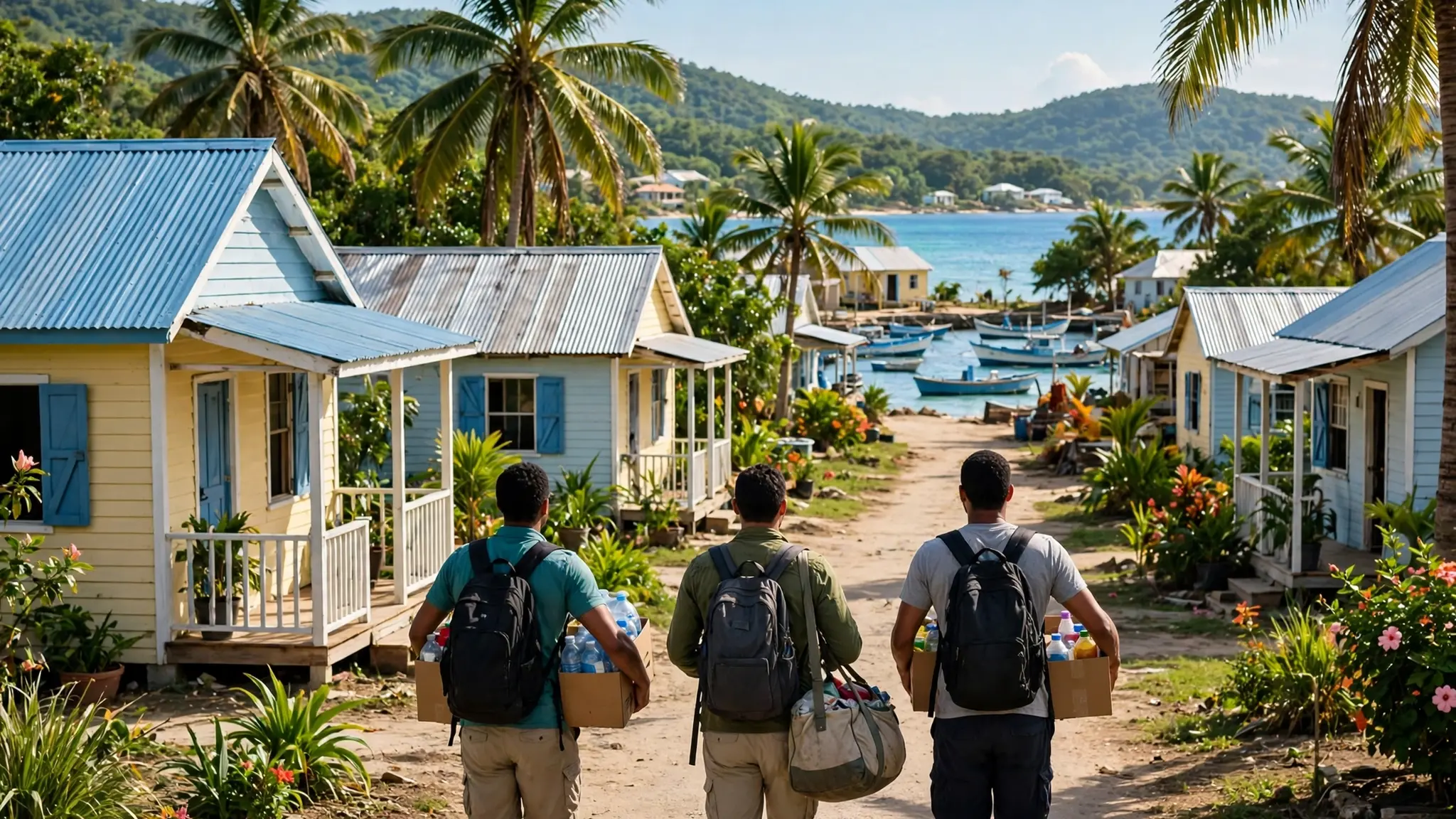
One year ago, in a single day, Hurricane Melissa changed Jamaica. Roofs were torn away, farms and fishing boats were destroyed, schools were forced to close, and families who had already endured Hurricane Beryl faced rebuilding their lives again, the Jamaica Gleaner reports. On 3 November 2026, Food For The Poor Jamaica looked back on that year and counted what its response had reached: more than 255,000 people with food, water and shelter, more than 1,150 families helped back into safe and secure homes, and 23 families who had lost everything given new or rebuilt homes.
Hurricane Melissa made landfall in Jamaica on 28 October 2025, the Gleaner reports. The charity’s one-year account, published by the Gleaner on 3 November 2026, says the response was made possible through donors, volunteers, church groups and community partners.
The same figures appear in a Jamaica Observer column published on 2 November 2026, which repeats the charity’s account of the year since the storm.
The human spine of the story is not a single named survivor in either report, but a pattern the Gleaner describes in plain terms: churches and community spaces became distribution centres, neighbours checked on neighbours, and families worked together to rebuild. That pattern is the story. In a year of blocked roads and disrupted power and water, the Gleaner reports, charity staff kept working even while their own homes were damaged, operating warehouses, coordinating relief and moving supplies into affected communities.
Food For The Poor Jamaica Hurricane Melissa Recovery 211 Projects
Beyond food, water and shelter, the organisation supported 211 recovery projects across affected communities, the Gleaner reports. Those projects included restoring schools and water points, and assistance for fishing boats, beehives, farms and other livelihoods.
A fishing boat, a beehive and a farm are not relief supplies in the usual sense. They are the means by which a family earns its next meal, and restoring them is a longer bet on recovery than a food parcel alone.
The response was powered by more than 3,800 volunteers who packed and delivered relief supplies, working alongside more than 80 church and community partners, the Gleaner reports. The Jamaica Observer column repeats the same volunteer and partner figures, again from the charity’s account. Eighty partners is a large network, and the Gleaner’s description of christain churches as distribution centres explains how that network reached families in places where roads were blocked and services were down for weeks.
Food For The Poor Jamaica emphasises that none of the work would have been possible without donors, the Gleaner reports. Emergency contributions in the immediate aftermath, and ongoing monthly support since, helped provide assistance throughout the recovery.
The charity also says it is releasing a Hurricane Melissa One-Year Impact Report alongside its statement, in both United States and Jamaican dollars, the Gleaner reports.
The Gleaner notes that the recovery effort faced serious challenges. Roads were blocked, and electricity and water supplies remained disrupted in some areas for weeks.
Staff faced damage to their own homes while continuing to operate warehouses and move supplies, the Gleaner reports.
Jamaica Hurricane Melissa One Year Later Families Still Waiting
Despite the progress, significant needs remain, the Gleaner reports. Many families are still waiting for safe, secure housing, while children and communities continue to await repairs to schools and other essential facilities.
The Jamaica Observer column makes the same point in the same terms, saying significant needs remain as the charity enters its second year of recovery work.
As Food For The Poor Jamaica enters its second year of recovery work, it will focus on households and communities with the fewest resources to fall back on, while continuing long-term rebuilding and restoration, the Gleaner reports. That focus is a choice about who gets helped next, and it is stated as the charity’s own plan, not as a promise already kept. Readers should watch for the next report to see whether that focus reaches the families still waiting for housing and school repairs.
The Jamaica Observer column adds a separate, human glimpse of the year that the Gleaner’s figures do not carry. Writing about a benefit concert for elderly survivors, columnist Jean Lowrie-Chin describes a convoy arriving in western parishes to find scorched landscape and rubble where buildings once stood.
At Petersfield School shelter, she writes, emotional elders spoke of their homes falling apart around them.
Food For The Poor Jamaica is a charitable organisation dedicated to assisting vulnerable communities across Jamaica, the Gleaner reports. For more than 40 years, the Gleaner reports, it has responded to Jamaica’s most pressing needs while helping communities build resilience.
Readers can follow Jamaican gospel music in Favored Ace Rededicates Life to Christ: Dancehall Gospel Singer Leaves Secular Music and in Kevin Downswell Joy Is Here Album Released October 30 2026. Churches turning land into homes is covered in YIGBY Churches Turning Land Into Affordable Housing: Brooklyn 385 Homes Open in 2026, and campus revival in UniteUS South Alabama Revival: 596 Decisions and 52 Baptisms October 27 2026.
When the second year begins, the question will not be how many people were reached in the first year, but whether the families still waiting for a safe home and a repaired school are reached in the second. The charity has named its focus, published its figures, and promised an impact report, and the volunteers and church partners who carried the first year will be watching, with the families, to see whether the second year keeps the promise the first year made. That is where this story goes next, and the next anniversary will be judged by the houses that are finished, not only by the supplies that were delivered.
Frequently Asked Questions
On 28 October 2025, the Jamaica Gleaner reports. This article marks one year since landfall, as reported by the Gleaner on 3 November 2026.
More than 255,000 people, more than 1,150 families back in safe homes, and 23 families given new or rebuilt homes, according to the charity’s account as reported by the Gleaner and the Observer. The figures are charity-reported, not independently audited.
211 recovery projects, including restoring schools and water points and assistance for fishing boats, beehives, farms and other livelihoods, the Gleaner reports, powered by more than 3,800 volunteers and more than 80 church and community partners.
Many families are still waiting for safe, secure housing, and children and communities await repairs to schools and other essential facilities, the Gleaner reports. The charity says its second year will focus on households with the fewest resources.
From two reports opened on 3 November 2026: the Jamaica Gleaner (3 November) and the Jamaica Observer (2 November). Both rest on the charity’s own release and impact statement; no independent audit or impact report was available, and none is quoted.
🔔 Don't Miss the Next Story!
Get breaking Christian news on your phone before everyone else — allow notifications when prompted, or join our newsletter below!
But the most surprising part of this story is yet to come — keep reading.
🙏 Have a Testimony to Share?
Has God done something amazing in your life? Or want us to cover a specific story? Send your testimony or story request via WhatsApp — your story could encourage thousands!
💬 Comments
Share your thoughts below. Be kind and respectful. If this story touched you, let us know in the comments!