Spain Train Crash Latest News: 68 Killed Near Toledo as Spanish Churches Offer Support to Victims
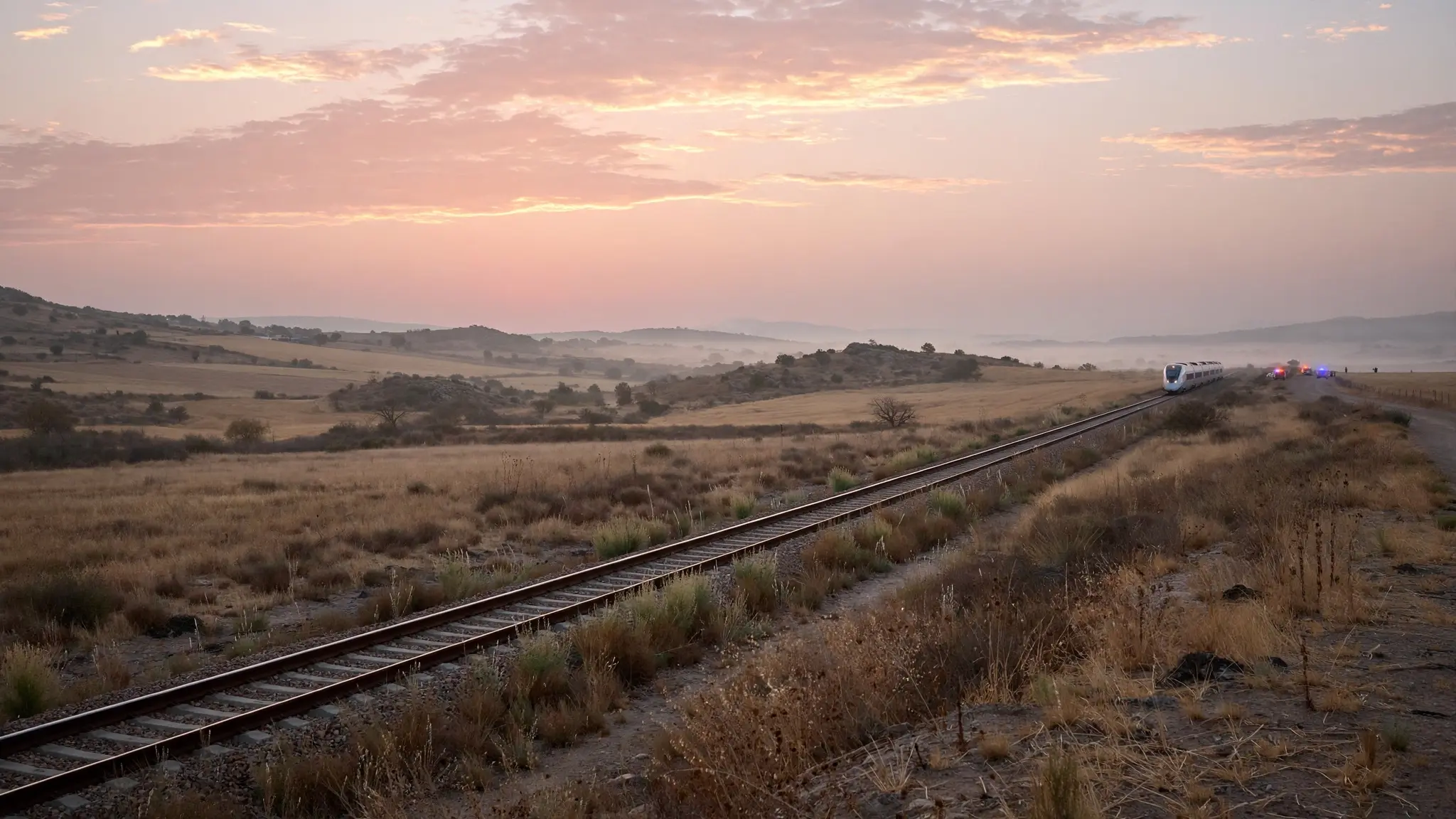
Antonio Garcia is 78 years old, and he ran toward the wreckage with what his pharmacy could offer. He carried first-aid materials, painkillers, tranquillisers, and blankets, and he found passengers who were calm in a way that stayed with him long after the morning ended.
Two high-speed trains, a Renfe AVE train and an Iryo train, collided on Wednesday 28 October 2026, just before 9am, between Urda and Los Yebenes in Toledo province, about 150 km south of Madrid on the Madrid-Andalusia corridor. Reports put the death toll at at least 68 people, with nearly 80 injured, but authorities described the toll as provisional and likely to rise, so the figure of 68 must be read as reported at the time, not as a final count, and figures may change as rescue and recovery work continues.
Reuters reports the crash is the deadliest in Spain since 2013, and the second collision between high-speed trains on the same line in nine months, after an accident in January 2026 at Adamuz, Cordoba, on 18 January that killed 46 people. Spain's transport minister spoke of an error and of inexplicable circumstances that led to the collision, as reported, but the cause remains under investigation and no blame or technical cause is assigned here.
In the small town of Urda, help did not wait for official orders. Residents rushed to the scene, and Garcia's account, given to Reuters, gives the morning its human shape. He described a passenger who had lost an arm calmly asking for an ambulance, and another passenger saying his final goodbyes to his family, and he remembered the last words he heard.
His last words were "God is good". For those of us who are believers, these are very beautiful words.
Spain Train Crash: FEREDE Calls Churches to Support Victims and Families
The Federation of Evangelical Religious Entities of Spain, known as FEREDE, expressed condolences on Wednesday and called on churches to offer support to those affected. The federation invited evangelical communities in Castilla-La Mancha, Madrid, and Andalusia to make themselves available to the families and survivors, and to pray for those who are suffering. It was a practical call as much as a prayerful one, asking churches to be present where the need was, not only to speak about it from a distance.
The statement was signed by president Esteban Munoz de Morales Mohedano and executive secretary Carolina Bueno Calvo. It also requested a rigorous and transparent investigation, and measures to prevent another tragedy, and it thanked emergency, healthcare, and law-enforcement teams for their work.
Elsewhere in Spain, the Evangelical Church of Valls, in Tarragona, issued a Catalan message described as an urgent reason for prayer for the victims and their families. It was a local response, in a local language, for a national tragedy. People prayed where they were, for people they had never met.
Toledo Train Collision: What Is Known and What Remains Under Investigation
What is known is the place, the time, and the two trains involved, and the fact that the collision happened on a busy high-speed corridor south of Madrid. What is not known, and what must not be guessed at, is the technical cause, and the reporting is clear that the investigation is still under way. The transport minister's words about an error and inexplicable circumstances are reported here as his words, not as a finding.
The comparison with the January crash at Adamuz will be part of that investigation in the public mind, even if officials do not yet draw a link. Two collisions on the same line in nine months, with 46 people killed in the first and at least 68 reported killed in the second, is a pattern that demands a full and open account, and FEREDE's call for a rigorous and transparent investigation speaks directly to that need.
For readers following how churches in Spain have been growing in recent years, the wider picture is set out in the report of Spain's Catholic revival and 14,000 adult baptisms. That story is about a different kind of news from Spain.
The wider picture of Christians facing sudden loss and waiting for news is also visible in the attack on a church in Ekiti, Nigeria, where families waited for news of loved ones taken from a service, and in the report of six Christians arrested in Egypt over a TikTok video. Those stories are very different in cause, and this article does not link them by blame, only by the shared experience of families waiting, praying, and hoping for word.
Spain's train crash is not a persecution story, and it should not be read as one. The findings are set out in the findings that conditions worsened in 55 percent of countries assessed and improved in none.
Spain Train Crash Latest News: Families Wait as Recovery Continues
The next days will bring the slow work of identification, of hospital updates, and of funerals, and the numbers in the headlines will give way to names in local papers and church notices. A church that makes itself available in the first week must still be available in the weeks after, when the cameras have gone.
Garcia's blankets and painkillers belong in the record of this crash all the same. They show what a community does when disaster arrives without warning. Faith, in Urda that morning, looked like turning up with what you had.
The investigation will take time, and the toll may still change, and the families will still be waiting when both of those things happen. What will the inquiry find, and will it be open enough for the families to trust, and will the churches that offered help on Wednesday still be standing beside them when the answers finally come?
Frequently Asked Questions
Reports put the death toll at at least 68 people, with nearly 80 injured, but authorities described the toll as provisional and likely to rise, so figures may change as rescue and recovery work continues.
The collision happened on Wednesday 28 October 2026, just before 9am, between Urda and Los Yebenes in Toledo province, about 150 km south of Madrid, involving a Renfe AVE train and an Iryo train.
The cause remains under investigation and has not been established; Spain's transport minister spoke of an error and inexplicable circumstances, as reported, but no technical cause or blame is assigned in this article.
FEREDE expressed condolences and called on churches, especially in Castilla-La Mancha, Madrid and Andalusia, to make themselves available to families and survivors, to pray for those suffering, and it requested a rigorous, transparent investigation.
In Urda, residents rushed to help, including 78-year-old pharmacist Antonio Garcia, who brought first-aid materials, painkillers, tranquillisers and blankets to the scene.
🔔 Don't Miss the Next Story!
Get breaking Christian news on your phone before everyone else — allow notifications when prompted, or join our newsletter below!
But the most surprising part of this story is yet to come — keep reading.
🙏 Have a Testimony to Share?
Has God done something amazing in your life? Or want us to cover a specific story? Send your testimony or story request via WhatsApp — your story could encourage thousands!
💬 Comments
Share your thoughts below. Be kind and respectful. If this story touched you, let us know in the comments!