Sagada Panag-aapoy Fire Ceremony Honours the Dead on All Saints Day 2026 in the Philippines
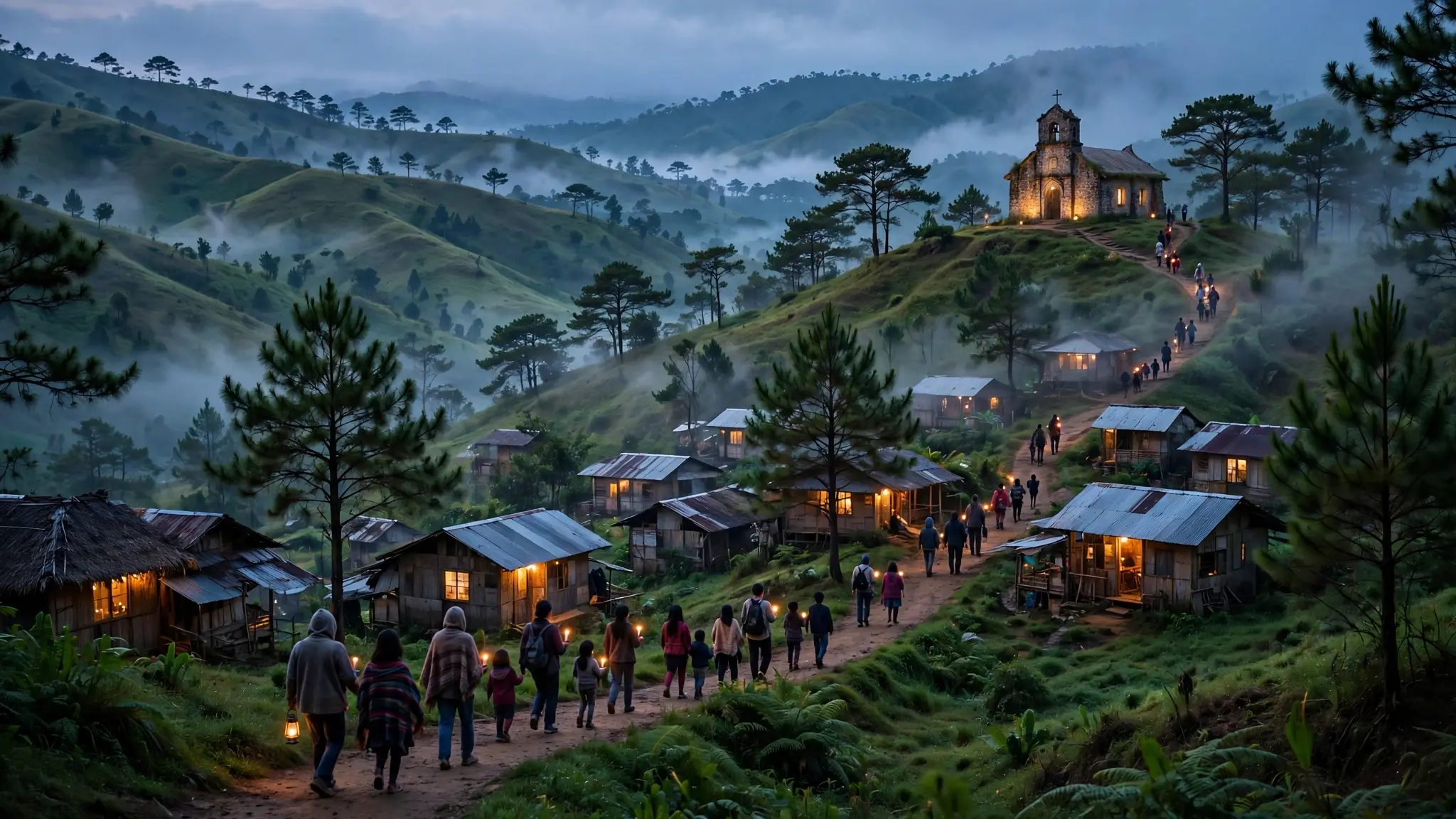
Cybil Domoguen came home to Sagada this year with her father and a bundle of pine sticks twenty inches long, to honour the grandparents who had raised her there. The 31-year-old teacher carried the sticks to the mountain cemetery on 1 November 2026, where tiny pinewood bonfires burned through the night and turned a fog-shrouded hilltop into what AFP described as a vast, fragrant altar of light. UCA News and The Manila Times, both carrying the AFP report, say the fires burned for more than 2,000 dead in a four-hectare burial ground owned by the Episcopal Church of Saint Mary the Virgin.
The ceremony is called Panag-aapoy, which means to light a fire, and it has marked All Saints' Day in Sagada for the past 122 years, Winston Garlejo Menong told AFP. Menong is the director of the Episcopal Church of Saint Mary the Virgin, which owns the cemetery. As night crept in and darkness blanketed the burial ground, the hum of activity and thick smoke gave way to a sepulchral glow, with a small fire burning beside grave after grave. For Domoguen, the fire was not a display. It was a visit, made with her father, to the grandparents who had raised her.
Sagada Panag-aapoy All Saints Day Fire Tradition Philippines
Sagada sits in Mountain Province in the northern Philippines, in the Cordillera mountain region. Its residents adopted Christianity only after Spain ceded the Philippines to the United States in 1898, four centuries after Spanish friars had converted the people of the coasts to Catholicism, AFP reports. American Protestant missionaries encouraged Sagada's residents to bury their dead and light candles on their graves, Menong said. The pine fire grew out of that encouragement, shaped by the mountains themselves.
Menong gave the practice its meaning in a single line. In our Biblical context, Christ is the light, he said. Be it with candles or the pine sticks preferred in Sagada, lighting a flame is inviting the presence of Christ, and having fellowship with departed loved ones. The fire is not decoration and it is not a memorial in the abstract. It is a way of sitting with the dead, in the light, for one night, and saying that the bond of fellowship has not ended.
Sagada's first Christians burned pinewood because candles were expensive and their flames were easily snuffed out by wind, tourism officer Maria Teresa Abad told AFP. The aromatic, sap-rich pines that cover the Cordilleras burn briskly, with a sharp natural scent in the mountain air. What began as a poor family's answer to the wind became the signature of the night, and the smell of pine smoke is now inseparable from the memory of the dead in Sagada.
Domoguen's own words show why the ceremony survives. She told AFP it is very unusual that people actually come to the cemetery to watch, because usually a person comes to pray for a dead relative. If a grave does not have any visitors, she added, people make sure to light some sticks for them. No grave is left in darkness, because neighbours beleive every name deserves a flame.
Hanging Coffins Sagada and Respect for Panag-aapoy Ceremony
The people of Sagada did not always light flames over their dead, or even bury them. Before the missionaries arrived, the preferred practice was to hang coffins from the walls of cliffs or wedge them into the mouths of caves, a custom that only fully died out in 2010, Abad told AFP. Some of the hanging coffins can still be seen on nearby Sagada cliffs. Traditional burial beliefs associated caves and elevated burial places with the spirit's passage toward the ancestral realm, something burial would hinder, Abad said, and the high places also kept remains safe from wild animals and flooding.
Over time, Sagada's mild climate and abundant waterfalls turned the town into a popular refuge from the tropical heat, and the Panag-aapoy and the hanging coffins became tourist draws, AFP reports. That popularity has brought a tension Domoguen feels personally. Last year, she said, tourists were taking pictures of the mourners, which was uncomfortable. She added that the community has no problem with strangers, as long as they respect boundaries. Her boundary is simple: come to pray, or come quietly, but do not turn grief into a photograph.
The church and the local government have since taken steps to protect the ceremony. Picnic mats and drone photography were banned, and noisy, mobile-phone-toting tourists were kept well away from the graves and cautioned to observe respectful silence, AFP reports. The Philippine tourism ministry said in a seasonal advisory that Panag-aapoy is a sacred cultural tradition, not a festival or a tourism event. Menong was blunter, telling AFP that the solemnity of the practice was getting lost, and that it was turning into a show for onlookers.
Readers can follow related stories in Today: Philippines Marks All Saints Day as Marcos Urges Devotion to Others and Archbishop Warns Against Halloween, Pope Leo XIV Says Holiness Is for Everyone at All Saints Angelus November 1 2026, Pope Leo XIV to Celebrate All Souls Mass Today for the Dead No One Remembers, and India Christians Denied Graves for Their Dead on All Souls Day.
Next year, another bundle of twenty-inch pine sticks will be carried up the hill by another daughter, for another grave, in a ceremony older than anyone now living in Sagada. The question the town will face again is the same one it faced this year: whether the world can learn to watch a sacred fire without trying to own it.
Frequently Asked Questions
Panag-aapoy means to light a fire. It is the ceremony in Sagada, Mountain Province, in which families burn pinewood sticks beside the graves of loved ones on All Saints' Day, AFP reports via UCA News and The Manila Times.
It has marked All Saints' Day in Sagada for the past 122 years, according to Winston Garlejo Menong, director of the Episcopal Church of Saint Mary the Virgin, which owns the cemetery, AFP reports.
Sagada's first Christians burned pinewood because candles were expensive and their flames were easily snuffed out by wind, unlike the brisk burn of the aromatic, sap-rich pines of the Cordilleras, tourism officer Maria Teresa Abad told AFP.
The 31-year-old teacher returned to Sagada with her father and a bundle of 20-inch pine sticks to honour the grandparents who had raised her there, AFP reports.
No. UCA News and The Manila Times both carry the same AFP dispatch, with the same quotations and figures, so this article rests on a single AFP report carried by two outlets, and that limit is disclosed here.
🔔 Don't Miss the Next Story!
Get breaking Christian news on your phone before everyone else — allow notifications when prompted, or join our newsletter below!
But the most surprising part of this story is yet to come — keep reading.
🙏 Have a Testimony to Share?
Has God done something amazing in your life? Or want us to cover a specific story? Send your testimony or story request via WhatsApp — your story could encourage thousands!
💬 Comments
Share your thoughts below. Be kind and respectful. If this story touched you, let us know in the comments!