India Top Court Halts Demolition of Tamil Nadu Church Spire
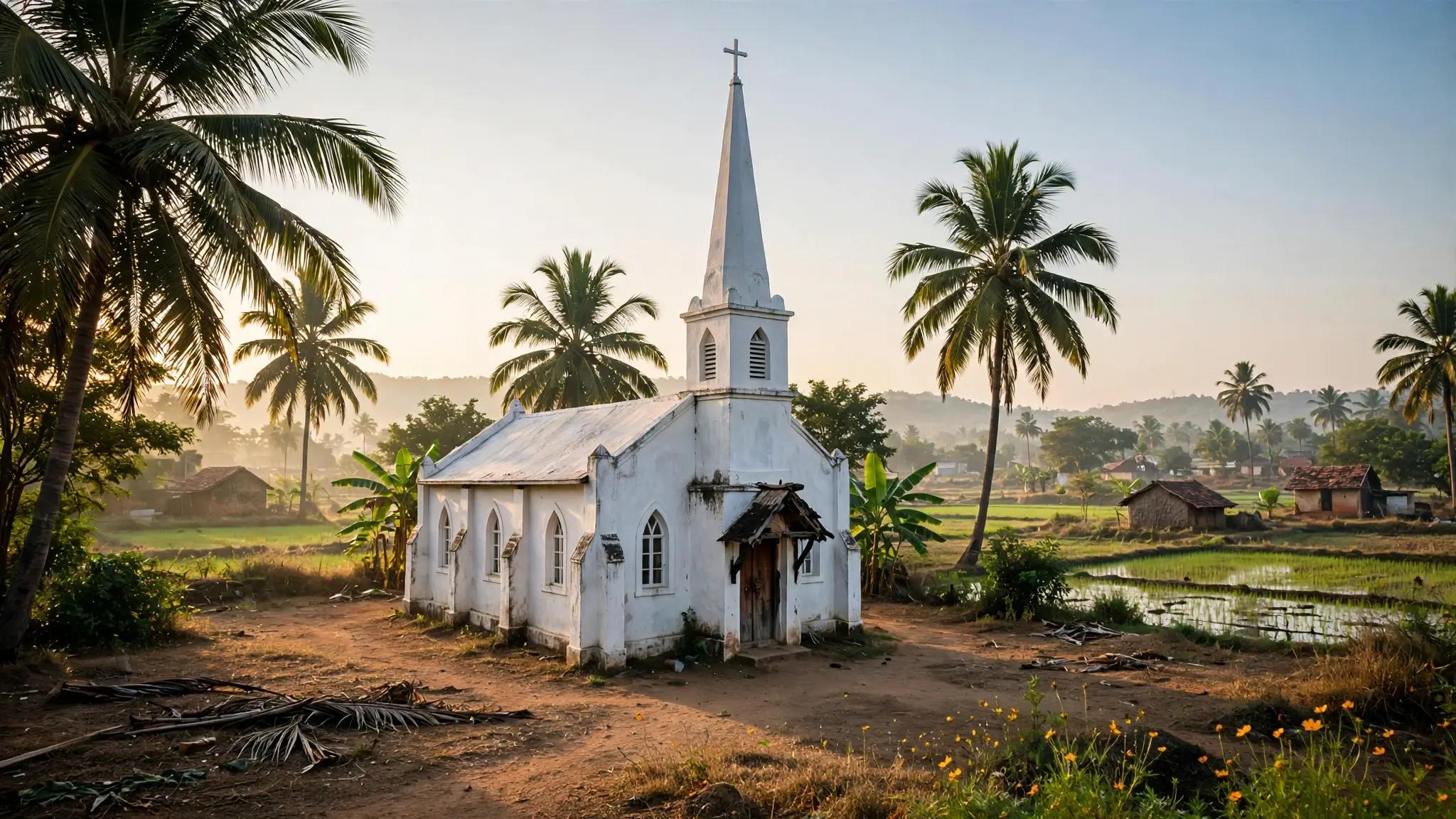
Ten Christian families in a Tamil Nadu village were weeks away from watching their church spire come down. Then, on 16 October 2026, India's Supreme Court said wait, and the demolition crews stayed away.
The Supreme Court bench of Justices Vikram Nath, R. Mahadevan and Aparesh Kumar Singh, in its interim order of 16 October, restrained authorities from carrying out the demolition and ordered them to submit their explanation within four weeks, UCA News reported on 19 October. The church stands in Thippanampatti village in Tenkasi district and belongs to the Church of South India (CSI).
The Madras High Court, the top court in the state, had ordered the demolition on 1 October after the petitioner, Balakrishna Prabhu, alleged the spire was being illegally constructed without prior permission from authorities. The High Court directed the Tenkasi District Collector to pull the spire down and restore the building to a community hall within four weeks.
That four-week clock had not run out when the Tirunelveli Diocesan Trust Association, which manages the church, reached Delhi with a Special Leave Petition challenging the High Court's judgment. Senior Advocate Huzefa Ahmadi appeared for the Trust before the Supreme Court.
We are happy that the top court has ordered a status quo and our church spire will not be demolished now.
That was the reaction of Reverend Ponraj of the CSI, speaking to UCA News on 19 October. For a congregation of about ten families in a village the High Court counted as holding roughly 450 Hindu families, the stay is the difference between a church and a hall.
Thippanampatti Church Spire: A Community Hall That Became a Church
The dispute turns on paperwork, not theology. In 2014, local authorities granted the Trust permission to construct a community facility called the "Church of South India Community Hall". The building has been used for prayer services by CSI members since 2016, and a church spire was added that year, according to Bar and Bench.
On 4 March 2024, the Trust sought recognition of the community hall as a place of worship and permission for the church tower. The District Collector rejected the application on 25 June 2024, refusing permission to convert the hall into a church and to construct the tower. The Trust challenged that refusal before the Madras High Court.
Before the High Court, the state argued that the original permission covered only a community hall and that no approval had been obtained for the spire. It relied on Rule 4(3) of the Tamil Nadu Panchayats Building Rules, 1997, under which prior approval of the District Collector is mandatory for a site intended for public worship. The High Court accepted the state's justfication, including concerns that there appeared to be a "rift between two religious groups", and dismissed the challenge.
The Trust has argued before the Supreme Court that the Collector's and High Court's orders were based on non-existent law and order issues and violate the Christian minority community's fundamental rights under Articles 14, 25 and 26 of the Constitution. Those articles cover equality before the law, freedom of religion, and the freedom to manage religious affairs.
Supreme Court Stay: What Happens Next in Tenkasi
The stay is interim, not final. The Supreme Court has sought responses from the Tamil Nadu government and other respondents, and the case will return after those replies arrive. Nothing in the 16 October order decides who ultimately wins; it preserves the building while the court hears the argument.
Readers following religious-freedom court cases can compare this with the UK church fighting in court for the right to preach Jesus on British streets, with the Pakistan Supreme Court ruling on Christian Qaisar Ayub, and with the persecution report finding conditions worsened in 55 percent of countries surveyed.
For now, the spire stands, the congregation worships, and the state has four weeks to explain itself to India's highest court. The Trust's lawyers will argue that a community hall where Christians have prayed for a decade is, in fact, a church. The state will argue that a permission never given cannot be presumed.
When the responses land and the bench reconvenes, ten families in Thippanampatti will learn whether their spire is a protected place of worship or an unauthorised structure after all. Until then, the highest court in India has given them the one thing the demolition order would not: time.
Frequently Asked Questions
On 16 October 2026, a bench of Justices Vikram Nath, R. Mahadevan and Aparesh Kumar Singh stayed the demolition of a Church of South India church spire in Thippanampatti village, Tenkasi district, and ordered government officials to submit their explanation within four weeks.
On 1 October 2026, the Madras High Court ordered the demolition of the spire and directed the Tenkasi District Collector to restore the building to a community hall within four weeks, after finding the spire had been built without prior permission.
The Tirunelveli Diocesan Trust Association argues the orders were based on non-existent law and order issues and violate the Christian minority community's fundamental rights under Articles 14, 25 and 26 of the Constitution.
In 2014, authorities granted permission to build a community facility called the "Church of South India Community Hall". The building has been used for prayer services since 2016, when a spire was added, and the Trust sought formal recognition as a place of worship in March 2024.
No. The 16 October order is interim: it preserves the status quo and seeks responses from the state within four weeks. The case will return to court after those replies, and the final outcome is not yet decided.
🔔 Don't Miss the Next Story!
Get breaking Christian news on your phone before everyone else — allow notifications when prompted, or join our newsletter below!
But the most surprising part of this story is yet to come — keep reading.
🙏 Have a Testimony to Share?
Has God done something amazing in your life? Or want us to cover a specific story? Send your testimony or story request via WhatsApp — your story could encourage thousands!
💬 Comments
Share your thoughts below. Be kind and respectful. If this story touched you, let us know in the comments!