UK Church Repair Fund Rejects 90% of Churches
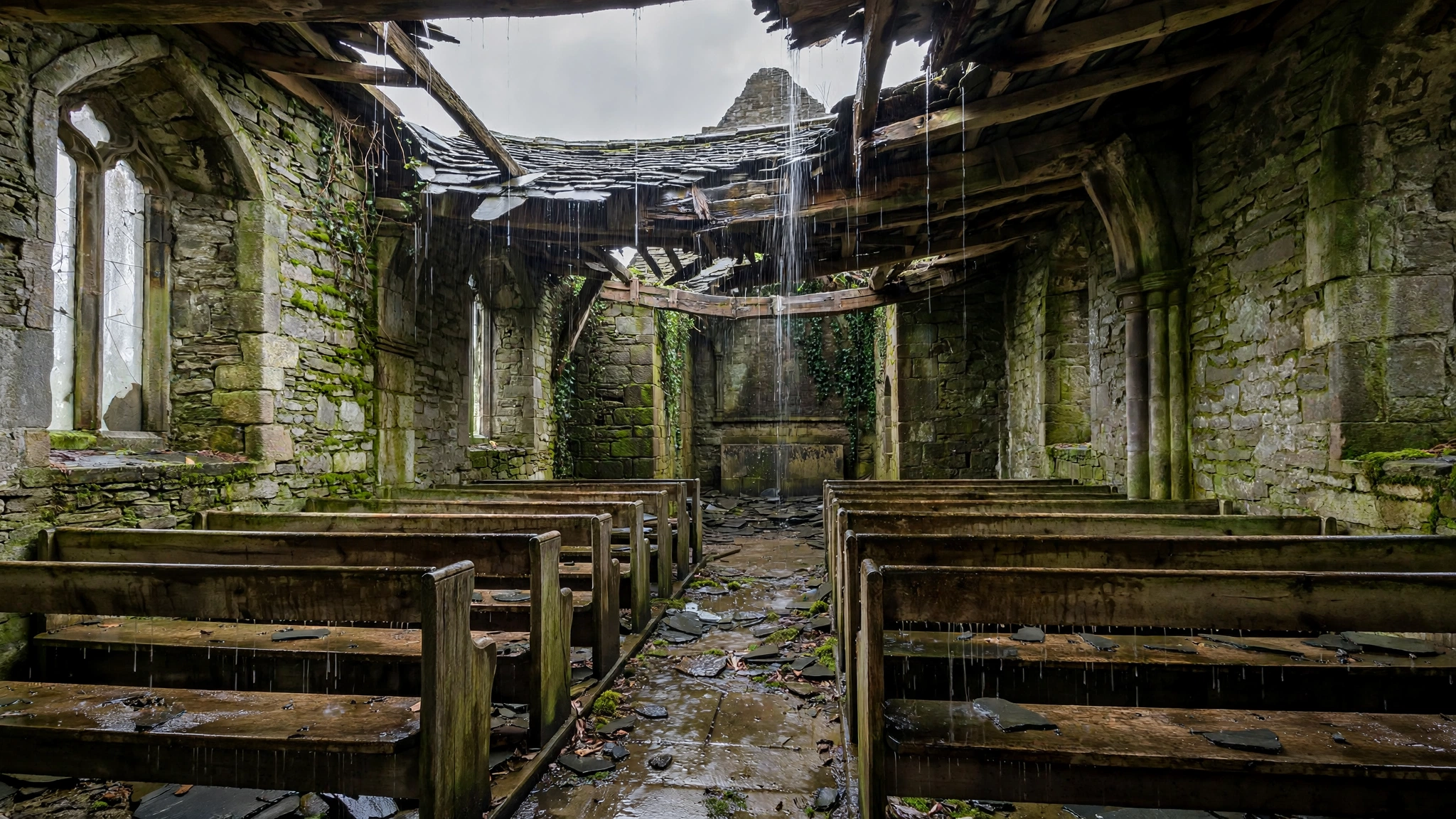
Rain falls onto the wooden pews of St Sampson's Church, and nobody in the village can stop it. The church was built in 1333, its congregation is 15 to 25 strong on a Sunday, and the new government fund meant to save buildings like it has just said no.
Judith Ayers, 63, is the churchwarden and lay leader of St Sampson's, South Hill, near Launceston in Cornwall. She has had no vicar for 18 months, leads Sunday services herself, runs fundraising, building work and weekly toddler mornings — all voluntarily — in a village with no shop, no pub, no school, no jobs and no public transport.
Her church is one of the more than 90% of applicants turned down by the UK government's new Places of Worship Renewal Fund, according to the National Churches Trust. The fund, introduced in May 2026, replaced the Listed Places of Worship Grant Scheme, which had paid VAT on repairs and maintenance for listed places of worship since 2001.
Places of Worship Renewal Fund: 93 of 1,143 Churches Invited
The numbers explain the anger. Round one of the new fund received 1,143 expressions of interest, and only 93 were invited to make a full application. The National Churches Trust put total demand at some £242 million — more than 20 times the money available per round.
The fund grants £23 million a year until 2030, split across two rounds of roughly £11.5 million each. The old scheme's budget was £42 million, and under it every listed church in England could access money. The new scheme is a competetion in which most get nothing, leaving many churches mid-project with a 20% hole in their budgets.
St Sampson's needs £150,000 to fix the hole in its roof. It has already paid £23,000 in VAT to HM Revenue and Customs, eating into funds earmarked for the repair. In seven years, the parish of 500 people has raised just £30,000.
It just feels so wrong that they've taken it away with a replacement that isn't a replacement. In all our budgeting, being able to claim back the VAT was a vital point.
That is Judith Ayers, speaking to The Times, and her sentence captures the whole scandal in two lines. Churches budgeted for years around a VAT refund that vanished, and the replacement fund rejects almost everyone who applies.
Church VAT Bill: Sunningdale Faces £275,000 After Rejection
St Sampson's is not alone. Holy Trinity, Sunningdale in Berkshire, had raised £1.7 million to become a community hub with a food bank and café. It was also rejected, and now faces an unexpected £275,000 VAT bill, having already spent £100,000 on fees and plans.
Neither church passed the fund's first stage, which prioritises applicants in the bottom three deciles of the Index of Multiple Deprivation — an official measure using 55 indicators. National Churches Trust head of policy Ben Sims called using the deprivation index for churches "extremely clumsy" and warned of 21,000 listed buildings potentially crumbling.
The argument is simple. A medieval church in a prosperous-looking village can still be falling apart, and a congregation of 20 pensioners cannot conjure £150,000 because their postcode looks comfortable on a spreadsheet. The fund measures deprivation by area, not by the state of the roof.
When St Sampson's does get a vicar again, the next incumbent will be responsible for ten churches, versus five under the predecessor. The Church of England is stretching its clergy thinner even as its buildings crumble faster — a squeeze familiar to the American congregation that watched its senior pastor step down after 45 years and wondered who would lead next.
National Churches Trust Warning: 21,000 Listed Buildings at Risk
The Department for Culture, Media and Sport responded that the fund "will prioritise heritage faith buildings in areas with the most need, where funding can have the greatest impact." That is the official line, and it does not answer Judith Ayers' question: what happens to the churches that fall outside the bottom three deciles but still have rain coming through the roof?
The stakes go beyond Sunday worship. Village churches host toddler groups, food banks, concerts, funerals and weddings; in places like South Hill, the church is often the last public building left. Lose the roof and the village loses its gathering place, a pattern of quiet decline also visible in the Syrian Christian village attacked twice in six months, where a community's survival depends on its church standing — and in the report on 500 million Christians facing restricted Bible access, where faith must survive without open churches at all.
There is also a cruel irony in the timing. Churches are being told to become community hubs — cafés, food banks, warm spaces — while the money to keep their roofs on is withdrawn. Holy Trinity raised £1.7 million on that promise, and now owes £275,000 in VAT for believing it.
The first round's verdict is now public, and the second round will decide whether the government listens or doubles down. The National Churches Trust has made its case with numbers that are hard to argue with: 1,143 churches asked, 93 were invited, £242 million of need chased £11.5 million of money. The question for ministers is whether a fund that rejects 90% of churches can honestly call itself a renewal fund — and for Judith Ayers, the question is far simpler, asked every time it rains over South Hill: who will pay to keep the water off the pews, and how much longer can a 700-year-old church wait for an answer?
Frequently Asked Questions
A UK government fund introduced in May 2026, granting £23 million a year until 2030 for repairs to listed places of worship. It replaced the Listed Places of Worship Grant Scheme, which had refunded VAT on repairs since 2001 (The Times).
More than 90% of applicants, according to the National Churches Trust. Round one received 1,143 expressions of interest and invited only 93 to apply in full (The Times).
Each round offers roughly £11.5 million, while the National Churches Trust put total demand at some £242 million — more than 20 times the money per round (The Times).
The fund's first stage prioritises applicants in the bottom three deciles of the Index of Multiple Deprivation, a measure using 55 indicators. St Sampson's, South Hill, did not pass that stage (The Times).
The Department for Culture, Media and Sport said the fund "will prioritise heritage faith buildings in areas with the most need, where funding can have the greatest impact" (The Times; Religion Media Centre).
🔔 Don't Miss the Next Story!
Get breaking Christian news on your phone before everyone else — allow notifications when prompted, or join our newsletter below!
But the most surprising part of this story is yet to come — keep reading.
🙏 Have a Testimony to Share?
Has God done something amazing in your life? Or want us to cover a specific story? Send your testimony or story request via WhatsApp — your story could encourage thousands!
💬 Comments
Share your thoughts below. Be kind and respectful. If this story touched you, let us know in the comments!