Conference of European Churches Prague 2026: Churches Seek Common Witness in a Changing Europe
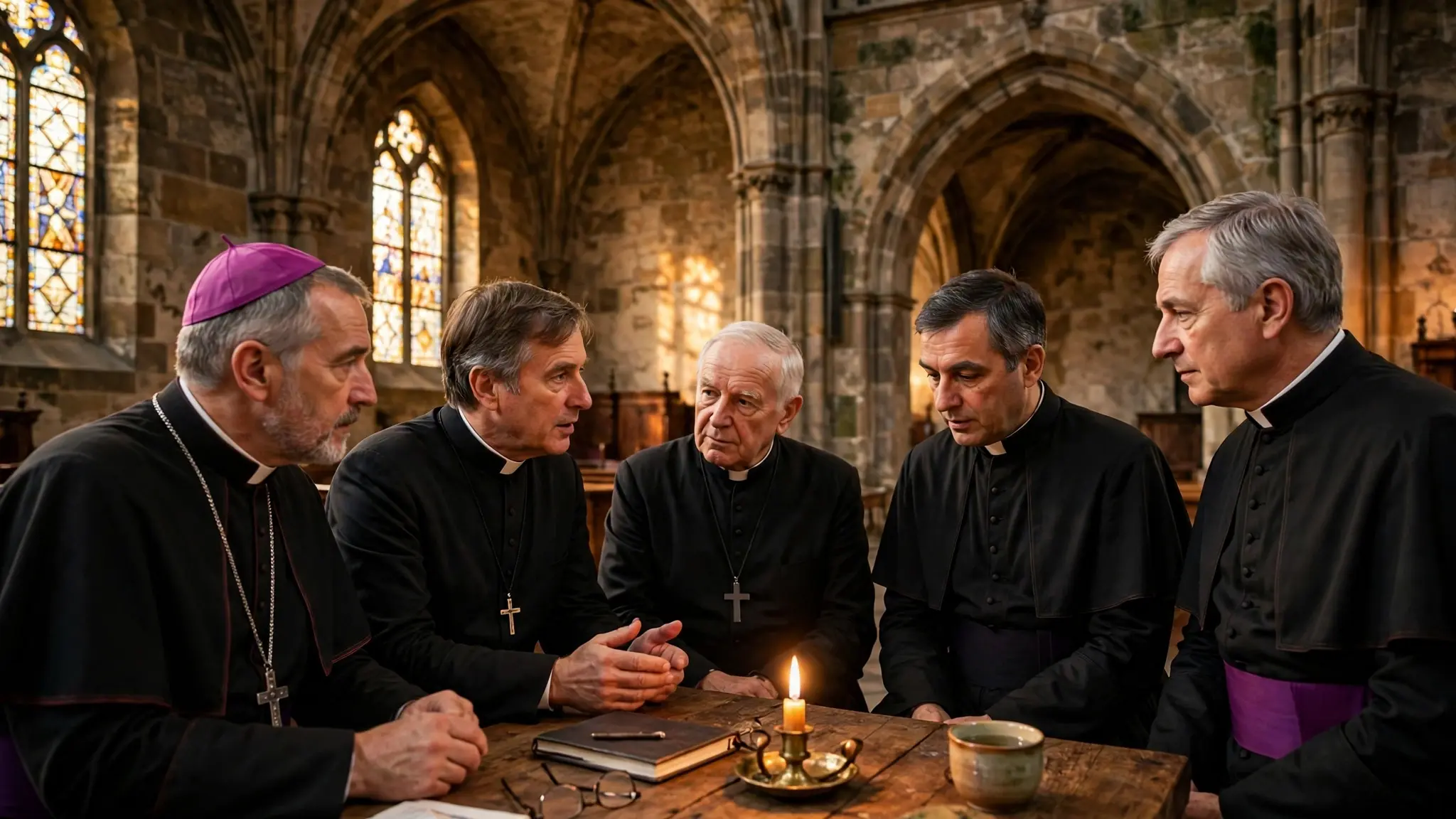
"How do we contribute to the delivery of fairness, justice and humanitarianism?"
That was the question Metropolitan Chrysostomos of Kyrenia, of the Church of Cyprus, put to church leaders gathered in Prague this week. It hung over three days of talks — October 20 to 22, 2026 — as the Conference of European Churches (CEC) held its Annual Meeting of the Ecumenical Secretaries in the Czech capital, hosted by the Evangelical Church of Czech Brethren.
The theme was blunt: "Europe and churches in a changing world." War, threats to democracy and the need to renew hope shaped the meeting, according to the CEC's own press release, issued from Brussels on October 22. Ecumenical officers from member churches across the continent sat down with theologians, political voices and ecumenical partners to work out what a common Christian witness looks like when the ground keeps shifting.
Conference of European Churches Prague 2026: Who Spoke and What Did They Say?
The loudest voices came from the edges of the continent's pain. Fr Roman Fihas, director of the Institute of Ecumenical Studies at the Ukrainian Catholic University in Lviv, spoke about the humanitarian work of Ukraine's churches and the practical cooperation growing between them.
"Ukrainians long for peace, but a sustainable peace must include justice, security, and respect for Ukraine's sovereignty."
Chrysostomos, speaking from the experience of the Church of Cyprus, called for peace in Ukraine, the Middle East and Cyprus alike. Volodymyr Bureha, vice-rector of the Kyiv Theological Academy and Seminary, also addressed the gathering, while Steinunn A. Björnsdóttir of the Evangelical Lutheran Church of Iceland took on a harder subject closer to home: the use of Christian language to promote nationalist and anti-immigrant attitudes.
"In addressing this challenge, I believe we can learn a great deal from our sister churches in Europe," she said. It was a reminder that the threats the meeting named are not only armies and borders. They are also words, twisted in pulpits and parliaments alike.
Charta Oecumenica 2026: What Is the Updated Charter Churches Discussed?
Alongside the big questions, the delegates worked on a concrete document: the updated Charta Oecumenica, the shared charter guiding how Europe's churches relate to one another. The meeting also took up secularisation, climate change and political extremism, the slow pressures that shape ordinary congregations far more than any single headline.
That practical spirit is what links Prague to other recent moments of church unity. Across the Atlantic, Catholic and evangelical leaders in the United States have just issued their own first joint statement, while in Britain, 550 people were baptised in the North Sea at Bridlington this year — different expressions of the same hunger for a faith that acts together rather than alone. The Haitian Christians who walked 40 miles in Ohio in prayer ahead of Reformation Sunday belong in that same picture: ordinary believers, moving together, when staying still would have been easier.
The CEC is a fellowship of some 120 Orthodox, Protestant, Anglican and Old Catholic churches from across Europe, plus around 40 associated organisations, founded in 1959. A gathering of its ecumenical secretaries is therefore not a photo opportunity. It is where the daily machinery of cooperation gets decided — who talks to whom, and what help congregations recieve when the next crisis comes.
Europe Churches Changing World: What Comes Next After Prague?
No single declaration came out of Prague that will end a war or reverse secularisation, and the delegates did not pretend otherwise. What they left with is harder to measure and easier to dismiss: relationships, a shared charter in progress, and a set of questions asked out loud in the same room.
Chrysostomos's question is still hanging in the air, and it is the one worth carrying home. If Europe's churches can answer it together — fairness, justice, humanitarianism, delivered rather than just declared — then three days in Prague will turn out to have mattered far more than they looked.
The next test will not be another meeting. It will be what these churches do, together, when the next call for help comes.
Frequently Asked Questions
The CEC Annual Meeting of the Ecumenical Secretaries took place in Prague, Czechia, from October 20 to 22, 2026, hosted by the Evangelical Church of Czech Brethren (CEC press release, October 22, 2026).
The theme was "Europe and churches in a changing world." Discussions covered war, threats to democracy, just peace, humanitarian solidarity, sovereignty, secularisation, climate change and political extremism.
Contributions came from Ukraine, Cyprus, Denmark and Iceland, including Fr Roman Fihas of the Ukrainian Catholic University, Metropolitan Chrysostomos of Kyrenia, Volodymyr Bureha of the Kyiv Theological Academy, and Steinunn A. Björnsdóttir of the Evangelical Lutheran Church of Iceland.
It is the shared charter guiding relations between Europe's churches. Delegates in Prague discussed the adoption of its updated version, alongside practical questions of common witness and cooperation.
The CEC is a fellowship of some 120 Orthodox, Protestant, Anglican and Old Catholic churches from all countries of Europe, plus around 40 associated organisations, founded in 1959, with offices in Geneva, Brussels and Strasbourg.
🔔 Don't Miss the Next Story!
Get breaking Christian news on your phone before everyone else — allow notifications when prompted, or join our newsletter below!
But the most surprising part of this story is yet to come — keep reading.
🙏 Have a Testimony to Share?
Has God done something amazing in your life? Or want us to cover a specific story? Send your testimony or story request via WhatsApp — your story could encourage thousands!
💬 Comments
Share your thoughts below. Be kind and respectful. If this story touched you, let us know in the comments!