UK Churches Spend Less Than 5 Percent on Evangelism, J John Warns October 2026
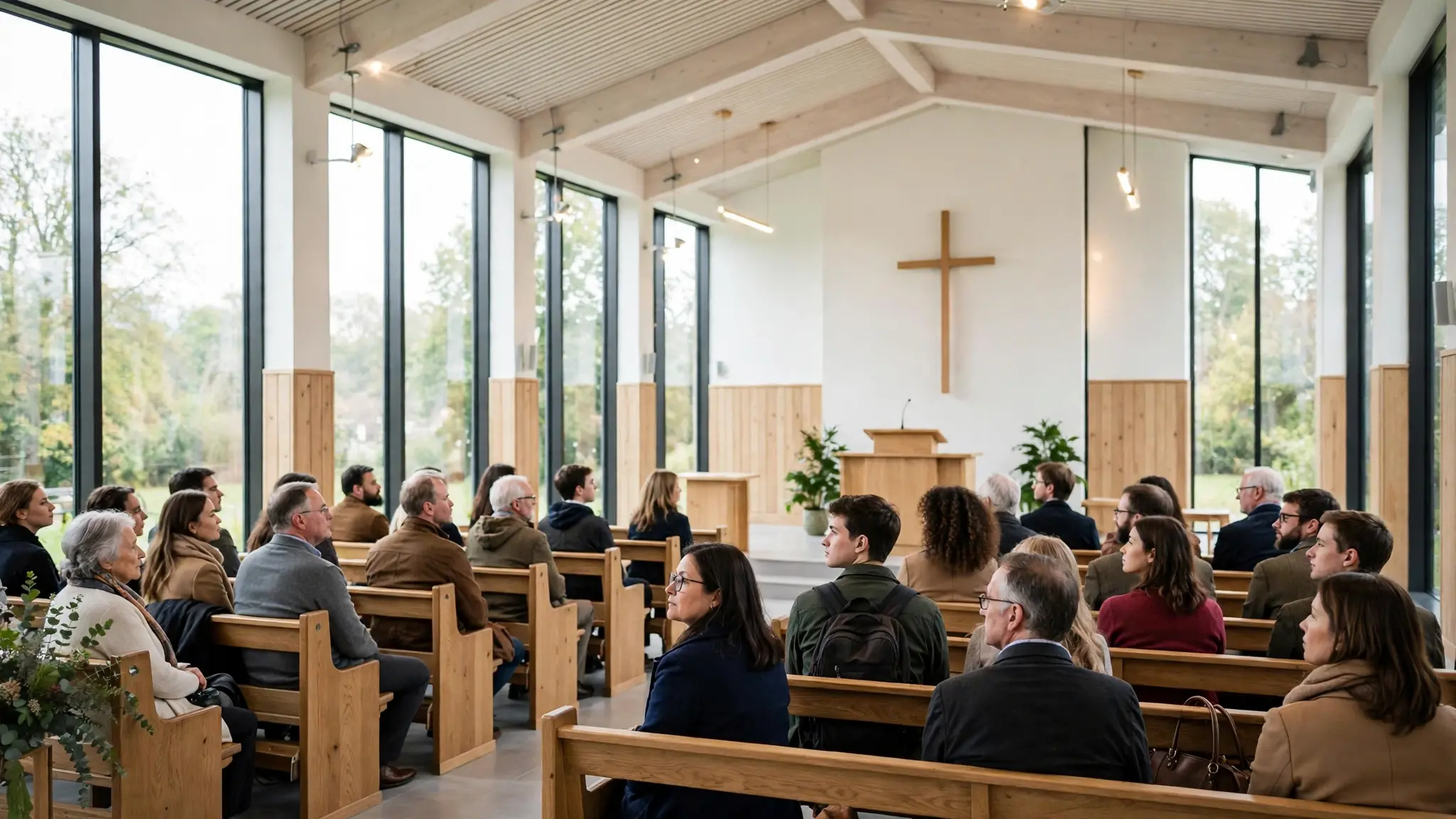
Picture a church on a normal Sunday. The singing is warm, the coffee is ready, the regulars know exactly where to sit, and almost everyone in the room already believes.
Now picture the street outside that same building. That is where evangelist Canon J John, founder of the Philo Trust, asked UK church leaders to look again in October 2026, when he spoke at the Church Resources Exhibition (CRE). His message, reported on October 20-21, 2026, was blunt: churches need to devote more time and resources to evangelism, and they need to better equip ordinary members to share their faith with people who are not Christians.
The number at the centre of his challenge stops you in your tracks. J John said research indicates that churches spend over 95 percent of their time, energy, money, resources and manpower on worship and wellbeing, and less than 5 percent on witness. It was not presented as a casual guess, but as research he cited, and it frames his whole argument as a question of balance rather than blame.
"Research indicates that we spend over 95% of all of our time, energy, money, resources and manpower on worship and wellbeing. We spend less than 5% on witness. Do you not agree there's a slight imbalance there?"
That word "slight" does a lot of work. J John was not saying worship and wellbeing do not matter. He was saying the split has drifted so far in one direction that witness has become an afterthought, squeezed into whatever time and money remain.
J John Evangelism Challenge: The 95 Percent and 5 Percent Figures Explained
It helps to slow down and picture what those percentages could mean in a real church week. Worship takes music, preaching, rotas and buildings, while wellbeing takes pastoral visits, prayer and care for families in crisis.
Witness, by contrast, is often one event, one course or one conversation that never quite happens because the diary is already full. When J John puts those two sides next to each other, the imbalance becomes easy to feel.
That caution matters, and it does not soften the challenge. The coverage notes the dates and methodology of the research he cited were not supplied, yet many leaders will recognise the pattern: the people already inside get most of the attention, while the people outside get whatever is left.
Philo Trust Research: Only 36 of 1,000 Churches Ran Evangelism Training
J John backed up the headline figure with a second striking detail from Philo Trust research among 1,000 Evangelical churches: only 36 said they had provided evangelism training during the previous decade. Again, the coverage notes that the research dates and methodology were not supplied, so this is research he cited, not a fresh survey of all UK churches.
Still, sit with that picture: out of 1,000 churches, only 36 remembered running evangelism training across ten whole years. That is not a picture of churches trying hard and falling short, but of training that rarely happens at all.
It also explains why so many Christians feel stuck. They may want to talk about their faith, but they have never been shown how to begin, what to say when a friend asks a hard question, or how to keep listening instead of rushing to an answer.
Equip People for Evangelism: Why Telling Christians to Witness Is Not Enough
J John did not leave his audience with guilt alone, but gave them a practical next step: churches should run an evangelism training course every year. His point was simple and direct: simply telling Christians to witness is not enough, because people need to be shown how.
"We've got to equip people. We've got to help people,"
It also changes the job of the leader, so that instead of being the only person who talks about faith in public, the leader becomes the person who helps everyone else find their voice.
Lead the Church as an Evangelist: Thinking About the Fringe and Beyond
J John then widened the challenge from training to mindset, urging leaders to think like evangelists, not only like pastors of the people already gathered. He put it in a line that is easy to remember and hard to ignore.
"I want you to lead the church as if you were an evangelist,"
He explained that mindset as thinking not just about the flock, but about "the fringe" and "beyond the fringe": people on the edges of church life, and people with no connection to Christianity at all.
Leading with those groups in mind changes small decisions, from a clearer notice sheet and a warmer welcome to a sermon illustration that makes sense to someone who has never opened a Bible and a church event planned so that a first-time guest does not feel lost in the first five minutes. None of that requires a church to abandon worship or wellbeing. It requires a church to hold all three together, and to ask, at each decision, who is still outside the room.
Worship, Wellbeing and Witness: Sharing Resources More Equally
That three-way balance is exactly what J John suggested, proposing that resources be distributed more equally between worship, wellbeing and witness, rather than letting witness take whatever remains. Equality here does not have to mean an identical budget line for each area. It means witness gets a real place in the plan, the diary and the budget, instead of being an optional extra.
The wider UK church story makes that call feel timely. Large worship gatherings still draw crowds, as seen in the arena worship tour reaching Atlanta and New Orleans in October 2026, and public moments still capture attention, from the 550 people baptized in the North Sea at Bridlington to the Dove Awards winners celebrated in Nashville. J John's point is that big moments need a local backbone: trained, confident Christians in ordinary churches, ready to talk about faith on a normal Tuesday.
There is a gentler side to his challenge: he was not asking exhausted volunteers to add another programme to an already full week. He was asking churches to notice where their energy goes, and to move a little of it toward people who have not yet heard. A yearly course, a clearer welcome and a practised conversation are small steps that, repeated often, can seperate a church that talks about witness from one that equips people for it.
So the question J John leaves behind is not really about a percentage on a slide, but about the next person who walks past a church building and never walks in, and whether anyone inside has been trained and given time to go and meet them. If churches take his challenge seriously, the change will not show up first in a headline. It will show up in a conversation, in a training room, and in a church that starts to plan its week with the fringe, and beyond the fringe, firmly in mind.
Frequently Asked Questions
Canon J John, founder of the Philo Trust, said churches need to devote more time and resources to evangelism and better equip members to share their faith with non-Christians, speaking at the Church Resources Exhibition in October 2026 (Christian Post; JubileeCast).
J John said research indicates churches spend over 95 percent of time, energy, money, resources and manpower on worship and wellbeing, and less than 5 percent on witness. The coverage notes the research dates and methodology were not supplied (Christian Post; JubileeCast).
J John recalled Philo Trust research among 1,000 Evangelical churches which found only 36 said they had provided evangelism training during the previous decade. The coverage notes the research dates and methodology were not supplied (Christian Post; JubileeCast).
He encouraged churches to run an evangelism training course every year, saying simply telling Christians to witness is not enough and they need to be shown how. He also suggested distributing resources more equally between worship, wellbeing and witness (Christian Post; JubileeCast).
He urged leaders to lead as if they were evangelists, thinking not just about the flock but about the fringe, people on the edges of church life, and beyond the fringe, people with no connection to Christianity (Christian Post; JubileeCast).
🔔 Don't Miss the Next Story!
Get breaking Christian news on your phone before everyone else — allow notifications when prompted, or join our newsletter below!
But the most surprising part of this story is yet to come — keep reading.
🙏 Have a Testimony to Share?
Has God done something amazing in your life? Or want us to cover a specific story? Send your testimony or story request via WhatsApp — your story could encourage thousands!
💬 Comments
Share your thoughts below. Be kind and respectful. If this story touched you, let us know in the comments!