Bibel TV Die Erinnerung 2026: 30,000 posters invite Germany to church
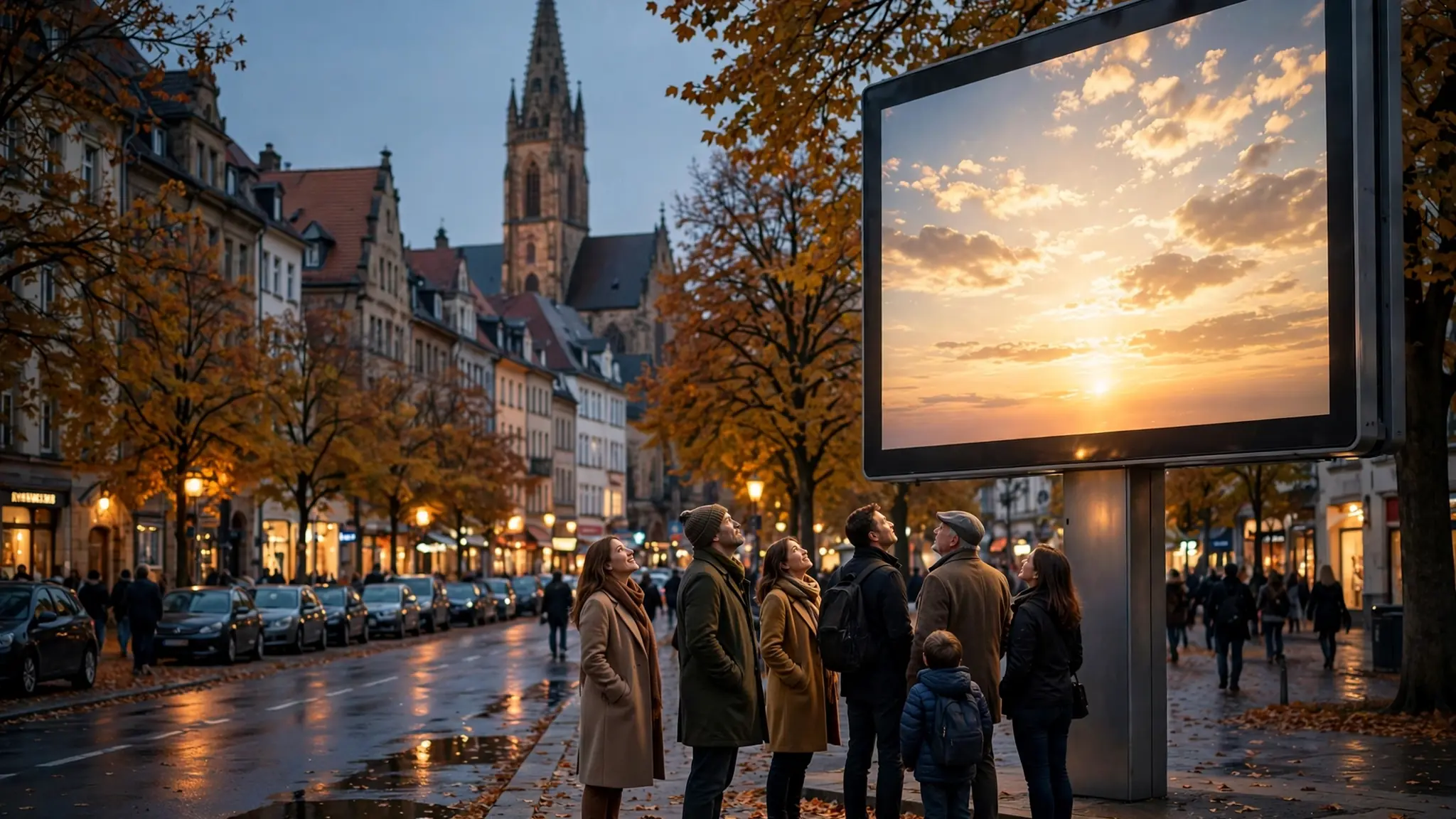
Thirty thousand billboards. In Germany — one of the most secular countries in Europe — thirty thousand giant posters are now asking total strangers a question they cannot dodge on their way to work: "Someone is very excited about you." It is the largest faith poster campaign in the country's recent memory, and it was paid for by 6,000 ordinary Christians who refused to let God's name disappear from public space.
The campaign is called "Die Erinnerung 2026" — The Memory 2026 — and it was launched by Bibel TV, the Christian media initiative, as reported by Evangelical Focus in mid-October 2026. The posters went up in major cities and smaller communities alike, deliberately placed so that, in the words of the organizers, every citizen would have a chance to see the message.
The slogans are not sermons — they are emotional, direct, and deliberately unsettling, asking strangers whether someone out there is excited about them, how they can find love, or whether anyone likes them for who they are. Each one ends with the same quiet invitation: "More at your church and on Bibel TV." No condemnation, no fine print — just a question and an open door.
With this campaign, 30,000 large-scale posters in both major cities and smaller communities ensure that every citizen has a chance to see the message. — Kai-Marcus Thäsler, managing director of the Outdoor Advertising Association, Evangelical Focus
Thäsler's remark captures the scale of the operation. This was not a handful of church noticeboards. Thirty thousand large-scale placements is the kind of media buy that normally belongs to car companies and election campaigns — and here it is, carrying nothing but an invitation back to church.
48 Texts Tested: A Campaign Built on Research, Funded by 6,000 Christians
The words on those billboards were not chosen by accident. The campaign was shaped by months of market research, testing more than 48 text variants to find the phrases that would resonate most with people far from church. Every slogan was engineered to land with someone who has not thought about God in years — or ever.
And the funding tells its own story. The entire campaign is donation-funded by more than 6,000 Christians from different denominations — Catholic, Protestant, and free-church believers giving side by side, old seperations forgotten for the cause. It is organized by the interdenominational non-profit Bibel TV Stiftung gGmbH, with backing from churches and free-church associations across the country.
That unity is rare, and it is the point. The campaign was built expressly as a service to all Christian denominations and congregations — not as an advertisement for one channel, one church, or one movement. The posters do not say which church to visit; they just say yours, the one near you: go.
It is the same instinct driving the Lancashire churches preparing for rebirth and the fifth straight year of rising UK church attendance — the conviction that ordinary people are more open to faith than the headlines suggest, and that the Church's job is to meet them where they are.
Posters, Social Media, and Free Materials for Local Churches
The billboards are only the most visible part. Alongside the posters, the campaign rolled out targeted social-media and traditional-media ads, plus flyers and postcards designed to keep the conversation going. Churches were given free materials to continue the impulse locally — so that when someone walks through the door with a question, the congregation is ready.
The promoters stated their aim plainly: they want Germans to take a first — or new — step into a local church. But the deeper goal is bigger than attendance numbers. They want God to be a topic of conversation again — at the dinner table, in the office, between friends.
God should be a topic of conversation again, in churches and congregations, Christian organisations, but also in personal conversations between people in everyday life, across all denominations. — Bibel TV promoters, Evangelical Focus
That is the campaign's real bet: in a country where faith has been treated as a private matter for a generation, a billboard can do what polite silence never could. It can start a conversation. And it can ask the one question that follows someone all the way home.
Why Germany: Faith Back in Public Space
The numbers behind the campaign's urgency are stark. Germany's churches have been losing members for years, and public faith has retreated into the private sphere. But the organizers are wagering that retreat is not the same as indifference — that millions of Germans are carrying unanswered questions about love, meaning, and belonging, and that nobody has asked them out loud in a long time.
The posters ask those questions for them. Months of research went into making sure the words would land, and six thousand donors put their money behind the bet. Thirty thousand placements make it impossible to look away.
As the 550 Christians baptized in the North Sea and the tent revival that baptized 3,000 in a single year suggest, the hunger for public, unembarrassed faith is not limited to one country. Germany's billboards are simply the most visible sign yet that the European Church is done whispering.
The posters will come down eventually — advertising space is rented, not owned. But what matters is what happens in the weeks after, when someone who stopped on a boulevard at dusk walks through a church door for the first time in decades. The campaign did its part: it asked, and whether the answer was waiting inside is the story still to be told.
Frequently Asked Questions
"Die Erinnerung 2026" (The Memory 2026) is a nationwide faith campaign launched by Bibel TV across Germany, reported by Evangelical Focus in mid-October 2026. It places 30,000 large-scale posters in major cities and smaller communities inviting people to church.
The posters carry emotionally direct questions such as "Someone is very excited about you," "How can you find love?" and "Is there anyone out there who likes me for who I am?" — each ending with the invitation "More at your church and on Bibel TV."
The campaign is fully donation-funded by more than 6,000 Christians from different denominations. It is organized by the interdenominational non-profit Bibel TV Stiftung gGmbH, backed by Catholic and Protestant churches and free-church associations.
The slogans were shaped by months of market research testing over 48 text variants, chosen specifically to resonate with people far from church.
To invite Germans to take a first — or new — step into a local church, "as a service to all Christian denominations and congregations," and to make God a topic of conversation again in everyday German life.
🔔 Don't Miss the Next Story!
Get breaking Christian news on your phone before everyone else — allow notifications when prompted, or join our newsletter below!
But the most surprising part of this story is yet to come — keep reading.
🙏 Have a Testimony to Share?
Has God done something amazing in your life? Or want us to cover a specific story? Send your testimony or story request via WhatsApp — your story could encourage thousands!
💬 Comments
Share your thoughts below. Be kind and respectful. If this story touched you, let us know in the comments!