Faith Leaders Urge Chancellor to Make the Wealthiest Pay Fair Share in Budget
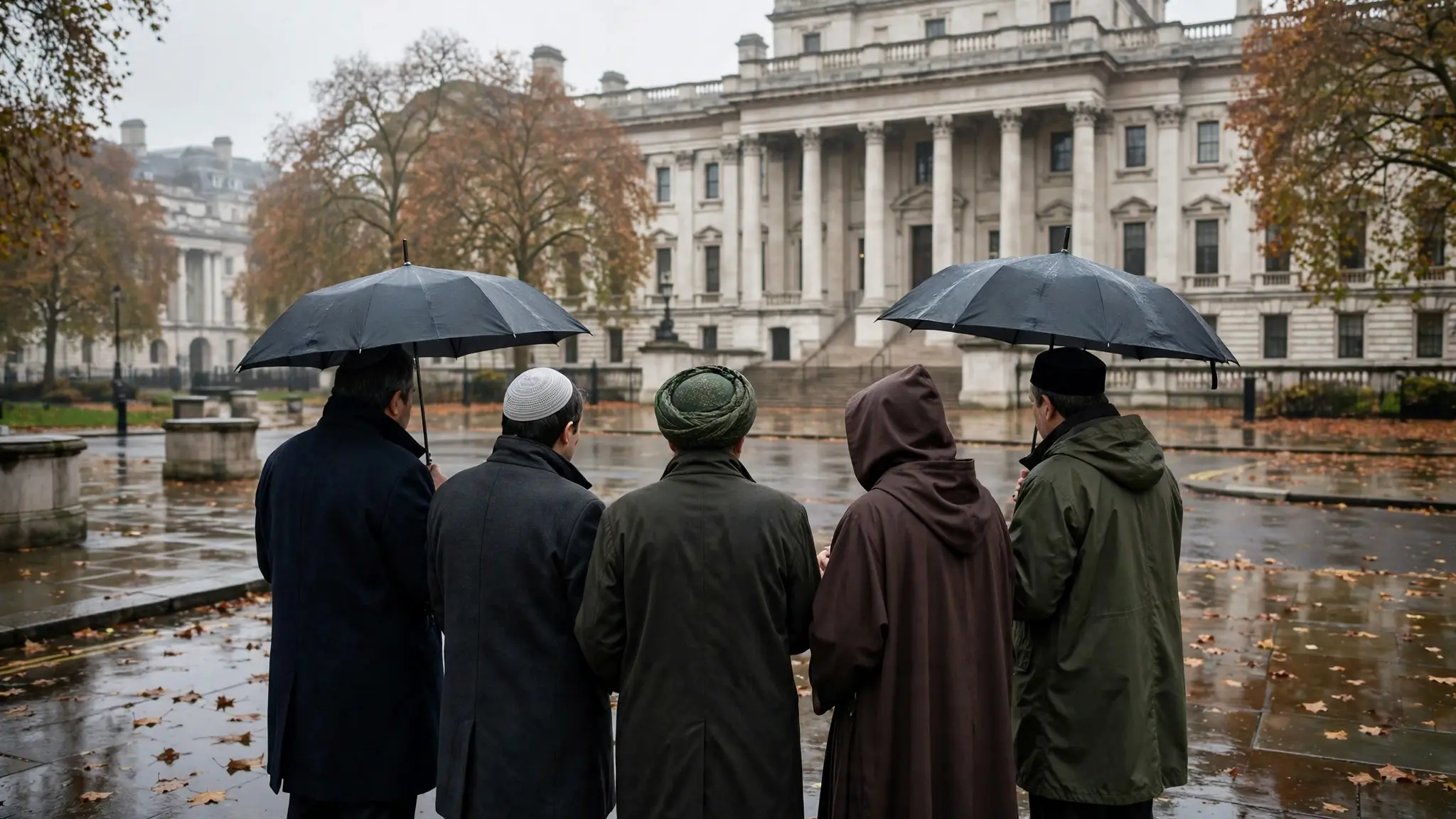
Rowan Williams does not often sign a letter the day before a Budget. The former Archbishop of Canterbury put his name alongside 24 other faith leaders and organisations on 26 October, in a call to the Chancellor to ask the wealthiest to pay their fair share. The letter was specific: a wealth tax, a fairer capital gains tax, and a tax authority with the staff to collect what is owed.
A coalition of 25 faith leaders and organisations, coordinated by JustMoney Movement, released an open letter to Chancellor John Healey on 26 October 2026, ahead of the Chancellor's Budget on Wednesday 28 October. The name of the Chancellor is given as John Healey in the JustMoney release, recieved on 26 October, and this article uses that name as sourced. The Budget itself falls after the letter, so the letter is a call, not a result, and no Budget outcome is reported here.
The group includes JustMoney Movement, the Rt Revd and Rt Hon Lord Rowan Williams of Oystermouth, former Archbishop of Canterbury, Church of England bishops, leaders from the Methodist Church, Baptist Union, United Reformed Church and Quakers in Britain, political economist Ann Pettifor, Greenbelt Festival organisers and other campaign groups and organisations.
The letter calls for a fairer tax system including fairer taxation of wealth to tackle poverty, inequality and the climate crisis. It sets out three specific asks: introducing an annual wealth tax, reforming and equalising Capital Gains Tax with Income Tax, and properly resourcing HMRC to help close the tax gap and ensure wealth is taxed effectively.
Faith Leaders Wealth Tax Call: What the Letter Asks For
The letter argues that wealth is increasingly concentrated among the super-rich, while lower rates of tax on wealth than income and tax loopholes mean the wealthiest can pay proportionally less. That is the signatories' argument, and it is presented here as their argument. The letter does not claim that every wealthy person pays less, and this article adds no figures the sources do not give.
Rosie Venner, Director of Movement Building at JustMoney Movement, put the case in plain terms, tying the Budget to inequality, public services, and the future. Her words carry the urgency of a letter written the day before a Budget, when the choices are still open.
A fairer tax system means asking those with the greatest wealth to contribute their fair share. This Budget is an opportunity to tackle inequality, strengthen public services and help build a fairer future for people and the planet. Let's not waste it.
That is Rosie Venner, speaking for JustMoney Movement, the organisation that coordinated the letter. The sentence "Let's not waste it" is aimed squarely at the Chancellor, and at the window the Budget opens. A Budget happens once, and the letter treats this one as a chance that should not be allowed to close without a fairer tax system in place.
The signatories framed their call in the language of faith, not only in the language of economics. They wrote about loving neighbours, standing alongside those who are most marginalised, funding public services, and protecting the natural world. For readers who follow how UK churches speak about public life, that framing will feel familiar, as UK church leaders gathering as Gen Z fuels church growth and UK church attendance rising for a fifth straight year show churches speaking with growing confidence in public.
Rowan Williams Joins Call for Fairer Tax System
In the letter, the signatories say: "A fair tax system enables us to love our neighbours, stand alongside those who are most marginalised, fund public services and protect the natural world." The sentence ties tax to neighbour-love directly, and it is the moral centre of the letter.
The Rt Revd Lynne Cullens, Bishop of Barking, and the Right Reverend Dr Tim Ellis, Assistant Bishop in the Diocese of Sheffield, are among the signatories. Bishop Tim Ellis put the argument in terms of responsibility and proportion, speaking about wealth made on the work of many, and about contributing properly to the life of the nation.
Bishop Ellis said: "Those few who become wealthy on the work and endeavours of the many should deem it a responsible act to contribute properly to the life of the nation through proportionate and fair taxation." The word "proportionate" does a lot of work in that sentence. It is not a call for punishment, in his framing, but a call for a share that matches the wealth held.
President and Vice-President of the Methodist Conference, Revd Mark Slaney and Caroline Stead, have also signed the letter, alongside bishops, Quaker, Baptist and United Reformed leaders, and campaign groups.
What the Chancellor Was Asked to Do in the Budget
The three asks, taken together, describe a system rather than a single change. A wealth tax asks for a yearly contribution from great wealth, equalising capital gains tax with income tax asks for consistency, and resourcing HMRC asks for the staff and tools to make the system work as written.
Churches in Britain have been talking about money and mission in other ways too, as UK churches spending less than 5 percent on evangelism shows, and as a UK church repair fund rejecting 90 percent of churches shows in a very different setting. Those stories are about church money, not national tax, but they share a question with this letter: what should money be for, and who decides.
The open letter was released on 26 October, two days before the Budget, and covered on 27 October by the Religion Media Centre and Keep the Faith. Open letters work by being public, and this one was written to be read by more than its addressee. Its audience includes the Chancellor, but also the congregations, campaigners and readers who will judge the Budget when it is announced.
The Budget on 28 October will show what the Chancellor chose to do. What is reported is the call itself, the names behind it, and the three specific changes it asks for.
Frequently Asked Questions
Twenty-five faith leaders and organisations coordinated by JustMoney Movement, including former Archbishop of Canterbury Rowan Williams, Church of England bishops, Methodist, Baptist, United Reformed and Quaker leaders, economist Ann Pettifor and Greenbelt Festival organisers.
On 26 October 2026, ahead of the Chancellor's Budget on Wednesday 28 October.
An annual wealth tax, reforming and equalising Capital Gains Tax with Income Tax, and properly resourcing HMRC to close the tax gap and ensure wealth is taxed effectively.
She said a fairer tax system means asking those with the greatest wealth to contribute their fair share, and called the Budget an opportunity not to waste.
No outcome is reported in the sources for this article. The letter is a call ahead of the Budget on 28 October, not a result.
🔔 Don't Miss the Next Story!
Get breaking Christian news on your phone before everyone else — allow notifications when prompted, or join our newsletter below!
But the most surprising part of this story is yet to come — keep reading.
🙏 Have a Testimony to Share?
Has God done something amazing in your life? Or want us to cover a specific story? Send your testimony or story request via WhatsApp — your story could encourage thousands!
💬 Comments
Share your thoughts below. Be kind and respectful. If this story touched you, let us know in the comments!