🎧 Listen to This Story (Audio Mode)
Saved for offline reading — text only; photos need the internet.
Daniel Grand's Home Prayer Case Reaches Supreme Court
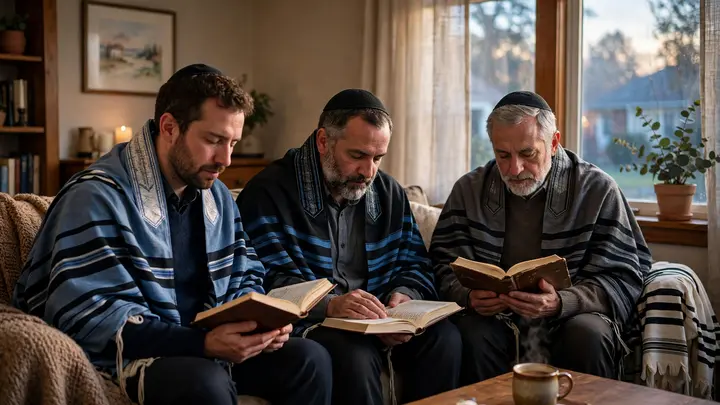
Daniel Grand invited about a dozen friends to pray in his home — and the prayer meeting never happened. Before the group had met even once, the city of University Heights, Ohio, sent him a cease-and-desist letter ordering him to stop using his home as a "place of religious assembly". Nearly six years later, the case has reached the US Supreme Court, which will hear arguments on December 9. The Solicitor General of the United States will argue on Grand's side.
Grand is an Orthodox Jew whose faith calls him to pray with a minyan — a quorum of at least ten men — three times each weekday and four times on the Sabbath and Jewish holidays. He lives far from an Orthodox synagogue, so in January 2021 he decided to host a minyan in his own home and emailed friends who lived nearby. Because Orthodox Jews are forbidden from driving on the Sabbath, there would have been no traffic and no parking problems. The gathering would have been quiet, small and invisible from the street.
Daniel Grand Home Prayer Case: City Said No Permit, No Prayer
It never got the chance. A neighbour who objected forwarded Grand's email to the mayor, who passed it to the city's law director. Before Grand had even returned the mayor's call, the cease-and-desist letter arrived.
Print it, pray through it, and share it with your family or small group.
Mayor Michael Dylan Brennan telephoned him on January 21, 2021, and, Grand says, told him: "You are under no circumstances allowed to have any type of religious gathering in your home without first obtaining a special-use permit." Grand cancelled the gathering. In a first-person account published by Alliance Defending Freedom, which now represents him before the Supreme Court along with Orrick, Herrington & Sutcliffe, he wrote: "I understood this to be a threat of criminal prosecution."
The city told Grand he needed a special-use permit, so he applied and appeared before the University Heights Planning Commission. The commission held a hearing in March 2021 and tabled the matter while asking him for more details. Grand withdrew his application and sued the city in 2022, arguing his rights had been violated the moment the city told him he could not hold the gathering without a permit. A federal district court dismissed the case, and the 6th US Circuit Court of Appeals upheld that dismissal in November 2025 — ruling that his claims were not ripe for federal review because he had withdrawn his application before zoning officials reached a final decision.
God does not wait for paperwork before He listens, and a prayer offered in a living room is no less a prayer for lacking a permit. That is the conviction carrying this case to the highest court in the land — that the right to pray with your friends in your own home should not depend on finishing a zoning process first.
Grand v University Heights: What the Supreme Court Will Decide
The Supreme Court is not being asked whether the city violated Grand's religious liberty rights. The justices will decide a narrower question with a much wider reach: whether Grand had to finish the city's zoning process before suing, or whether the city's warning and his decision to cancel the prayer gathering were enough to bring the case to court. "No American needs a permit to pray," said Alliance Defending Freedom Senior Counsel John Bursch, who is representing Grand. ADF argues the city had no reason to limit the prayer meetings — and that forcing Grand through a permit process designed to convert his home into a commercial place of worship also forced him and his family to move.
God does not wait for paperwork before He listens, and a prayer offered in a living room is no less a prayer for lacking a permit.
Grand's road to the Supreme Court was walked almost alone at first. He filed his petition asking the justices to step in on his own, without a lawyer, in February 2026 — and the justices agreed to hear it that June.
The case has since drawn heavyweight support: the federal goverment has filed a brief backing Grand, along with 14 states, 51 members of Congress and a number of religious organisations. The Southern Baptist Convention's Ethics and Religious Liberty Commission joined the US Conference of Catholic Bishops in a friend-of-the-court brief supporting him, saying religious exercise "has never been confined to the church sanctuary". Solicitor General John Sauer will argue alongside Grand's lawyers on December 9.
The city sees it very differently. University Heights argues that Grand, after appearing before the planning commission and saying he no longer wished to create a place of religious assembly, is effectively asking the Supreme Court to act as a local zoning administrator. Its position is that no final decision was ever made on his case, because he withdrew his request — so he cannot claim religious discrimination.
ADF, meanwhile, says the city went far beyond ordinary zoning enforcement: it withheld Grand's Certificate of Occupancy and tax abatements, costing him thousands in extra taxes, and stopped picking up his trash. Grand has since sold the home and moved outside the city.
Why the Home Prayer Case Matters for Every Believer
A win for Grand would decide only that believers can get into court before the paperwork ends. But that doorway matters enormously, because it decides whether the next family told to stop praying in its own home can fight back at all. Supreme Court Leans to Catholic Schools in Colorado Case showed the same court sounding ready, only weeks ago, to protect religious schools from being shut out of public programmes. Justice Alito Says Free Speech, Religious Liberty and Racial Equality Must Be Preserved showed at least one justice treating those freedoms as the ones that hold the rest together.
🙏 Did this part inspire you?
ADF is organising a nationwide prayer effort ahead of the December 9 hearing. Through its #PrayFreely campaign, it is asking churches, Bible studies, prayer groups and small groups to pray for the case in the weeks before the hearing — and to pray together on the morning of oral arguments. Alabama Votes 63% for School Prayer in Constitution showed voters in one state choosing to protect prayer by a wide margin. 80,000 Christians Pack AT&T Stadium for Night of Prayer: Is America Waking Up? showed what happens when prayer stops being private and becomes public.
The argument falls during Hanukkah week — a season that celebrates the freedom to worship God without a ruler's permission. A ruling is expected by the end of the court's term next summer.
Until then, one question hangs over every living room in America where friends gather to pray: does the Constitution protect what happens behind your own front door, or does the city get to decide first? Daniel Grand asked that question in an email to a dozen friends in January 2021. On December 9, nine justices will finally answer it — and millions of believers who pray at home will be listening.
Frequently asked questions
Daniel Grand is an Orthodox Jewish man from University Heights, Ohio, whose faith calls him to pray with a minyan — a quorum of at least ten men — several times a day. In January 2021 he invited about a dozen friends to form a prayer group in his home, because he lives far from an Orthodox synagogue.
Before the group ever met, the city sent Grand a cease-and-desist letter directing him to stop using his home as a "place of religious assembly" and told him he needed a special-use permit. Grand cancelled the gathering and later sued the city.
The justices will decide whether Grand had to finish the city's zoning process before suing, or whether the city's warning and his decision to cancel the prayer gathering were enough to bring the case to court. They are not being asked whether the city violated his religious liberty rights.
The federal government has filed a brief supporting Grand, along with 14 states, 51 members of Congress and religious organisations including the Southern Baptist Convention's Ethics and Religious Liberty Commission and the US Conference of Catholic Bishops. Solicitor General John Sauer will argue on Grand's side.
🙏 Did this part inspire you?
Print it, pray through it, and share it with your family or small group.
🔔 Don't Miss the Next Story!
Get breaking Christian news on your phone before everyone else — allow notifications when prompted, or join our newsletter below!
But the most surprising part of this story is yet to come — keep reading.
🙏 Have a Testimony to Share?
Has God done something amazing in your life? Or want us to cover a specific story? Send your testimony or story request via WhatsApp — your story could encourage thousands!
💬 Comments
Share your thoughts below. Be kind and respectful. If this story touched you, let us know in the comments!