🎧 Listen to This Story (Audio Mode)
Saved for offline reading — text only; photos need the internet.
Latest: 33 Faith Institutions Divest From Fossil Fuels at COP31 in Antalya
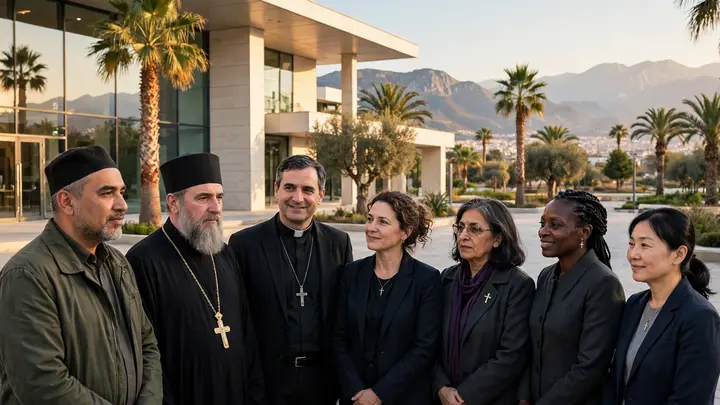
Thirty-three faith institutions across Europe, North America and Africa announced on 17 November 2026 that they are pulling their money out of fossil-fuel companies. The joint move, timed to the UN climate conference COP31 in Antalya, Türkiye, is addressed to the negotiators inside the summit halls. Their message is plain: the world needs a rapid and fair energy transition, and it needs it now — to confront the climate crisis, the conflicts it feeds, and the rising cost of living.
Thirty-one of the 33 are Catholic institutions. That is the headline inside the headline. Dioceses, religious orders, development agencies and lay organisations — from Germany to Italy, from Canada to the Democratic Republic of Congo — have signed the same statement on the same day. And they are not alone. To date more than 700 faith-based organisations have publically committed to divesting from fossil fuels, part of a global effort rallying upward of 1,700 institutions with combined assets eclipsing $40 trillion.
Seven of the new signatories are German. Among them is the Fulda Diocese, which becomes Germany's first Catholic diocese to divest. It is joined by Misereor, the German bishops' development agency, by Pax Christi Germany, and by the Lumen Gentium Foundation, a lay organisation that represents 19.2 million Catholics. When a body that speaks for nearly twenty million believers moves its money, the markets notice — and so do the negotiators.
Print it, pray through it, and share it with your family or small group.
Five Catholic dioceses in total have signed on: two in Italy, and one each in Germany, France and Ireland. In France, the Diocese of Montpellier becomes the third Catholic diocese in the country to take the step. The list also reaches beyond the Catholic Church. The Anglican Diocese of New Westminster in Canada is the fifth Anglican diocese to divest, and Holy Canadian Martyrs Church in Ottawa has joined too.
Sixteen Catholic religious orders ministering on three continents are part of the announcement. They include the Carmelites of the Province of the Most Pure Heart of Mary in the United States, the Salesians in France, and Franciscans working in Germany, Rwanda and Burundi. The statement also carries the names of Oikocredit, a Catholic university in DR Congo, and the Scalabrinian Foundation, an international organisation serving migrants and refugees.
COP31 Fossil Fuel Divestment: The Seven Italian Institutions That Signed
Italy accounts for seven of the signatories, and their names show how wide the coalition runs. The Archdiocese of Bari-Bitonto and the Diocese of Belluno-Feltre stand alongside the International ACLI Federation, the Scalabrinian Foundation, the Missionary Community of Villaregia, the Sisters of Charity of St Jeanne Antide Thouret, and the Sisters of St Joseph of Chambéry Italian Province. Bishops, sisters, missionaries and lay workers — different vocations, one decision.
That breadth is the point. Divestment is no longer a gesture made by a single diocese here or a single order there. It is a shared act of witness, timed to the days when the world's governments are sitting in the same city arguing over the same question. The institutions are saying, with their own balance sheets, that they will not profit from the fuels driving the crisis.
The divestment is a different kind of solidarity, but it comes from the same instinct: the Church does not only pray about suffering, it moves.
The summit itself began on 9 November and concludes on Friday 20 November. Inside it, Catholic officials and activists have been pressing countries to build on the momentum for a fossil fuel phaseout. The World Council of Churches brought four calls to the table, including a just transition — a transition that protects workers and poor communities rather than leaving them behind when the old energy economy closes.
"Climate change is no longer a distant environmental threat but a daily reality for millions of people. The time for promises without implementation is over."
Those are the words of Budi Chayono of Franciscans International, speaking at COP31. He was not announcing the divestment — his voice belongs to the wider faith presence at the summit — but his words catch the mood of the week. For the people the Franciscans serve, in places where floods, drought and heat are already daily facts of life, climate change is not a debate topic. It is the water in the house, the failed harvest, the child who cannot sleep in the heat.
That is why the divestment statement speaks of more than carbon. It links the climate crisis to conflict and to the rising cost of living, because in the communities these institutions serve, those three things arrive together. A family that cannot afford food does not experience a climate statistic. It experiences hunger. A village that loses its wells does not experience a policy paper. It experiences thirst.
Faith Institutions Divest From Fossil Fuels: What Happens Next at COP31
The announcement is not the end of the story. A national rally is planned in Rome on 5 December, "The Earth Called — Together for the Climate", in Piazza del Popolo, where the appeal behind the divestment will be relaunched to a wider public. The organisers clearly intend the Antalya moment to be a beginning, not a press release that fades when the summit ends.
🙏 Did this part inspire you?
Faith voices have been part of the COP31 story from the start. Charissa Suli led a prayer for the Pacific Islands at the summit, as reported in Charissa Suli Leads COP31 Prayer for Pacific Islands Today, and the churches' presence has run through the fortnight — in prayer rooms, in side events, and in the corridors where negotiators decide what their countries will actually do.
Churches under pressure elsewhere know what it means when faith institutions act together. Catholic bishops have warned that Christians are under threat in Sudan as war destroys their churches, as reported in Today: Catholic Bishops Warn Christians Under Threat in Sudan as War Destroys Churches. And the Red Week campaign has lit churches for the 413 million Christians facing persecution, as reported in Red Week 2026 Lights Churches for 413 Million Christians. The divestment is a different kind of solidarity, but it comes from the same instinct: the Church does not only pray about suffering, it moves.
The question now is what the negotiators do with the days that remain. COP31 closes on Friday 20 November, and the faith institutions have put their money where their statement is. The rally in Rome will keep the pressure on after the delegates go home. Whether the summit delivers a real step toward phasing out fossil fuels — or another round of promises — will be clear within days.
For the 33 institutions, the decision is already made, and it is public. They have chosen to guard what they call our common home, and they have done it in the most concrete way an institution can: by deciding, together, where its money will no longer go.
Frequently asked questions
Thirty-three faith institutions across Europe, North America and Africa announced on 17 November 2026 that they are divesting from fossil-fuel companies. Thirty-one of the 33 are Catholic institutions, joined by one Anglican diocese in Canada and Holy Canadian Martyrs Church in Ottawa.
Five Catholic dioceses signed the announcement: two in Italy, and one each in Germany, France and Ireland. The Fulda Diocese in Germany is the first Catholic diocese in the country to divest, and the Diocese of Montpellier is the third Catholic diocese in France to take the step.
More than 700 faith-based organisations have now publicly committed to divesting from fossil fuels. They are part of a global divestment effort rallying upward of 1,700 institutions with combined assets eclipsing $40 trillion.
The joint statement calls on COP31 negotiators to deliver a rapid and fair energy transition to confront the climate crisis, conflicts and the rising cost of living. The World Council of Churches brought four calls to the summit, including a just transition that protects workers and poor communities.
A national rally called "The Earth Called — Together for the Climate" is planned for 5 December in Piazza del Popolo, Rome, where the appeal behind the divestment announcement will be relaunched to a wider public.
🙏 Did this part inspire you?
Print it, pray through it, and share it with your family or small group.
🔔 Don't Miss the Next Story!
Get breaking Christian news on your phone before everyone else — allow notifications when prompted, or join our newsletter below!
But the most surprising part of this story is yet to come — keep reading.
🙏 Have a Testimony to Share?
Has God done something amazing in your life? Or want us to cover a specific story? Send your testimony or story request via WhatsApp — your story could encourage thousands!
💬 Comments
Share your thoughts below. Be kind and respectful. If this story touched you, let us know in the comments!