🎧 Listen to This Story (Audio Mode)
Saved for offline reading — text only; photos need the internet.
Pakistan Supreme Court Confirms Death Sentence for Christian Qaiser Ayub in Blasphemy Case
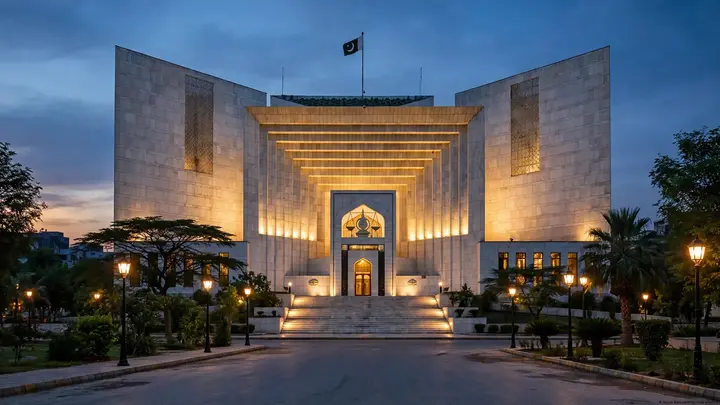
Pakistan's Supreme Court has rejected the appeal of Qaiser Ayub, a Christian father of three, and upheld his death sentence for blasphemy under Section 295-C of the Pakistan Penal Code. The same bench acquitted his younger brother Amoon, ending almost twelve years in prison for a man the court said there was not enough evidence against. The decision was made on 7 October 2026 and only recently became public, with reports emerging between 6 and 13 November.
Qaiser Ayub has now spent more than a decade fighting for his life. The case dates back to 2011, when blasphemous material allegedly appeared on a website linked to his name. He and his brother were arrested in 2014. A trial court sentenced both men to death in December 2018, and the Lahore High Court confirmed the convictions in June 2022.
For the Ayub family, the Supreme Court's ruling split their fate in two. Amoon walked free after nearly twelve years behind bars, his name cleared for lack of evidence. Qaiser, the elder brother, was left facing the same death sentence he has lived under since 2018 — only now confirmed by the highest court in the country.
According to the European Centre for Law and Justice, this is the first time Pakistan's Supreme Court has upheld a death sentence for blasphemy. That makes the ruling more than one man's tragedy. It sets a precedent that every blasphemy case in Pakistan will now be measured against, and it tells every Christian accused under the law that the highest court in the land can, and will, confirm the ultimate punishment.
Print it, pray through it, and share it with your family or small group.
Qaiser's chances are not entirely gone. His remaining options are a review before the courts or an appeal for presidential mercy. But both are long shots, and both take time — time he has already spent, year after year, in a prison cell, waiting for judges to decide whether he lives or dies.
Qaiser Ayub Blasphemy Case: A Fifteen-Year Wait for Justice
Fifteen years have passed since the material at the heart of this case first appeared online. In that time, Qaiser Ayub's children have grown up with their father in prison. His brother Amoon lost his twenties and early thirties to a cell. And the case itself has moved at the slow, grinding pace of Pakistan's courts — trial, appeal, high court, supreme court — each step taking years, each verdict pushing the family further into uncertainty.
The acquittal of Amoon raises its own painful question. If there was not enough evidence against the younger brother, what does that say about a case built on the same material, investigated by the same police, and tried in the same courtroom? The Supreme Court did not answer that question in public. It simply freed one brother and condemned the other.
Two days after the ruling, the danger facing Pakistan's Christians showed itself again in a different village. Police in Narang Mandi, in Sheikhupura district, registered a case against a Christian man, Kamran Gill Masih, over an allegedly offensive video, and arrested him. A crowd then set fire to his clinic and pharmacy, which were attached to his home. More than 35 Christian families fled the village in fear, as reported in Latest: Pakistan Mob Burns Christian Man's Home and Clinic Over Blasphemy Allegation.
Pakistan Blasphemy Law 295-C and the Death Sentence
Section 295-C carries a mandatory death sentence for derogatory remarks about the Prophet Muhammad, and it has long been one of the most feared laws in Pakistan. Christians and other minorities say it is routinely used to settle personal scores, seize property, or punish people who have done nothing at all. A US hearing has already demanded the repeal of blasphemy laws in Egypt, a neighbouring debate with the same root, as reported in USCIRF Egypt Hearing Demands Blasphemy Law Repeal. In Nigeria, twelve worshippers were abducted during a church service in Kaduna, as reported in Latest: 12 Worshippers Abducted During Church Service in Kurmin Wali, Kaduna. And in Sudan, Catholic bishops have warned that Christians are under threat as war destroys churches, as reported in Today: Catholic Bishops Warn Christians Under Threat in Sudan as War Destroys Churches.
Readers should not confuse this case with a seperate report about two other brothers acquitted after around twenty years on blasphemy charges. That is a different case, involving different people, and it has nothing to do with Qaiser and Amoon Ayub.
Qaiser Ayub is a father of three who has spent twelve years in prison and now waits to learn whether a review petition or a plea for mercy will save him. His brother is free. His children are still waiting. And Pakistan's Christians are watching to see whether the first Supreme Court confirmation of a blasphemy death sentence will be the last — or the beginning of a new pattern.
Frequently asked questions
On 7 October 2026, Pakistan's Supreme Court rejected Qaiser Ayub's appeal and upheld his death sentence for blasphemy under Section 295-C. The decision only became public in November 2026. It is the first time the Supreme Court has upheld a death sentence for blasphemy.
Qaiser Ayub is a Christian father of three from Pakistan. His case dates to 2011, when blasphemous material allegedly appeared on a website linked to his name. He was arrested with his younger brother Amoon in 2014 and sentenced to death by a trial court in December 2018.
The same Supreme Court bench acquitted Amoon Ayub for insufficient evidence, ending almost twelve years in prison. The Lahore High Court had confirmed both brothers' convictions in June 2022, but the Supreme Court freed Amoon while upholding Qaiser's death sentence.
His remaining chances are a review before the courts or an appeal for presidential mercy. Both are long and uncertain processes, and he remains in prison while they are pursued.
Two days after the ruling, police in Narang Mandi, Sheikhupura district, registered a case against Christian Kamran Gill Masih over an allegedly offensive video and arrested him. A crowd set fire to his clinic and pharmacy attached to his home, and more than 35 Christian families fled the village.
🙏 Did this part inspire you?
Print it, pray through it, and share it with your family or small group.
🔔 Don't Miss the Next Story!
Get breaking Christian news on your phone before everyone else — allow notifications when prompted, or join our newsletter below!
But the most surprising part of this story is yet to come — keep reading.
🙏 Have a Testimony to Share?
Has God done something amazing in your life? Or want us to cover a specific story? Send your testimony or story request via WhatsApp — your story could encourage thousands!
💬 Comments
Share your thoughts below. Be kind and respectful. If this story touched you, let us know in the comments!