🎧 Listen to This Story (Audio Mode)
Saved for offline reading — text only; photos need the internet.
Today: Catholic Bishops Warn Christians Under Threat in Sudan as War Destroys Churches
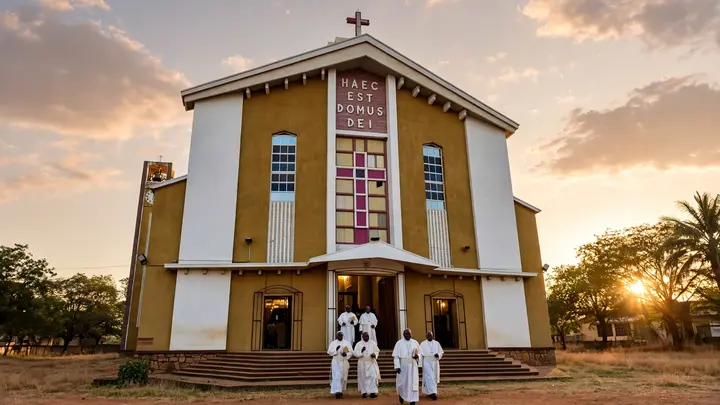
The Catholic bishops of Sudan and South Sudan have warned that Christians face growing threats as the war between the Sudanese Armed Forces and the Rapid Support Forces destroys churches, schools and hospitals. The warning came in a communiqué issued at the end of the bishops' 52nd Annual Plenary Assembly in Torit, held from 7 to 13 November 2026 under the theme of peace, democracy and hope.
The bishops did not soften the language. They condemned the war and its devastating humanitarian consequences, pointing to the widespread destruction of homes, schools, places of worship, health facilities and critical infrastructure. And they named the danger to believers directly: they expressed particular concern over threats facing Christian communities, clergy, religious men and women, and Church institutions in areas controlled by either warring faction.
The statement was signed by Cardinal Stephen Ameyu Martin Mulla, President of the Sudan and South Sudan Catholic Bishops' Conference and Metropolitan Archbishop of Juba. The bishops' words carry weight because they speak from inside the suffering. Their churches are among the buildings being hit, and their priests and nuns are among the people at risk.
One sentence in the communiqué stands out as a line in the sand. "Therefore, no person in the Sudan should be persecuted, coerced or discriminated against because of religious belief," the bishops said. It is a simple claim — that faith should never be a reason to harm someone — and in a country at war, it is also a brave one.
Print it, pray through it, and share it with your family or small group.
The bishops also raised the alarm over looming food shortages, calling for urgent action to strengthen food security. They urged governments, humanitarian agencies and development partners to step up food assistance, support agricultural production and invest in measures that would keep families fed through the months ahead.
Sudan Bishops Torit Plenary November 2026: Elections, Peace and Food
The communiqué reached beyond the war itself. The bishops urged political leaders in both Sudan and South Sudan to prioritise peace, constitutional order, democratic accountability and human dignity. They warned against political exclusion, violence and governance practices that could undermine stability.
In South Sudan, the bishops turned to the general elections scheduled for 22 December 2026. They expressed concern over institutional, technical, financial and security challenges that could affect the credibility of the vote. Any caretaker arrangements, they said, must operate within the framework of the Transitional Constitution and the Revitalised Peace Agreement.
The bishops called on all parties in Sudan to cease hostilities, protect civilians and allow unrestricted humanitarian access. They urged regional and international actors — including the African Union, IGAD, the United Nations and the Holy See — to intensify diplomatic efforts aimed at restoring peace.
The appeal matters because the bishops are not distant observers. The assembly met in Torit, in South Sudan, while the war raged across the border in Sudan. The men who signed the communiqué lead congregations that have buried the dead, sheltered the displaced and watched their own churches come under fire.
Sudan Churches Destroyed: Why the Bishops Spoke Out Now
The bishops' warning about churches under threat is not abstract. On 1 November, the Sudanese Armed Forces shelled and completely destroyed the largest church in Omdurman, according to Christian Solidarity Worldwide. The church, used by both the Episcopal and Evangelical denominations, was built in the early 1900s and was the second oldest church in the city, after the Coptic Church.
It is a simple claim — that faith should never be a reason to harm someone — and in a country at war, it is also a brave one.
Two days later, on 3 November, a building belonging to the Comboni Catholic missionary order in Khartoum El-Shajara was bombed. The attack on Mariam Home left five nuns and several children injured. CSW sources believe the attacks on churches are intentional, and that more may follow as the two sides continue to negotiate a ceasefire.
The war between the Sudanese Armed Forces and the Rapid Support Forces began on 15 April 2023, when violence erupted as the two forces were due to merge under an internationally supported framework for a transition to democracy. More than three years on, the fighting has turned churches into targets and Christians into people who worship in the shadows.
The same pattern of Christians caught in war is unfolding across the region. In Ethiopia's Oromia region, at least 60 Orthodox Christians were killed in two attacks in October, as reported in Latest: 60 Orthodox Christians Killed in Ethiopia's Oromia Region, Church Says. And the European Parliament has condemned the persecution of Christians in Pakistan, Nigeria and Sudan, as reported in EU Parliament Condemns Persecution of Christians in Pakistan Nigeria and Sudan.
Sudan's Christians have endured this before. A Sudanese Christian freed from Kobar prison after more than a year still does not feel safe in Khartoum, as reported in Amin Ismail Freed From Kobar Prison in Sudan After More Than a Year But Still Not Safe in Khartoum. The bishops' communiqué is the latest chapter in a story of a small, stubborn church that refuses to disappear.
And still the churches gather. That is the part of this story that never makes the casualty reports. In Khartoum, in Omdurman, in Torit, congregations meet and pray in buildings that may not stand next week. They do it because their faith is not a luxury for peaceful times. It is the one thing the bombs cannot take.
🙏 Did this part inspire you?
The question now is whether anyone beyond Sudan is listening. The bishops have done their part: they met, they spoke, they named the danger, and they called on the world to act. The next report from Sudan will tell us whether the ceasefire talks the bishops are watching produce protection — or whether another century-old church falls, and another five nuns are carried from the rubble.
Frequently asked questions
At the end of their 52nd Annual Plenary Assembly in Torit (7-13 November 2026), the bishops warned that Christians face growing threats as the war between the Sudanese Armed Forces and the Rapid Support Forces destroys churches, schools, hospitals and other infrastructure. They also raised the alarm over looming food shortages.
Cardinal Stephen Ameyu Martin Mulla, President of the Sudan and South Sudan Catholic Bishops' Conference and Metropolitan Archbishop of Juba, signed the communiqué issued at the end of the assembly in Torit.
On 1 November, the Sudanese Armed Forces shelled and completely destroyed the largest church in Omdurman, used by the Episcopal and Evangelical denominations and built in the early 1900s, according to Christian Solidarity Worldwide. On 3 November, a Comboni missionary building in Khartoum El-Shajara was bombed, injuring five nuns and several children.
The bishops expressed concern that institutional, technical, financial and security challenges could affect the credibility of the general elections scheduled for 22 December 2026. They said any caretaker arrangements must operate within the Transitional Constitution and the Revitalised Peace Agreement.
They called on all parties to cease hostilities, protect civilians and allow unrestricted humanitarian access, and urged the African Union, IGAD, the United Nations and the Holy See to intensify diplomatic efforts to restore peace.
🙏 Did this part inspire you?
Print it, pray through it, and share it with your family or small group.
🔔 Don't Miss the Next Story!
Get breaking Christian news on your phone before everyone else — allow notifications when prompted, or join our newsletter below!
But the most surprising part of this story is yet to come — keep reading.
🙏 Have a Testimony to Share?
Has God done something amazing in your life? Or want us to cover a specific story? Send your testimony or story request via WhatsApp — your story could encourage thousands!
💬 Comments
Share your thoughts below. Be kind and respectful. If this story touched you, let us know in the comments!