🎧 Listen to This Story (Audio Mode)
Saved for offline reading — text only; photos need the internet.
18 States Urge Supreme Court to Save Kentucky Prayer Grotto
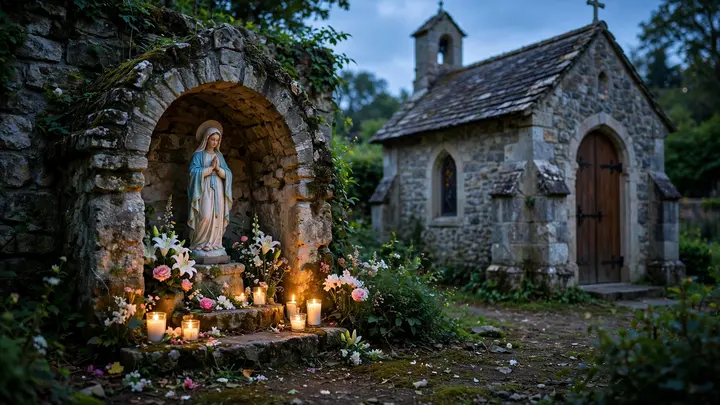
Eighteen state attorneys general have urged the U.S. Supreme Court to let a small Kentucky Catholic community build a 600-square-foot prayer grotto on its own land. The brief, led by Kentucky Attorney General Russell Coleman and filed this week, asks the justices to reverse the Kentucky Supreme Court and revive the shrine plan in Park Hills. The court agreed in October to hear the case, with oral arguments scheduled for January 20, 2027.
The grotto itself is modest. The Missionaries of St. John the Baptist, who run Our Lady of Lourdes Chapel in Park Hills, a suburb of Cincinnati, want to build a 16-by-39-foot grotto honouring the Virgin Mary's apparition to St. Bernadette at Lourdes in France. The plan calls for a shrine, a plaza, a walking path and a retaining wall, a quiet place for prayer and meditation beside the church on Amsterdam Road. The community's own description is simpler still: a grotto, two statues, a patio, and a walkway.
The fight began in 2021, when the Missionaries sought permission to build on land they had bought next to their church. The property was zoned residential, so the group applied to the local zoning board for a conditional use permit and setback variances. The board granted them. Then two neighbours, Joel and Elizabeth Frederic, sued, challenging the city's approval of the outdoor shrine. The neighbours prevailed in Kentucky's appellate courts, and in December 2025 the Kentucky Supreme Court ruled 6-1 against the church, holding that the zoning board had exceeded its authority in granting the variance and that no violation of federal religious land-use law had occurred.
Print it, pray through it, and share it with your family or small group.
The Kentucky court reasoned that the ordinance did not substantially burden the church's religious exercise, in part because the community could build a smaller shrine on its existing plot, and in part because it knew of the prohibition before it sought the permit. The Missionaries say that reasoning forces a court to decide which size, form and location of a shrine counts as religiously essential, and which does not. That, they argue, is exactly the kind of judgment the law forbids the government to make.
The case, Missionaries of Saint John the Baptist, Inc. v. Frederic, docket No. 25-1131, reached the Supreme Court on March 26, 2026. The justices agreed on October 1 to hear it, but only on one question: whether barring a religious institution from building a religious structure on its own property is a substantial burden under the federal Religious Land Use and Institutionalized Persons Act, known as RLUIPA. It is the first time the Supreme Court has considered the land-use protections of that law, according to Coleman's office, and the answer will reach far beyond one small town in Kentucky.
Kentucky Prayer Grotto: Why 18 States Say Zoning Law Burdens Faith
The 18-state coalition, including Nebraska, West Virginia, Utah, Arkansas, Texas and others, argues that the zoning restriction is the clearest kind of burden on a religious organisation. In their filing, the attorneys general said the law Congress wrote was meant to stop exactly this: a local government using land-use rules to keep a religious community from building what its faith calls it to build. They urged the court to reverse the Kentucky ruling, arguing that doing so would let states keep the balance Congress struck between local zoning power and religious freedom.
Kentucky Attorney General Russell Coleman said he was proud to join the filing. His office prepared the brief through Solicitor General Matt Kuhn, Principal Deputy Solicitor General Jack Heyburn and Deputy Solicitor General Jacob Abrahamson. Coleman has been involved at every stage of the case. He previously defended the Missionaries' position before Kentucky's highest court, and in April he led a coalition of 20 states in a brief urging the U.S. Supreme Court to take up the dispute. The local goverment first said yes to the grotto, then a court said it had no power to say yes at all, and now 18 states are asking the nation's highest court to settle the matter.
The neighbours' position is not frivolous. They bought homes in a residential neighbourhood, and they argue the zoning rules that protect that neighbourhood should apply to everyone, including a church. The Kentucky Supreme Court agreed with them. What the Supreme Court must now decide is where the line falls between a town's right to plan its streets and a church's right to pray on its own ground.
RLUIPA Land-Use Protections Face First Supreme Court Test
RLUIPA was passed by Congress in 2000 to protect religious institutions from discriminatory land-use decisions. Its land-use provision says the government may not impose a land-use regulation that places a substantial burden on religious exercise unless it can show a compelling interest pursued in the least restrictive way. Until now, the Supreme Court has never ruled on what counts as a substantial burden when a church simply wants to build on land it owns. The Park Hills case will set that standard for the first time.
The stakes are national. Every congregation that wants to build a sanctuary, a school, a shrine or a fellowship hall deals with the same zoning boards, the same variance hearings and the same neighbours. If the Kentucky court's reasoning stands, a town could tell a church its building is too big, its design too grand or its location too visible, and a court could agree that none of those things is truly essential to the faith. If the Missionaries win, churches across the country will have a clearer shield when local officials use planning rules to block them.
🙏 Did this part inspire you?
Faith and the courts keep meeting in the Supreme Court's docket this year. Maine is already there over a church school's fight for tuition aid, as we reported in Latest: Crosspoint Church Petitions Supreme Court Over Maine's LGBT Rules for School Tuition Aid. The Justice Department has weighed in on the side of faith in other cases, as we reported in DOJ Backs Christian Doctors Challenging Colorado Law Forcing Gender Procedures on Minors. And states themselves are sharply split on how well they protect religious life, as we reported in Alabama Tops Religious Freedom Index at 80 Percent as Michigan Finishes Last at 34 Percent.
For now, the grotto remains unbuilt. The statues have not been placed, the plaza has not been paved, and the small plot of land beside Our Lady of Lourdes Chapel is still empty grass. On January 20, 2027, the justices will hear argument on whether a church may build a place of prayer on property it bought and paid for. The answer will decide the fate of a 600-square-foot shrine in Park Hills, and it will quietly redraw the rules for every congregation in America that wants to build something and call it holy.
Frequently asked questions
It is a planned 16-by-39-foot grotto honouring the Virgin Mary's apparition to St. Bernadette at Lourdes, with a statue of the Virgin Mary, a plaza, a walking path and a retaining wall. The Missionaries of St. John the Baptist want to build it beside Our Lady of Lourdes Chapel in Park Hills, Kentucky, as a quiet place for prayer and meditation.
The local zoning board granted a conditional use permit and variances in 2021, but two neighbours, Joel and Elizabeth Frederic, sued. Kentucky's appellate courts sided with the neighbours, and in December 2025 the Kentucky Supreme Court ruled 6-1 that the board had exceeded its authority and that no violation of federal religious land-use law had occurred.
The Religious Land Use and Institutionalized Persons Act is a federal law passed in 2000. Its land-use provision bars the government from imposing a land-use regulation that substantially burdens religious exercise unless it serves a compelling interest in the least restrictive way.
An 18-state coalition led by Kentucky Attorney General Russell Coleman filed an amicus brief at the U.S. Supreme Court this week, including Nebraska, West Virginia, Utah, Arkansas and Texas. Coleman previously led a 20-state brief in April urging the court to take the case.
Oral arguments are scheduled for January 20, 2027. The case is Missionaries of Saint John the Baptist, Inc. v. Frederic, docket No. 25-1131, and it is the first time the Supreme Court has considered RLUIPA's land-use protections.
🙏 Did this part inspire you?
Print it, pray through it, and share it with your family or small group.
🔔 Don't Miss the Next Story!
Get breaking Christian news on your phone before everyone else — allow notifications when prompted, or join our newsletter below!
But the most surprising part of this story is yet to come — keep reading.
🙏 Have a Testimony to Share?
Has God done something amazing in your life? Or want us to cover a specific story? Send your testimony or story request via WhatsApp — your story could encourage thousands!
💬 Comments
Share your thoughts below. Be kind and respectful. If this story touched you, let us know in the comments!