🎧 Listen to This Story (Audio Mode)
Saved for offline reading — text only; photos need the internet.
Alabama Tops Religious Freedom Index at 80 Percent as Michigan Finishes Last at 34 Percent
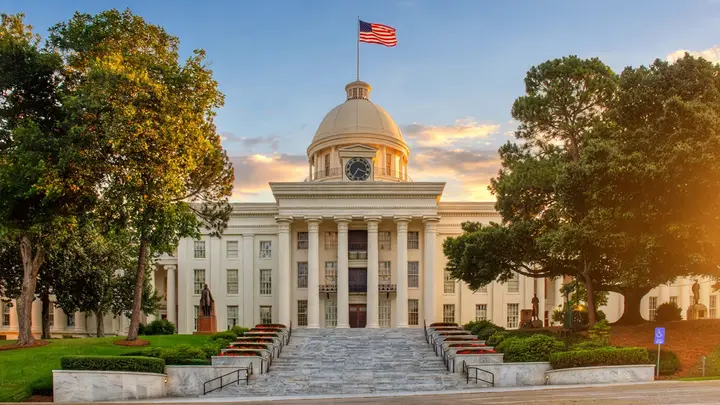
Alabama ranks first in America for religious freedom, scoring 80 percent overall in the Napa Legal Institute's fourth annual Faith and Freedom Index, released on 16 November 2026. Michigan finishes last at 34 percent for the second year running. The index ranks all 50 states plus Washington, D.C., on laws affecting churches, religious schools, pregnancy resource centers, homeless shelters and faith-based nonprofits across 15 categories.
Behind Alabama come Kansas at 76 percent, Indiana at 75 percent and Texas at 71 percent. At the bottom, Michigan's 34 percent is followed by Washington at 38 percent and Massachusetts at 41 percent. More than half of the states — 32 of them — scored below 50 percent, which means most of America still falls short on the laws that protect faith-based nonprofits.
The results cut across party lines, and that is one of the most surprising parts of the report. New York, a Democratic-led state, scored 55 percent — higher than Republican-led North Dakota, South Carolina and Tennessee. The index measures laws, not politics, and the laws do not always follow the map the way people expect.
Two different sets of scores are circulating, and they should not be mixed up. The overall scores — Alabama 80 percent, Michigan 34 percent — are the headline ranking. There is also a seperate religious-freedom-only score, where Alabama reaches 94 percent, Kansas 87 percent and Michigan just 24 percent. Same index, different measure, and the two should always be labelled clearly.
Print it, pray through it, and share it with your family or small group.
It is also important to say what the index does and does not measure. It measures laws affecting nonprofits: whether a church can own property, whether a religious school can operate freely, whether a pregnancy resource center can advertise honestly, whether a homeless shelter can hire people who share its faith. It does not measure how free Christians feel in their daily lives. A state can score well on paper while its believers still feel the pressure, and a state can score badly while its churches thrive.
Alabama's top ranking comes with a wrinkle. The state still has a Blaine amendment on its books — a 19th-century provision, originally aimed at Catholic schools, that bars public money from going to religious institutions. Alabama tops the index in spite of that amendment, not because of it, and the amendment remains a reminder that even the best-scoring state has work to do.
Religious Freedom Index 2026: Alabama 80 Percent, Michigan 34 Percent
The states at the bottom have their own stories. Michigan's 34 percent is the worst in the country for the second year in a row, and the state's churches and nonprofits have felt the weight of laws that make their work harder and more expensive. Washington at 38 percent and Massachusetts at 41 percent are not far behind, and all three states have room to improve.
But the index also shows that change is possible, and that it can come quickly. Florida improved to 67 percent overall by clarifying that nonprofit directors may rely on clergy guidance when they make decisions — a small legal change with a real effect on how faith-based boards work. Massachusetts, despite its low overall score, raised its fundraising audit threshold from $200,000 to $500,000, easing a burden on small nonprofits.
Those details are the heart of the index. It is not really a ranking of states. It is a list of laws, and every law on the list can be changed. A legislature that wants to protect religious freedom can do it in a single session. A legislature that does not want to can leave the burden in place for years.
Napa Legal Faith and Freedom Index: What the Scores Mean for Churches
The index was covered widely in the week it was released. Christian Post covered the rankings on 23-24 November, and Fox News Digital and the Washington Stand covered them the same week. The coverage matters, because most church leaders have never heard of the laws the index measures until those laws land on their desk as a bill or a lawsuit.
Churches feel these laws in practical ways. A religious school that cannot get a zoning permit cannot open its doors. A homeless shelter that cannot hire staff who share its mission cannot serve its guests the way it wants to. A pregnancy resource center that faces new advertising rules cannot reach the women who need it. The index puts a number on all of that, and the number for most states is below 50 percent.
American bishops have been making their own careful decisions about the Church's future this month, approving a new lectionary translation in a 196-5 vote at their fall meeting in Baltimore, as we reported in US Bishops Approve New Catholic Lectionary Translation for Mass in 196-5 Vote. The index is a reminder that the laws around the Church matter just as much as the decisions inside it.
The Church of England has been facing its own questions about trust and leadership, as King Charles opened the General Synod on 17 November and Archbishop Sarah Mullally vowed to rebuild trust, as we reported in King Charles Opens General Synod as Archbishop Sarah Mullally Vows to Rebuild Trust. In America, the question is different but just as serious: will the law protect the Church's freedom to serve, or will it slowly make that service harder?
🙏 Did this part inspire you?
Even the Christian business world is feeling the pressure of a changing landscape. Life Surge, the Christian wealth-building seminar company, has moved into a new $16 million headquarters even as its attendance has fallen by more than half, as we reported in Today: Life Surge Attendance Drops by Half as Christian Seminar Buys 16 Million Dollar Headquarters. Faith-based organisations of every kind are navigating a country where the rules keep shifting.
For now, Alabama can celebrate, Michigan can reflect, and the other 48 states can read the report and ask where they stand. The index will be back next year, and the scores will move — up or down — depending on what state legislatures do in the meantime. The question for every church leader reading it is simple: does your state protect your freedom to serve, or does it get in the way?
Continued tomorrow.
Frequently asked questions
Alabama ranks first overall at 80 percent in the Napa Legal Institute's fourth annual Faith and Freedom Index, released 16 November 2026. Kansas follows at 76 percent, Indiana at 75 percent and Texas at 71 percent.
Michigan ranks last at 34 percent overall for the second year running, followed by Washington at 38 percent and Massachusetts at 41 percent.
The overall score (Alabama 80 percent, Michigan 34 percent) is the headline ranking across 15 categories. The religious-freedom-only score is a separate measure: Alabama 94 percent, Kansas 87 percent, Michigan 24 percent. The two should not be mixed.
More than half of the states — 32 of them — scored below 50 percent overall in the 2026 index.
It measures state laws affecting churches, religious schools, pregnancy resource centers, homeless shelters and faith-based nonprofits across 15 categories. It measures laws, not how free Christians feel day to day.
🙏 Did this part inspire you?
Print it, pray through it, and share it with your family or small group.
🔔 Don't Miss the Next Story!
Get breaking Christian news on your phone before everyone else — allow notifications when prompted, or join our newsletter below!
But the most surprising part of this story is yet to come — keep reading.
🙏 Have a Testimony to Share?
Has God done something amazing in your life? Or want us to cover a specific story? Send your testimony or story request via WhatsApp — your story could encourage thousands!
💬 Comments
Share your thoughts below. Be kind and respectful. If this story touched you, let us know in the comments!