🎧 Listen to This Story (Audio Mode)
Saved for offline reading — text only; photos need the internet.
Latest: Crosspoint Church Petitions Supreme Court Over Maine's LGBT Rules for School Tuition Aid
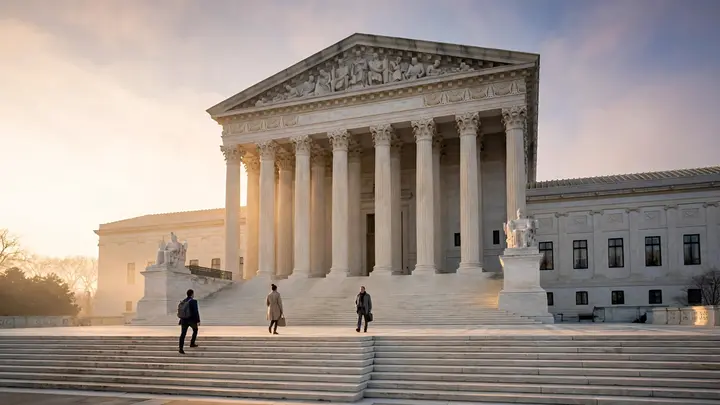
Crosspoint Church, which operates Bangor Christian Schools in Maine, has asked the U.S. Supreme Court to stop the state from shutting its school out of a taxpayer-funded tuition aid program unless it adopts LGBT policies that clash with its Christian beliefs. The church filed its petition for a writ of certiorari on Friday 20 November 2026, about four months after the 1st U.S. Circuit Court of Appeals ruled against it. The justices have not yet said whether they will hear the case.
For one small church school in Bangor, the choice Maine offers is brutally simple: keep the faith that shapes every classroom, or take the public money that helps local families afford school. Crosspoint says it should never have to choose, and it is now asking the nine justices in Washington to agree.
Maine runs one of the oldest school choice programs in America. In towns without a public school serving certain grade levels, the state pays tuition so families can send their children to an approved private school. For years the fight has been over whether Christian schools may take part at all.
The Supreme Court already answered that question once. In 2022, the justices ruled 6-3 in Carson v. Makin that Maine could not prevent parents from using the state tuition program to send their children to Christian schools. The case was brought by parents from Bangor Christian itself, who had sued the state over a ban on tuition assistance for children sent to a private school with religious elements in its curriculum.
Print it, pray through it, and share it with your family or small group.
But the victory did not end the fight. After the 2022 ruling, Democratic Maine Attorney General Aaron Frey said Crosspoint's school was still ineligible for the program, this time over its religious stance on LGBT issues. In a 2023 statement, Frey said the education provided by the schools at issue was "inimical to a public education", arguing that they "promote a single religion to the exclusion of all others, refuse to admit gay and transgender children, and openly discriminate in hiring teachers and staff."
Crosspoint sued Maine officials in March 2023, denouncing the new requirement as a "poison pill". In February 2024, U.S. District Judge John Woodcock denied the church's request for a preliminary injunction, ruling that the complaint was unlikely to succeed. Woodcock wrote that the educational antidiscrimination provisions "do not violate the Free Exercise Clause because they are neutral, generally applicable, and rationally related to a legitimate government interest."
In July 2026, a three-judge panel of the 1st U.S. Circuit Court of Appeals ruled against Crosspoint. Circuit Judge William Kayatta wrote the opinion, finding that "Crosspoint has not shown that specific anti-BCS animus motivated" the policy. The panel concluded Crosspoint had not succeeded on its free-exercise claims, and sent the case back to the district court for further proceedings.
Now the church has taken the fight to the highest court in the land. Its petition asks the justices to decide whether "public-benefits conditions requiring religious schools to abandon their religious exercise to obtain the benefits are subject to strict scrutiny", the toughest standard courts use to review government action. The petition argues that Maine's "maneuvers cannot be described as anything but defiance" of the 2022 ruling, saying the state replaced the sectarian-school ban with a condition officials knew "would be unacceptable to BCS and other religious schools."
"To obtain tuition funds, Crosspoint must cease operating BCS consistent with its Christian mission to preach the Gospel and biblically rooted beliefs about sex and gender identity," the petition reads. First Liberty Institute put it more bluntly: "Free-exercise rights cannot be nullified with a clever legislative trick. Only a direct repudiation of Maine's maneuvers by this Court will safeguard free-exercise rights."
Ryan Gardner, senior counsel for First Liberty Institute, called Maine's policies "un-American" in a statement on Monday 23 November. "Religious education plays a historical and vital role in our diverse society, but Maine's leadership still refuses to comply with the Supreme Court's mandate to treat faith-based education fairly," Gardner said.
"Punishing religious institutions for their religious beliefs is odious to our Constitution. We now hope the Court will take this case and end Maine's efforts to circumvent the First Amendment."
Crosspoint Church Supreme Court Petition: What Maine's Tuition Program Requires
At the heart of the case is what compliance would actually cost the school. According to First Liberty Institute, Bangor Christian Schools would face potential legal consequences if it joined the tuition program while keeping its policies on biological sex, seperate bathrooms and athletic teams, and religious standards for student enrollment.
The church says those policies are not add-ons to its mission. They are the mission, applied to the daily life of a school.
The dispute is being watched far beyond Maine. Alabama now tops a new religious freedom index at 80 percent while Michigan finishes last at 34 percent, as we reported in Alabama Tops Religious Freedom Index at 80 Percent as Michigan Finishes Last at 34 Percent, and the gap between the friendliest and toughest states for faith-based work has never been wider.
🙏 Did this part inspire you?
Crosspoint is not alone at the Supreme Court's door. A second Maine school, St. Dominic Academy, a Catholic school of the Diocese of Portland, also asked the justices on Friday to review the rules that keep it out of the state tuition program. Its petition was filed by the religious liberty law firm Becket.
Carson v Makin 2022: Why the 6-3 Ruling Still Matters
The 2022 Carson ruling is the foundation of Crosspoint's case, and the church's lawyers say Maine has spent four years trying to build around it. The Supreme Court said the state could not exclude religious schools from a public benefit simply because they are religious. Maine responded, Crosspoint argues, by keeping the schools out for a different reason: not because they teach the Bible, but because they live by it in their admissions, hiring and student life.
That distinction is what the justices are now being asked to judge. If the Court takes the case, the question will be whether a state can attach conditions to public money that a religious school cannot accept without abandoning its beliefs. The same fight over protection for religious communities is playing out beyond America too: Syrian Christian leaders recently demanded protection after a kidnapping, as we reported in Latest: Three Syrian Patriarchs Demand Protection for Christians After Jeweller Maher Sankari Kidnapped for 120kg of Gold.
Religious freedom cases in the United States have a way of arriving in clusters. A British-born clergyman is facing a visa review over his own public statements, as we reported in Latest: Calvin Robinson Faces US Visa Review After Call to Drive Jews Out of America, and the Crosspoint petition lands in the same season of argument over where faith ends and the state begins.
For now, the families of Bangor Christian Schools are watching Washington. The question is whether the Court that told Maine it could not exclude Christian schools in 2022 will now tell the state it cannot do the same thing by another name.
Frequently asked questions
Crosspoint Church, which operates Bangor Christian Schools, asked the Supreme Court to review the 1st Circuit's July 2026 ruling against it and decide whether public-benefit conditions that force religious schools to abandon their religious exercise must face strict scrutiny, the toughest legal standard.
Maine says the school must comply with state LGBT antidiscrimination rules, covering sexual orientation and gender identity, to take part in its tuition assistance program. Crosspoint says complying would force it to abandon its Christian beliefs about sex and gender identity.
In a 6-3 ruling, the Supreme Court held that Maine could not prevent parents from using the state tuition program to send their children to Christian schools. The case was brought by parents from Bangor Christian Schools.
Strict scrutiny is the toughest standard courts use to review government action. The government must show a compelling interest and prove its rule is narrowly tailored to achieve it. Crosspoint wants this standard applied to Maine's conditions on tuition aid.
No. The justices have not yet said whether they will hear Crosspoint's petition, which was filed on 20 November 2026. A second petition from St. Dominic Academy, a Catholic school in Maine, was filed the same day.
🙏 Did this part inspire you?
Print it, pray through it, and share it with your family or small group.
🔔 Don't Miss the Next Story!
Get breaking Christian news on your phone before everyone else — allow notifications when prompted, or join our newsletter below!
But the most surprising part of this story is yet to come — keep reading.
🙏 Have a Testimony to Share?
Has God done something amazing in your life? Or want us to cover a specific story? Send your testimony or story request via WhatsApp — your story could encourage thousands!
💬 Comments
Share your thoughts below. Be kind and respectful. If this story touched you, let us know in the comments!