🎧 Listen to This Story (Audio Mode)
Saved for offline reading — text only; photos need the internet.
US Bishops Approve New Catholic Lectionary Translation for Mass in 196-5 Vote
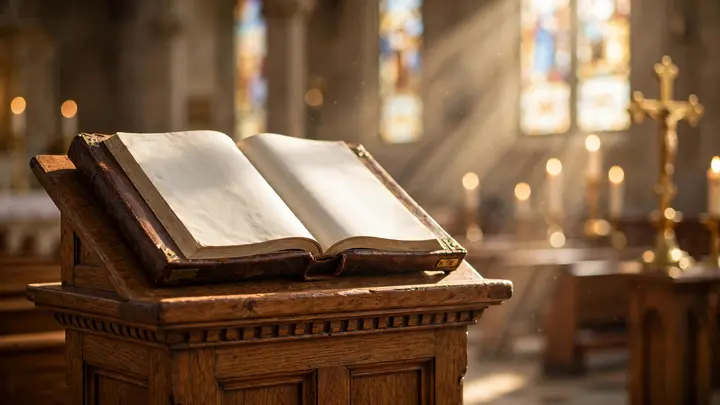
The nation's Roman Catholic bishops have approved updated versions of the Roman rite Mass lectionary and Book of the Gospels, with translations now matching those in the forthcoming Catholic American Bible. The favourable vote on 18 November 2026 — 196 in favour, five against and three abstaining — took place during the US Conference of Catholic Bishops' annual fall plenary assembly, held 16–19 November in Baltimore. The Catholic American Bible will replace the New American Bible Revised Edition (NABRE), released in March 2011, which has been the English translation of Scripture used in the readings at Masses; the new Bible will be available in 2027 through approved publishers.
Picture a Sunday morning in an American parish, a few years from now. The lector steps up to the ambo, opens the lectionary, and reads the first reading. The words will sound familiar — the same stories, the same psalms — but the phrasing will be slightly different, because the book in the lector's hands will be new. That is what 196 bishops voted for in Baltimore: not a new Bible for the shelf, but a new voice for the readings that millions of Catholics hear every Sunday.
The vote was decisive. One hundred and ninety-six bishops said yes, five said no, and three abstained — a margin that shows how much agreement there was in the room. The bishops were not voting on a whim. The lectionary is the book the church reads from at Mass, and changing its translation means changing the words that ordinary Catholics hear proclaimed, week after week, year after year. A decision like that is not taken lightly, and the size of the majority says the bishops believe the time has come.
Print it, pray through it, and share it with your family or small group.
At the heart of the change is a simple idea. "It is about consistency," said Auxiliary Bishop Michael G. Woost of Cleveland, chair of the bishops' Committee on Divine Worship: "we needed to bring those translations into the lectionary." Right now, the Bible Catholics read at home and the readings they hear at Mass come from different translations. The new Catholic American Bible will close that gap, so the words on the page at home and the words from the ambo on Sunday will finally match.
New Lectionary Translation: What Changes for American Catholics at Mass
The Catholic American Bible will replace the New American Bible Revised Edition, known as the NABRE, which has been in use since its release in March 2011. Fifteen years is a long time for a translation to serve the church, and the bishops' decision is, in part, a recognition that scholarship and language have moved on. The new Bible will be available in 2027 through approved publishers, and the lectionary that carries its translation will follow.
One detail in the new lectionary has already caught people's attention. The updated version includes the passage for All Souls' Day, 2 November, whose Masses "tend to attract a large crowd" of people "coming to pray for their deceased relatives and friends." Anyone who has been to church on All Souls' Day knows the scene: pews full of people who do not come every Sunday, but who come on that day, to remember someone they loved. The bishops made sure the new book serves them properly.
The road to Baltimore was a long one. The bishops' annual fall plenary assembly ran from 16 to 19 November, and the lectionary vote was one of its biggest decisions. The same gathering also heard Archbishop Coakley urge the bishops to focus on mission rather than politics, as we reported in Latest: Archbishop Coakley Tells US Catholic Bishops to Focus on Mission Not Politics in Baltimore, and it took up questions of artificial intelligence, immigration and church renewal, as we covered in US Bishops Meet in Baltimore November 16-19 to Tackle AI, Immigration and Church Renewal. The lectionary vote sat at the centre of that agenda, because it touches every parish in the country.
It was a careful decision to make the church's prayer and the church's Bible speak with one voice.
US Bishops Lectionary Vote: What Happens Next in Baltimore and Rome
The bishops' decision now goes to the Vatican Dicastery for Divine Worship and the Discipline of the Sacraments for official confirmation and recognition. That step matters: no lectionary can be used at Mass until Rome confirms it. And the timeline is patient — the new lectionaries are not expected in US parishes before the 2028–2029 liturgical cycle. Catholics will not hear the new translation next Sunday, or next year. They will hear it when the church is ready, and the church is taking its time.
That patience is part of the point. A lectionary is not a document; it is a companion for a lifetime of Sundays. The bishops know that the words they approved in Baltimore will be read at weddings and funerals, at Christmas and Easter, at ordinary Tuesdays when only a handful of people are in the pews. The 196–5 vote was not a rush to change. It was a careful decision to make the church's prayer and the church's Bible speak with one voice.
Young Catholics, too, have a stake in this. A recent survey found that 64% of young Catholic adults say faith matters more now than five years ago, as we reported in US Bishops: 64% of Young Catholic Adults Say Faith Matters More Now Than 5 Years Ago, and the words they hear at Mass will shape the faith they carry into the future. The bishops' construction-site image of the church — a place always being built, as Archbishop Coakley put it in his address, which we covered in US Catholic Bishops Baltimore 2026: Coakley Calls Church a Construction Site of Hope — fits this moment: the lectionary is one more stone being set in place.
🙏 Did this part inspire you?
So the books are not yet printed, the readings are not yet changed, and the lectors of America will keep reading from the old translation for another couple of years. But the decision has been made, the vote has been counted, and Rome will have its say. The question now is how the new words will sound when they are finally read aloud — and whether a generation of Catholics will hear the Scriptures a little more clearly because their bishops chose consistency over comfort. Continued tomorrow.
Frequently asked questions
The nation's Roman Catholic bishops approved updated versions of the Roman rite Mass lectionary and Book of the Gospels, with translations now matching those in the forthcoming Catholic American Bible.
The vote was 196 in favour, five against and three abstaining, taken during the US Conference of Catholic Bishops' annual fall plenary assembly, held 16–19 November 2026 in Baltimore.
The new lectionary will use the Catholic American Bible, which will replace the New American Bible Revised Edition (NABRE), released in March 2011. The new Bible will be available in 2027 through approved publishers.
The bishops' decision now goes to the Vatican Dicastery for Divine Worship and the Discipline of the Sacraments for official confirmation and recognition, and the new lectionaries are not expected in US parishes before the 2028–2029 liturgical cycle.
"It is about consistency," said Auxiliary Bishop Michael G. Woost of Cleveland, chair of the bishops' Committee on Divine Worship: "we needed to bring those translations into the lectionary," so the Bible Catholics read at home matches the readings heard at Mass.
🙏 Did this part inspire you?
Print it, pray through it, and share it with your family or small group.
🔔 Don't Miss the Next Story!
Get breaking Christian news on your phone before everyone else — allow notifications when prompted, or join our newsletter below!
But the most surprising part of this story is yet to come — keep reading.
🙏 Have a Testimony to Share?
Has God done something amazing in your life? Or want us to cover a specific story? Send your testimony or story request via WhatsApp — your story could encourage thousands!
💬 Comments
Share your thoughts below. Be kind and respectful. If this story touched you, let us know in the comments!