USCIRF Egypt Hearing Demands Blasphemy Law Repeal
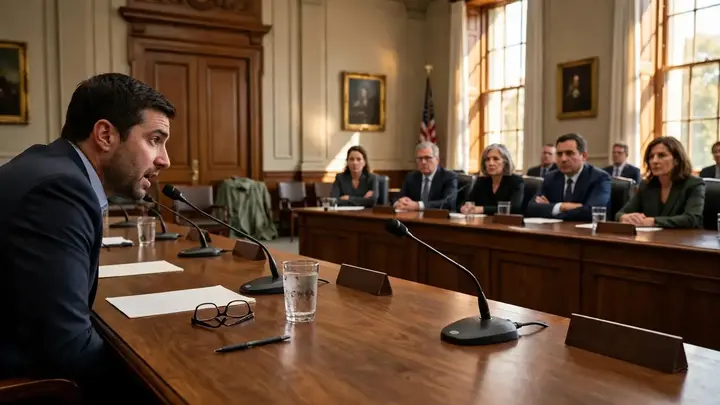
The U.S. Commission on International Religious Freedom held its first country-specific hearing on Egypt in 10 years on Thursday 5 November 2026, and the message from every speaker was the same: repeal the blasphemy law. The virtual hearing, chaired by USCIRF Chair Asif Mahmood, called on Cairo to scrap Article 98(f) of the Penal Code and to free the religious prisoners held under it.
One of those prisoners gives the hearing its human face. Said Abdelrazek, a Christian convert from Islam, was charged in July with contempt for Islam alongside terrorism-related counts, and his case has been heard by a terrorism court in Badr after months in pretrial detention. He did not plant a bomb or join a militia — he changed his religion, and in Egypt that can be enough to put a man in front of a terrorism judge.
What the Hearing Asked Egypt to Do
Commissioner David Anderson asked the panel for one priority improvement to demand of Cairo. Mariam Wahba, research analyst at the Foundation for Defense of Democracies, answered with lawyer-like clarity: work for legal change, starting with the repeal of the anti-blasphemy law.
"Legal change at least opens the door for accountability," Hawthorne told the panel. Wahba put it more simply: "If you focus on the law the culture will change eventually." She added that she was open to a pragmatic first step, narrowing or defining the law before a full repeal, rather than waiting for everything at once.
The Law at the Centre: Article 98(f)
Article 98(f) criminalises "contempt for religion", a charge Egyptian prosecutors apply to alleged insults against the country's three recognised religions. In practice, the speakers said, it lands hardest on people who leave Islam: Christian converts, atheists and freethinkers who post their views online. USCIRF's April 2026 Country Update on Egypt found the goverment has not "exhibited significant political will to repeal or revise this law or end the active prosecution of blasphemy cases."
The arrests have not slowed down. Fourteen people have been arrested in Egypt since September for expressing beliefs outside Islam, as reported in Latest: Coptic Engineer Sherif Wagih Fahmi Arrested in Alexandria Egypt October 2026, and earlier this year six Coptic men were jailed over a comedy clip posted on TikTok, as covered in Six Christians Arrested in Egypt Over TikTok Video Latest News.
The same tool is used against Christians elsewhere too: a mob in Pakistan burned a Christian man's home and clinic over a blasphemy allegation, as reported in Latest: Pakistan Mob Burns Christian Man's Home and Clinic Over Blasphemy Allegation, and in Nigeria, where a Christian mother was jailed for 14 years for sharing her faith, as covered in Latest: Christian Mother Jailed 14 Years in Nigeria for Sharing Her Faith.
Three Names the Commissioners Refused to Drop
Mahmood, who moderated the hearing, raised the arbitrary detention of Christian apologist Augustin Samaan and atheist artist Sherif Gaber. Wahba raised the detention of Said Abdelrazek.
Samaan's case shows how heavy the punishment can be. ADF International has recalled that he was sentenced to five years of hard labour for content explaining the Christian faith, a sentence that turns evangelism into a prison term, as reported in Egypt Christians Arrested TikTok Video Latest: 6 Coptic Men Jailed Over Comedy Clip. His name has now been spoken aloud in a U.S. government hearing, the kind of attention his case has lacked for years.
Abdelrazek's case is, if anything, stranger: a convert charged with contempt for Islam who also faces accusations of joining a banned group and inciting unrest, charges prosecutors have tied to his speech and beliefs. USCIRF lists him as a victim of religious persecution, and the hearing put his name on the record in Washington.
Beyond the Law: Monasteries, Schoolbooks and Forced Marriages
The hearing ranged far beyond one statute. Panellists flagged Egypt's attempted seizure of St. Catherine's Monastery in Sinai, the world's oldest monastery, and the forced reconciliation committees imposed after mob violence follows church building in a Muslim-majority area. Marcus Sheff, chief executive of the Institute for Monitoring Peace and Cultural Tolerance in School Education, described how schoolbooks perpetuate discrimination against non-Muslims, including Jewish people and Ismaili Muslims.
Sawsan Hosny Mahmoud, of the Baha'is of Egypt, spoke about her community's discrimination, including Egypt's refusal to register Baha'i marriages, and Commissioner Gunisha Kaur pressed her on the details. Commissioner Rachel Laser warned that religious freedom is not measured by fine gestures, like President Sisi attending Christmas services, but by legal and institutional reform, and she raised the impunity around forced conversions and forced marriages of Coptic women and girls.
Several members of Congress and senators sent pre-recorded video messages, including Representative Don Beyer, co-chair of the Egypt Human Rights Caucus. The message from Washington was consistent: religious freedom belongs on the table whenever human rights are discussed with Cairo, not as an afterthought but as a standing item.
What Happens Next for Egypt's Christians
USCIRF recommends Egypt be placed on the Special Watch List, for countries that have engaged in or tolerated severe violations of religious freedom but do not meet every test for the harsher Country of Particular Concern designation. The panellists said the listing would make religious freedom a forceful priority in U.S. dialogue with Egypt and put pressure on Cairo's lack of will to act.
The hearing also exposed a seperate problem: the gap between what Egypt promises and what it prosecutes. The government promotes interfaith tolerance in public while its courts jail converts and apologists in private, and the panel's answer was to close that gap by changing the law first and letting the culture follow.
The hearing is over, but the three names raised in it are still behind bars, and the law that put them there is still on the books. The next move belongs to Washington, to Cairo, and to the courts that will decide whether a man can change his religion without losing his freedom — and the next hearing, the next designation and the next arrest will each add a line to that story.
Frequently Asked Questions
The hearing called on Egypt to repeal Article 98(f) of the Penal Code, the blasphemy provision, and to release religious prisoners of conscience detained under it, including Augustin Samaan, Sherif Gaber and Said Abdelrazek.
The virtual hearing, titled "Freedom of Religion or Belief in Egypt", was held on Thursday 5 November 2026 from 10:00 to 11:30 AM ET. It was the first country-specific USCIRF hearing on Egypt in 10 years.
Said Abdelrazek is a Christian convert from Islam who was charged in July with contempt for Islam alongside terrorism-related counts. His case has been heard in a terrorism court in Badr, and USCIRF lists him as a victim of religious persecution.
Augustin Samaan is a Christian apologist detained in Egypt under the blasphemy law. ADF International has recalled that he was sentenced to five years of hard labour for content explaining the Christian faith.
It is a U.S. government category for countries that have engaged in or tolerated severe violations of religious freedom but do not meet all the criteria for designation as a Country of Particular Concern. USCIRF recommends Egypt be placed on it.
🔔 Don't Miss the Next Story!
Get breaking Christian news on your phone before everyone else — allow notifications when prompted, or join our newsletter below!
But the most surprising part of this story is yet to come — keep reading.
🙏 Have a Testimony to Share?
Has God done something amazing in your life? Or want us to cover a specific story? Send your testimony or story request via WhatsApp — your story could encourage thousands!
💬 Comments
Share your thoughts below. Be kind and respectful. If this story touched you, let us know in the comments!