🎧 Listen to This Story (Audio Mode)
Saved for offline reading — text only; photos need the internet.
Latest: Federal Judge Rules Maine School Board Discriminated Against The Pines Church Over Beliefs
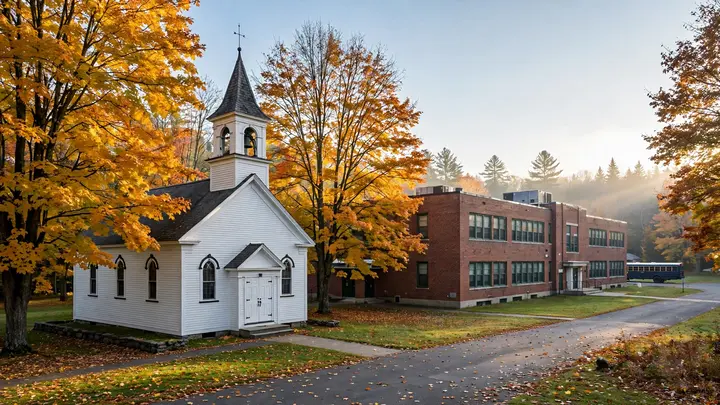
A federal judge has ruled that a Maine school board violated a church's First Amendment rights when it refused the congregation a year-long lease of a public high school — and then awarded the church exactly $1. Chief U.S. District Judge Lance E. Walker issued the 37-page ruling on Friday 13 November 2026, finding that the Hermon School Department discriminated against The Pines Church of Bangor after quizzing its leaders about their beliefs on same-sex marriage and abortion.
One dollar. That is what three and a half years of litigation came down to. The Pines Church had dropped its claim for compensatory damages in order to get a bench trial, so the judge's award was nominal by design. But the words around that dollar were anything but small. Walker found that a majority of the school committee acted with "bad motive," that their stated practical concerns were "pretextual" and "threadbare," and that the month-to-month arrangement they offered instead was an offer "designed to be rejected."
The story began with a growing church and nowhere to meet. Pastor Matt Gioia founded The Pines Church after moving his family back to Maine in 2020. The congregation started in his home, then rented space month-to-month at a movie theatre in Orono. By late 2022 it had outgrown that too, and Gioia asked the Hermon School Committee for a year-long Sunday-morning lease of the high school theatre, cafeteria and a couple of classrooms. The church would bring its own equipment, handle its own setup and teardown, and pay up to $1,000 a month.
Print it, pray through it, and share it with your family or small group.
What happened next is the heart of the case. Committee member Christopher McLaughlin questioned the church's positions on same-sex marriage, abortion, gender-affirming care and other cultural issues. The committee then voted 4-1 to offer a month-to-month arrangement instead of the year-long lease — an arrangement that, the judge noted, does not even require committee approval. A motion for a six-month lease died without a second. Gioia declined the month-to-month offer, and the church sued in May 2023.
Judge Walker, who heard a two-day bench trial in February, was unsparing about what he found. He concluded that the church's religious identity was a substantial factor in the committee's decision, and that McLaughlin, Stephanie Oiler and Kristen Shorey acted with discriminatory animus toward the church's religious identity and beliefs. "If a public school's facilities are available for public use," he wrote, "a religious organization cannot be denied access to those facilities because it is a religious organization." He added a line that will be quoted in religious-liberty cases for years: "novelty is not a basis to discriminate against religious organizations."
Pines Church Maine Ruling: What the Judge Found
The ruling was narrower than the headlines it will draw, and the judge was careful to say so. He credited the school superintendent as a "guardrail" who kept steering the committee back toward the Constitution, and he rejected the church's claims about how the process was handled. He set aside the church's Establishment Clause theory and denied an injunction the church never properly explained. The victory, in other words, was real but limited.
What the church won was a declaration that the school department's treatment and denial of its application violated the First Amendment's Free Speech and Free Exercise clauses, along with Maine's public accommodations law. It won $1 in nominal damages and the right to seek reasonable attorney's fees and costs. What it did not win was the lease itself. The judge declined to order the school department to hand over the high school, and he left the committee's vote standing.
That gap — between winning the principle and not getting the building — is the part of this story that will stay with Gioia's congregation. The Pines Church sued because it needed a stable home for Sunday worship, not because it wanted a constitutional precedent. It now has the precedent.
One Dollar, One Principle: What the Maine Church Case Means
But there is a second sense in which the ruling is a warning, not a triumph. The judge found bad motive in three committee members, yet the committee's vote still stands and the church still has no lease. The law can name discrimination and still leave the victims without the thing they asked for.
For Gioia, the case was never really about the money. He moved his family back to Maine in 2020 to plant a church, started it in his living room, and watched it grow past the walls of a rented movie theatre. The judge's ruling says that wall was unlawful. The congregation now has to decide what to do with that finding.
There is something quietly powerful about a church that would spend three years in federal court over the right to rent a school hall on a Sunday. It is not glamorous work. Nobody plants a church dreaming of depositions and bench trials. But the freedom to gather, to sing, to preach and to pray in a rented room is the freedom everything else is built on, and when it is threatened, somebody has to stand up for it. In Maine, that somebody was a pastor named Matt Gioia and a congregation small enough to meet in a movie theatre.
The case also fits a wider pattern of American churches finding themselves in court over the most basic questions of where they may meet. Highland Park Methodist Church in Dallas is suing the United Methodist Church over the use of its own name, after voting overwhelmingly to leave the denomination and discovering the fight was only beginning.
🙏 Did this part inspire you?
Religious liberty cases keep reaching the highest courts, too. The Supreme Court is set to decide whether Colorado can block Catholic preschools from a state programme, a case that will shape how far the government may go in excluding religious organisations from public benefits. The Maine ruling sits in that same current — a lower court, a smaller stage, but the same question about whether faith communities are second-class citizens when they ask for equal access.
And Maine itself has been a place where faith and public life keep meeting. Maine faith leaders recently organised to protect voters on election day, showing that the state's churches are not hiding from public life but stepping into it. The Pines Church case is the other side of that coin: a church asking only to be treated like any other community group that wants to rent a room.
The next move belongs to the Hermon School Department. It can appeal, it can negotiate a lease, or it can do nothing and let the declaration stand. A dollar does not rent a building. But a federal judge's words, once written down, are harder to ignore than a dollar is to spend. And for a small church in Maine, that may be enough to keep going.
Frequently asked questions
On Friday 13 November 2026, Chief U.S. District Judge Lance E. Walker ruled that the Hermon School Department violated The Pines Church's rights under the First Amendment and Maine's public accommodations law when it refused the congregation a year-long lease of Hermon High School facilities after questioning its beliefs.
The church won $1 in nominal damages because it had dropped its claim for compensatory damages in order to get a bench trial. The $1 was symbolic; the church was also found entitled to reasonable attorney's fees and costs.
The Pines Church asked the Hermon School Committee for a year-long Sunday-morning lease of the high school theatre, cafeteria and classrooms, offering up to $1,000 a month and its own setup and teardown. The committee instead offered a month-to-month arrangement, which the judge called an offer "designed to be rejected."
Pastor Matt Gioia founded The Pines Church after moving his family back to Maine in 2020. The congregation began in his home, then met month-to-month at a movie theatre in Orono before outgrowing that space.
No. The judge declined to order the school department to grant the year-long lease and denied an injunction, leaving the committee's vote standing. Whether the school department will appeal to the First Circuit had not been reported as of 14 November.
🙏 Did this part inspire you?
Print it, pray through it, and share it with your family or small group.
🔔 Don't Miss the Next Story!
Get breaking Christian news on your phone before everyone else — allow notifications when prompted, or join our newsletter below!
But the most surprising part of this story is yet to come — keep reading.
🙏 Have a Testimony to Share?
Has God done something amazing in your life? Or want us to cover a specific story? Send your testimony or story request via WhatsApp — your story could encourage thousands!
💬 Comments
Share your thoughts below. Be kind and respectful. If this story touched you, let us know in the comments!