Latest: 60 Orthodox Christians Killed in Ethiopia's Oromia Region, Church Says
Sixty is not a number that stays abstract for long. It is fourteen people in one village on one Tuesday, and forty-six more in three villages on the Saturday that followed, in farming communities where neighbours know whose field is whose and which house belongs to which family.
That is the account given by the Holy Synod of the Ethiopian Orthodox Tewahedo Church, which said on Monday, October 26, 2026, that two attacks in the Arsi Zone of Ethiopia's Oromia region had killed at least 60 Orthodox Christians. Al Jazeera, the Associated Press and OSV News all reported the statement, and the figures here are the church's figures unless another source is named.
The statement was read at the start of the Holy Synod's plenary assembly in Addis Ababa, according to OSV News. It came from the bishops together, after a report from the Diocese Office had reached them, and it asked the country's government to act.
We have heard with deep sorrow the report submitted by the Diocese Office. The killings were described by the Holy Synod as "extremely tragic cruelty and suffering inflicted on our citizens."
That wording, reported by Al Jazeera and TRT World, is the church's own. The Synod used a second phrase in the statement carried by the Associated Press, calling the killings "brutal and merciless massacres": the grief of a church leadership, not the conclusion of an independent investigation.
What Happened in Gora Silingo and Shirka, According to the Church
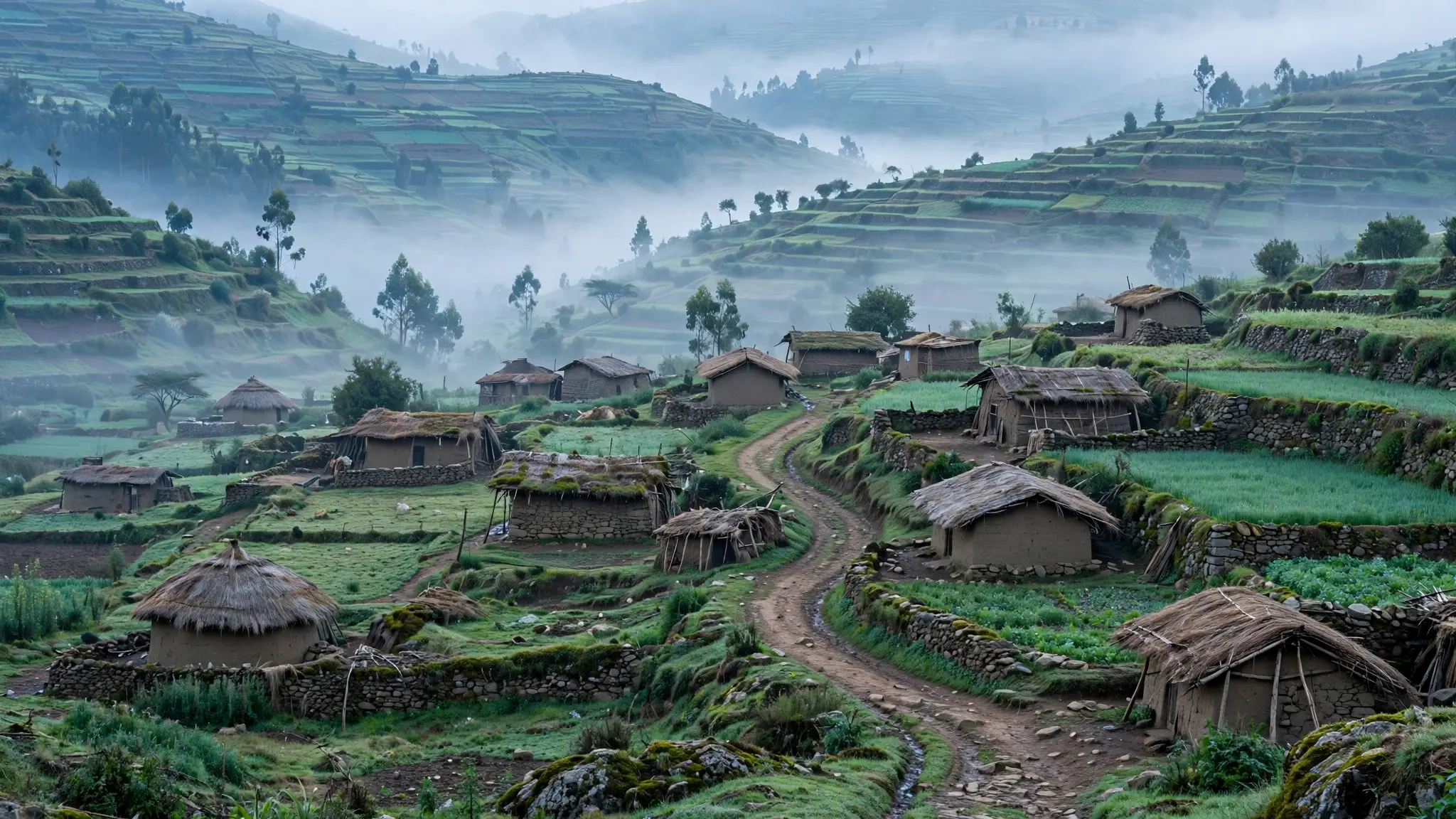
The first attack, the Synod said, took place on October 20 in Gora Silingo, in Angada Kebele in Merti district. Fourteen people were killed there. The second took place on October 24 in the villages of Tereta, Chole and Birbo in Shirka district, where forty-six people were killed. Both districts sit in the Arsi Zone, in central Ethiopia's Oromia region, roughly 120 miles south of Addis Ababa, according to OSV News.
More than twenty people were seriously wounded and taken to hospital, the Synod said, and twenty homes were burned down. Vatican News, citing reports, described the death toll as provisional and said elderly people and children were among the victims, a detail no independent count has yet confirmed.
One independent count points to a slightly lower toll for the second attack. The Armed Conflict Location and Event Data project, cited by Agence France-Presse, put the October 24 toll at at least 43 killed and 18 wounded. The Synod's figure for that day is 46, a reminder that counts in the first days after a rural attack can differ.
What is not in dispute is the scale. Two farming districts lost dozens of people in four days, and twenty families, by the Synod's count, lost their houses as well as the people they lived with.
Who Is Being Blamed, and What Is Still Unproven
No group has claimed responsibility for the attacks, Al Jazeera reported. That single fact should sit at the centre of any discussion of who carried them out, because everything else that has been said so far is an accusation, not an admission.
The Oromia regional government has pledged to pursue those responsible, Al Jazeera reported. Its spokesperson, Hailu Adugna, told the Associated Press that the authorities blame the Oromo Liberation Army, known as the OLA, and its allies, and that action against those responsible had begun. Local media reports cited by Al Jazeera said a local official accused a newly formed rebel alliance that includes the OLA.
The OLA's leader, Jaal Marroo, denied in an Associated Press interview published in February that his fighters target civilians, according to The Hindu. That denial predates these attacks, so it is not a denial of this attack specifically, and who attacked these villages has not been settled by any court or inquiry reported so far.
Behind the Synod's alarm is a wider reported pattern. Al Jazeera reported that the Ethiopian Human Rights Council said in July that at least 432 civilians and four local militia members were killed in targeted attacks in East Arsi between 2021-22 and June 1, 2026. That seperate count covers a longer period and should not be added to the October toll.
Prayers, Memorials and the Demand for Protection
The Synod's statement mourned, and it demanded. It condemned the killings as violations of the constitutional protections for life and religious freedom, and said the violence threatened Ethiopia's tradition of peaceful coexistence, according to Al Jazeera and TRT World.
It announced prayers for the victims on Monday, and directed Orthodox churches and monasteries worldwide to hold similar services on Tuesday, following the Divine Liturgy. A memorial service was held on October 26 at the Patriarchal Seat in Addis Ababa, according to Borkena, with churches asked to hold memorial prayers the following day.
The bishops called on the authorities to bring the attackers to justice, to condemn the attacks publicly, and to deploy security forces to protect civilians, OSV News reported. The Synod said it would seek discussions with senior officials. Those are requests, not outcomes, and whether protection reaches Merti and Shirka is still to be seen — an outcome that has not yet occured.
Readers following attacks on Christian communities elsewhere can find related coverage in the reported kidnapping of a pastor's wife and daughter in Nigeria, in the detention of house church Christians in Jiangxi, China, in the Uganda court sentences over the killing of two evangelists, and in the attack on a church funeral in Karak, Jordan. Each of those stories rests on its own sources, and none of them explains what happened in Arsi.
The last word, for now, belongs to the families who buried their dead in Gora Silingo, Tereta, Chole and Birbo. What happens next depends on two things that have not yet arrived: a verified account of who did this, and proof that the protection the Synod asked for will reach the villages that need it. Both questions are still open, and both will be watched — the next chapter of this story is still being written, and it is one the world should not look away from.
Frequently Asked Questions
The Holy Synod of the Ethiopian Orthodox Tewahedo Church says 60 Orthodox Christians were killed: 14 on October 20 in Merti district and 46 on October 24 in Shirka district. An independent count by the Armed Conflict Location and Event Data project, cited by Agence France-Presse, put the October 24 toll at at least 43.
According to the Synod, the first attack was in Gora Silingo, Angada Kebele, in Merti district, and the second was in the villages of Tereta, Chole and Birbo in Shirka district. Both districts are in the Arsi Zone of Ethiopia's Oromia region, roughly 120 miles south of Addis Ababa.
No group has claimed responsibility. The Oromia regional government blames the Oromo Liberation Army and its allies, according to the Associated Press. The OLA leader has previously denied that his fighters target civilians. The accusation has not been settled by a court or independent inquiry in the reporting so far.
The Synod called on the authorities to bring the attackers to justice, condemn the attacks publicly, and deploy security forces to protect civilians, and said it would seek discussions with senior government officials about the security crisis.
The Synod announced prayers for the victims, a memorial service was held on October 26 at the Patriarchal Seat in Addis Ababa, and Orthodox churches and monasteries worldwide were directed to hold similar services the following day, after the Divine Liturgy.
🔔 Don't Miss the Next Story!
Get breaking Christian news on your phone before everyone else — allow notifications when prompted, or join our newsletter below!
But the most surprising part of this story is yet to come — keep reading.
🙏 Have a Testimony to Share?
Has God done something amazing in your life? Or want us to cover a specific story? Send your testimony or story request via WhatsApp — your story could encourage thousands!
💬 Comments
Share your thoughts below. Be kind and respectful. If this story touched you, let us know in the comments!