🎧 Listen to This Story (Audio Mode)
Saved for offline reading — text only; photos need the internet.
72 Iranians Prepare for Baptism in Vienna as Faith Grows
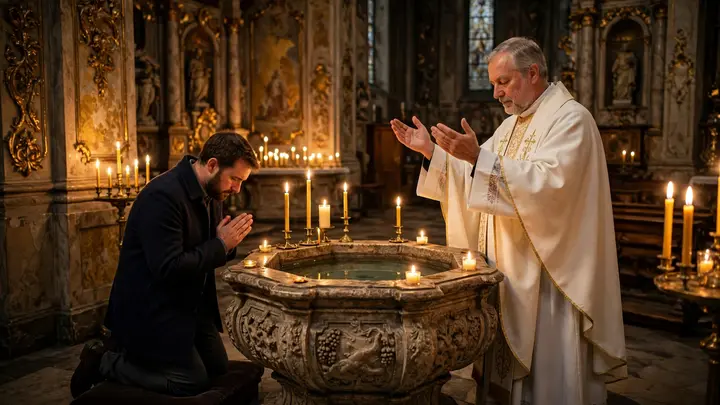
Seventy-two Iranians are preparing for baptism in the Archdiocese of Vienna this year, nearly matching the 73 native Austrians in the same class. The numbers come from the archdiocese itself, and they describe one of the most remarkable quiet revivals in Europe: people who fled a country where converting to Christianity can mean prison are now lining up, in public, to be baptized.
The pattern is not new, but it is growing. Of the 179 adults admitted to baptism in the Archdiocese of Vienna in 2025, 66 were born in Iran, compared with 71 born in Austria. This year the gap has narrowed to a single person. Among the nearly 230 catechumens preparing for baptism in 2026, the Iranians number 72 and the Austrians 73. The next-largest foreign-born groups, Afghans and Germans, number just five each.
Think about what that means. Iranians born in Vienna's archdiocese number about 18,516 people, roughly 0.9 percent of the city's population. Yet they make up nearly a third of the adults preparing for baptism. A tiny community, most of them refugees or their children, is producing almost as many new Christians as the native population of an entire archdiocese.
Anna Maria Jalalifar knows the road these converts are walking, because she walked it herself. She fled Iran with her husband and two little girls in November 1993, after their home had been raided again and again. She arrived in Austria on a cold winter evening, speaking no German, with her husband in a detention centre and a fear that they would all be sent back.
Print it, pray through it, and share it with your family or small group.
She set out to find a church, and she could not ask for directions in words. So she drew a cross on her hand and showed it to a passerby, who pointed her in the right direction. A woman who had been raised by devout Muslim parents, who was ten years old when the revolution turned her daily life into a nightmare, found her way to a church with a cross drawn on her skin.
Today Jalalifar leads the Hananias ministry, part of the Austrian Pontifical Mission Societies, walking Persian-speaking seekers toward faith in Farsi and Dari. She has been a catechist since 1999 and has led Hananias since 2018. She screens every candidate with great care, because she knows what is at stake. In Iran, the choice these men and women are making can cost them their freedom. A British government report from June 2026 described the nearly systematic arrest and imprisonment of converts who openly practise their faith.
Vienna Baptisms 2026: Iranian Converts Nearly Match Austrians
Jalalifar's own turning point came from a hard question about the God she grew up with. "I thought that a god who treats human beings with such harshness and cruelty could not be the true God, and many of my compatriots have come to the same conclusion," she told the National Catholic Register. "That is how many set out on a search and discover the Christian faith."
It is a sentence that carries the weight of a whole life. She had seen a harsh, fearful religion up close, in the raids on her home, in the detention centre where her husband was held, in the fear that followed her family across a continent. And when she finally met Jesus, she found a God of mercy instead. That contrast, harshness against mercy, is what draws so many Iranians to the baptismal font in Vienna.
And when she finally met Jesus, she found a God of mercy instead.
The Hananias ministry exists because the journey does not end at the font. New converts need a spiritual home, people who speak their language, and someone who understands the cost of what they have done. Many of them still have family in Iran. Some of them practise their faith in secret when they visit home. The baptism is public in Vienna, but its consequences can follow them anywhere.
That is why Jalalifar screens candidates carefully, and why the archdiocese takes the preparation seriously. These are not casual decisions. The nearly 230 catechumens preparing for baptism in 2026 have spent months in classes, learning the faith, praying, and counting the cost. For the 72 Iranians among them, the cost is not theoretical. It is prison, if they are ever caught practising openly back home.
And yet they keep coming. Year after year, the numbers hold. Sixty-six Iranians baptized in 2025. Seventy-two preparing in 2026. A ministry born from one woman's observation, that converts needed someone to walk with them, is now shepherding dozens of new believers a year into the Church.
Iranian Christians in Vienna: From Fear to Baptism
The story in Vienna belongs to the same great turning as the revivals unfolding on American campuses, where hundreds of students have been choosing Christ in a single night, as we reported in 329 Students Choose Christ at Belmont University Revival Night in Nashville. The settings could hardly be more different, a concert hall in Tennessee and a quiet catechism class in Vienna, but the decision is the same, and so is the joy that follows it.
It belongs, too, to the story of men behind bars finding the same freedom, as we reported in 200 Inmates Give Their Lives to Christ as Revival Hits Oklahoma Prison, where 200 men gave their lives to Christ in a single worship night. And it belongs to the rivers of the Amazon, where thousands have been baptized in the open water, as we reported in Pastor Josue Bengtson Says 14,500 Baptized in Amazon as Revival Sweeps Brazil's Rivers. The waters are different. The turning is one.
🙏 Did this part inspire you?
Seventy-two people who could have stayed quiet chose to stand in a church, in front of witnesses, and say that Jesus Christ is Lord.
What makes Vienna different is the price tag attached to the decision. A student in Nashville risks embarrassment. A prisoner in Oklahoma risks nothing more than his pride. An Iranian in Vienna risks his freedom, and the safety of the family he left behind. He is baptized knowing that if he ever goes home and practises openly, the state may come for him. That is why the archdiocese counts these baptisms with such care, and why the number 72 matters so much.
Seventy-two people looked at the cost, counted it honestly, and said yes anyway. Seventy-two people who grew up in a country where the state tells you what God is like decided to find out for themselves, and found a God of mercy instead of harshness. Seventy-two people who could have stayed quiet chose to stand in a church, in front of witnesses, and say that Jesus Christ is Lord.
Anna Maria Jalalifar still remembers the cold evening she arrived, the cross on her hand, and the stranger who pointed her toward a church. She could not speak a word of German. She did not need to. The cross said everything, and it still does. This year, 72 Iranians will follow that same cross into the water in Vienna, and more will surely follow.
Frequently asked questions
Among the nearly 230 adults preparing for baptism in the Archdiocese of Vienna in 2026, 72 were born in Iran, compared with 73 native Austrians. In 2025, 66 of the 179 adults baptized were Iranian-born, against 71 Austrian-born.
Anna Maria Jalalifar is an Iranian-born convert who fled Iran with her husband and two young daughters in November 1993. She has been a catechist since 1999 and leads the Hananias ministry, which helps Persian-speaking seekers find a home in the Catholic Church.
Hananias is a ministry of the Austrian Pontifical Mission Societies that accompanies Iranian and Afghan seekers toward baptism, in Farsi and Dari. It was born from the observation that converts from Islam needed dedicated pastoral care and a spiritual home.
Many converts say they were disillusioned by a harsh and fearful religion they experienced up close. Jalalifar said she concluded "a god who treats human beings with such harshness and cruelty could not be the true God," and many of her compatriots reached the same conclusion.
Converting to Christianity is severely punished in Iran. A British government report from June 2026 described the nearly systematic arrest and imprisonment of converts who openly practise their faith.
🙏 Did this part inspire you?
Print it, pray through it, and share it with your family or small group.
🔔 Don't Miss the Next Story!
Get breaking Christian news on your phone before everyone else — allow notifications when prompted, or join our newsletter below!
But the most surprising part of this story is yet to come — keep reading.
🙏 Have a Testimony to Share?
Has God done something amazing in your life? Or want us to cover a specific story? Send your testimony or story request via WhatsApp — your story could encourage thousands!
💬 Comments
Share your thoughts below. Be kind and respectful. If this story touched you, let us know in the comments!