Church Helps Homeless Story: How Grace Chapel Saved Tommy
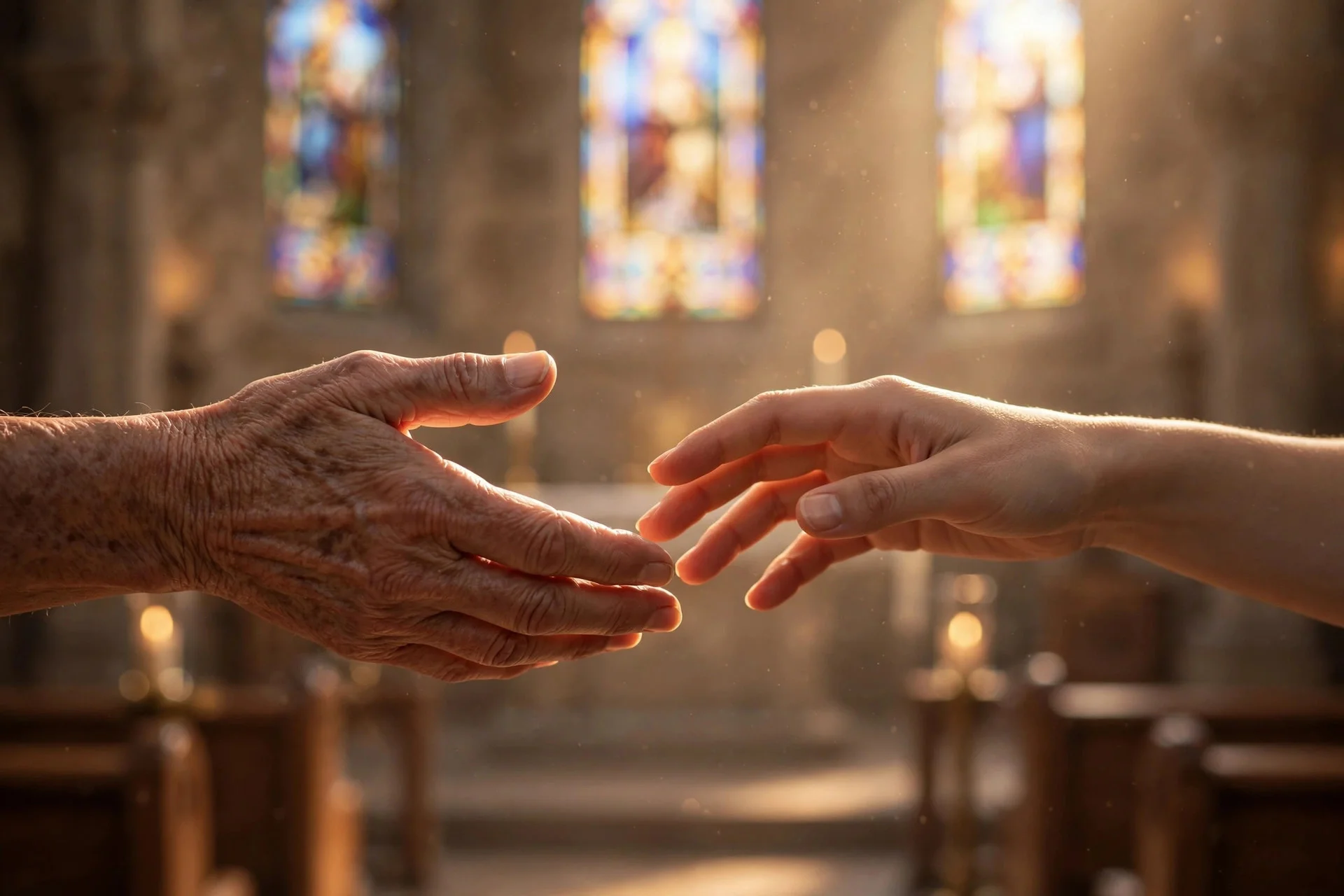
For a church helps homeless story about more than a donation check, drive to Mill Creek, Kentucky — population 1,900, one stoplight, and Grace Chapel, a white clapboard church with sixty-three members and a budget that barely covers the heating bill. That little church took in a homeless man named Tommy Brennan, and the town is still talking about it.
The Man Under the Bridge
Tommy had been sleeping under the Mill Creek bridge for four months when Pastor Gary Whitfield found him. Gary was walking the creek bank one October morning, praying about the church's future — attendance sliding, roof leaking — when he saw the blue tarp strung between concrete pillars, and a man hunched over a cold can of beans.
Tommy was fifty-two: construction worker, back injury, painkillers, lost job, lost apartment, a wife who stopped answering. He had ridden a Greyhound as far as his last $40 would take him — Mill Creek.
"I'm not looking for trouble, Pastor," Tommy said, not looking up. "I'll be gone when the weather turns."
Gary sat down on the damp ground beside him. "What if you didn't have to be?"
The Vote
That Sunday, Gary told the congregation about Tommy — all of it — and proposed something concrete: let Tommy sleep in the unused Sunday school room through winter. Deacons would arrange showers. The women's group would handle meals. A retired contractor, old Mr. Abernathy, offered Tommy part-time cleanup work.
The sanctuary went quiet. Then Marge Tillman, eighty-one and the church's unofficial conscience, stood up: "The Bible says when we do it for the least of these, we do it for Him. I move we stop talking and start doing."
Not everyone agreed. Two families worried about safety. One man worried about liability. Gary listened to every objection. Then he read one verse, slowly:
"For I was hungry and you gave me something to eat, I was thirsty and you gave me something to drink, I was a stranger and you invited me in." — Matthew 25:35
The vote was 47 to 16. Tommy moved into Room 3 the following Saturday, carrying everything he owned in a backpack and a plastic grocery bag.
Room 3
The first weeks were awkward — Tommy showered at 5 AM, ate after the kitchen emptied, spoke in monosyllables. But Carol Jean from the women's group knocked with fried chicken and said, "Tommy Brennan, you will eat at a table like a human being, because I am nosy and not ashamed of it."
Slowly, Tommy thawed. He fixed the leaking faucet, the loose stair rail, the fellowship hall door stuck for three years — "a man needs to earn his keep." Mr. Abernathy's cleanup work became steady hours, and Tommy bought work boots with his first real paycheck — his first new pair in six years — polishing them nightly like gold. He started sitting in the back pew on Sundays, and one morning Gary heard a deep baritone joining "Amazing Grace." Tommy knew every word. His mother had sung it to him. He had just forgotten for a while.
The turning point came at Christmas. Gary asked Tommy to read the Christmas story at the candlelight service. Tommy refused three times. On Christmas Eve, he stood at the lectern in a borrowed sport coat, hands shaking around the big-print Bible, and read about shepherds and angels to a packed sanctuary. When he finished, the whole church stood and applauded — and Tommy, who had not cried in front of anyone in a decade, put his face in his hands and wept.
The Ripple
Tommy got sober — two years this past March — with a recovery group and half of Grace Chapel praying him through it. He saved enough for a small apartment above the hardware store. On moving day, the youth group showed up with a donated couch, a microwave, and a crooked bookshelf Tommy pretended not to love.
But Gary tells every visiting pastor the other half: Grace Chapel did not just save Tommy. Tommy saved Grace Chapel. Attendance rose to ninety. Tommy led the volunteer crew that fixed the roof. And the church that once wondered if it had a future now runs "Tommy's Closet," a free clothing ministry serving forty families a month. The blue tarp from under the bridge hangs framed in the fellowship hall. Beneath it, a brass plaque: "We were all under the bridge once."
Today
Tommy is fifty-five. He still lives above the hardware store, still polishes his boots, and every Sunday he stands at Grace Chapel's front door as official greeter — the first face visitors see.
"I was invisible for four months under that bridge," Tommy says. "Then one church decided I was a person. That's the whole story. They decided I was a person, and I started believing it too."
What This Story Teaches Us
- Ministry is proximity. Grace Chapel did not write a check — they opened a door and shared a table. Transformation happens at close range, not from a safe distance.
- Dignity is as vital as charity. The church gave Tommy food and shelter, but also usefulness. People need purpose as much as provision.
- The helper gets helped. The church set out to rescue Tommy and ended up rescued itself. When you pour yourself out for "the least of these," you never stay empty.
Frequently Asked Questions
Did the whole church agree to help Tommy? No — the vote was 47 to 16. You don't need unanimous agreement to do the right thing; you need a faithful majority willing to act with wisdom.
What is "Tommy's Closet"? In the story, the free clothing and essentials ministry Grace Chapel started after Tommy's transformation, serving forty families a month across the county.
Is Tommy Brennan a real person? No. Tommy, Pastor Gary, and Grace Chapel are fictional characters in an inspirational story. Any resemblance to real people or churches is coincidental.