God Provides Testimony Immigrant: Empty Pockets, Full Hearts
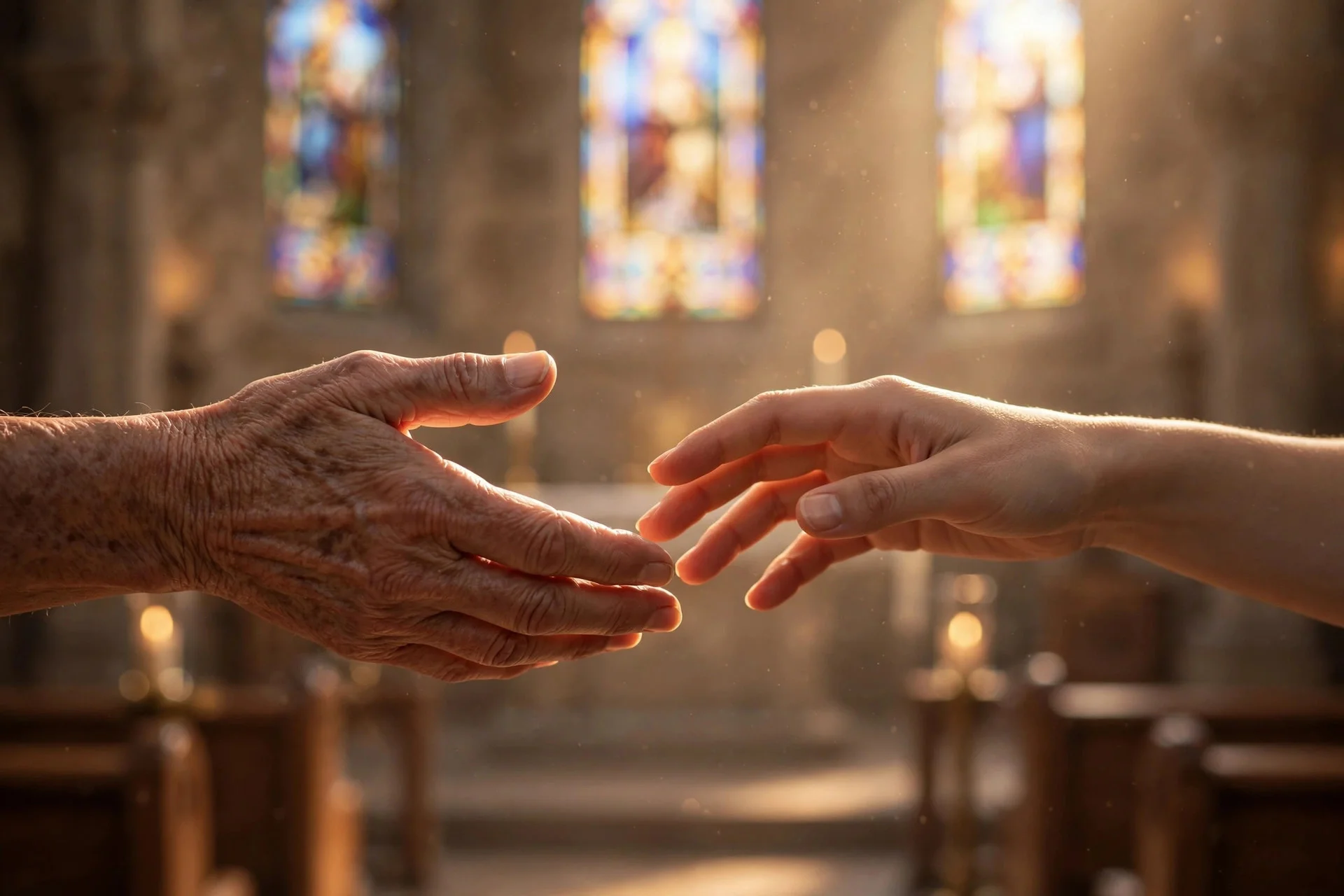
This god provides testimony immigrant story begins at Houston's airport on a humid August evening. Emeka Okafor, thirty-four, stepped off the plane holding his six-year-old daughter Zara's hand while his wife Adaeze carried their sleeping four-year-old son Chidi. The family's entire life was packed into two suitcases — one with a broken zipper held shut by a belt.
In Emeka's front pocket was an envelope with $214. That was everything.
Leaving Everything Behind
Back in Enugu, Nigeria, Emeka had been a teacher and Adaeze a nurse — respected, rooted, surrounded by family. They gave it all up for one reason: Chidi's heart. He was born with a defect no hospital within their reach could repair well. A cousin in Houston told them about a children's hospital charity program. They sold everything — furniture, Emeka's motorcycle, Adaeze's sewing machine — and bought four one-way tickets.
"We landed with faith and $214," Emeka says. "The faith was the bigger luggage."
The first week, they slept on the floor of the cousin's one-bedroom apartment. Then the warehouse job Emeka had been promised fell through. The hospital charity covered Chidi's evaluation, but rent was due in nine days, and the envelope was getting thinner with every grocery trip.
The Week the Money Ran Out
Adaeze remembers the exact moment the fear turned physical. She stood in a grocery aisle in Houston, calculator open on a borrowed phone, putting back a bag of rice because the plantains were cheaper. Zara tugged her sleeve and whispered, "Mummy, are we poor now?"
Adaeze knelt down between the yams and canned tomatoes. "We are not poor, my love. We are just waiting on God." She believed it. She also cried the whole drive home.
That Sunday, with $43 left, they walked a mile in the Texas heat to a small church two blocks away, Chidi riding on Emeka's shoulders. They slipped into the back row knowing no one. During the greeting time, an older woman named Mrs. Alvarez turned around, took one look at Adaeze's tired face, and hugged her like family. After the service she said, "You come to my house for lunch." It was not a question.
Manna in Houston
Over arroz con pollo, the Okafors told their story — haltingly at first, then all at once, the way a dam breaks. Mrs. Alvarez listened, refilled their plates twice, and made one phone call.
By Wednesday, a bag of groceries appeared on the cousin's doorstep: rice, beans, chicken, plantains. No note. Just food.
On Thursday, Emeka got a call from a church member who owned a small logistics company. "Mrs. Alvarez says you're honest and you work hard. Can you start Monday?" The pay beat the warehouse job that had fallen through.
On Friday, an envelope slid under the door: $900 in cash and a note in shaky handwriting — "For the rent. God told me you needed it. — A friend." They never learned who wrote it.
"And my God will meet all your needs according to the riches of his glory in Christ Jesus." — Philippians 4:19
Adaeze taped that verse to the wall of their tiny new apartment, above the spot where Chidi's hospital bracelet hung. His surgery, three months later, was a complete success. The surgeon said "textbook." Adaeze says "answered."
The Turnaround
Provision kept arriving in small, unmissable pieces. A church member taught Emeka to drive and lent him a car for the test. A nurse helped Adaeze get her credentials evaluated so she could work while studying for her U.S. license. Zara's teacher sent home extra books when she learned Zara loved reading.
But the real transformation was not in what they received — it was in what they started giving. Eighteen months after landing, the Okafors were the ones leaving grocery bags on doorsteps. They started a small fund at their church for newly arrived immigrant families: "The $214 Fund." Every family helped is told their story and asked one thing — when you're on your feet, fill someone else's bag.
Today
The Okafors live in a three-bedroom house in southwest Houston with a mango tree Adaeze planted herself — a stubborn little piece of Enugu in Texas soil. Emeka manages the logistics company's night shift. Adaeze passed her nursing boards and works at the same children's hospital that saved Chidi. Zara is twelve and reads two grades above her level. Chidi is ten, his scar a thin white line, playing goalkeeper with the reckless joy of a boy given a second heart.
Every August, on their arrival anniversary, the family eats dinner on the floor, the way they did that first week, and counts blessings out loud, one by one. It takes a while.
"People ask if America was the miracle," Emeka says. "America was the address. God was the miracle."
What This Story Teaches Us
- God's math is not our math. Two suitcases and $214 looked like disaster on paper. In God's hands, it was exactly enough to begin.
- Provision often arrives through people. Every miracle in this story had a human address. God loves to use ordinary neighbors as His delivery service.
- Blessing is meant to flow, not pool. The $214 Fund exists because the Okafors understood: what God gives you is meant to pass through you.
Frequently Asked Questions
Is this a true story? No — this is a fictional inspirational story with fictional characters, written to encourage readers. Any resemblance to real people is coincidental.
What happened with Chidi's surgery? In the story, his surgery through the hospital charity program was completely successful. He recovered fully and now plays soccer as a healthy ten-year-old.
How can I help immigrant families in my community? Start where the Okafors' neighbors started: notice who is new, share a meal, ask what they need. Churches, resettlement agencies, and food banks in most cities welcome volunteers year-round.