🎧 Listen to This Story (Audio Mode)
Saved for offline reading — text only; photos need the internet.
US Officials Tell Congress Violence Against Nigerian Christians Has Not Stopped a Year After CPC Designation
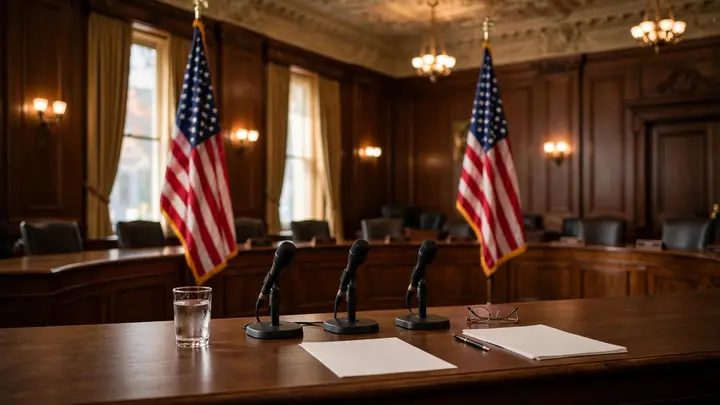
United States officials told Congress on Thursday 12 November 2026 that violence against Christians in Nigeria has not stopped, one year after the country was placed back on America's religious-freedom watchlist. "Unfortunately the violence has not stopped," said Frank Garcia, Assistant Secretary of State for African affairs, testifying before the House Foreign Affairs Subcommittee on Africa. The State Department, he said, is treating the issue as a priority and working with Nigerian authorities to hold attackers to account.
The hearing, chaired by Representative Chris Smith, was a review of Nigeria one year after its renewed designation as a "country of particular concern" — known as CPC — for religious freedom. It was a sober session. A year of diplomacy, pressure and promises had passed, and the officials sent to report on progress had to tell Congress the plain truth: the killing has not stopped, the kidnappings have not stopped, and the Christians of Nigeria's Middle Belt are no safer than they were.
The CPC designation was renewed in November 2025 under President Donald Trump, who also threatened military action over the treatment of Christians in Nigeria. Nigeria's goverment rejected the designation, saying it was based on misinformation and faulty data. A year later, that disagreement has not been resolved — but the hearing was not about the label. It was about whether anything on the ground has actually changed.
Print it, pray through it, and share it with your family or small group.
On that question, the testimony was blunt. Riley Barnes, a State Department official for democracy, human rights and labour, told the subcommittee that Nigeria has hired police, deployed forest guards, and increased prosecutions and arrests. But those steps, she said, "had not led to greater safety for Christians in the country's Middle Belt region." The machinery of the state is moving. The violence is moving faster.
"There are still rising death tolls and kidnappings. So, I think we have this posture of trust but verify," Barnes said. It is the language of a government that wants to believe its partner — and no longer can. Trust, but verify. Cooperate, but count the bodies. That single sentence may be the most honest summary of a year of American policy toward Nigeria: engagement without illusion.
Nigeria Christians Violence CPC Hearing: What Congress Heard
Representative Riley Moore, a Republican from West Virginia, cited a sharp increase in violence against Christians in Nigeria's central Plateau state — the same region where five Christians were killed in attacks on 8 November, days before the hearing. Moore has spoken on the issue before, warning in a statement earlier this month that Nigerian Christians still face unspeakable violence. The hearing gave his warning an official echo.
Chairman Chris Smith called the designation a "wake-up call for Nigeria" and urged the government to protect religious believers, especially Christians, from Boko Haram and the Islamic State West Africa Province, known as ISWAP. The two jihadist groups remain the most feared names in the region's violence, and Smith's message was direct: a designation means nothing if it does not change what happens to a farming family in Plateau on a Sunday night.
The scale of what those families face is staggering. According to the Open Doors 2026 World Watch List, of the 4,849 Christians killed worldwide for their faith between 1 October 2024 and 30 September 2025, some 3,490 — 72 per cent — were Nigerians. Nigeria ranked seventh of the fifty countries where it is hardest to be a Christian. Those numbers were already known before the hearing, but hearing them read into the congressional record, in a room in Washington, gives them a weight that a report on a shelf does not carry.
That is the number behind the headlines: 3,490 Christians murdered in Nigeria alone, in a single year, in a single country. It is the reason the CPC designation exists, the reason the hearing was held, and the reason the officials' answer landed as heavily as it did.
Nigeria Country of Particular Concern: One Year On, What Has Changed?
The hearing also carried a warning about what comes next. Insecurity now tops the list of campaign issues ahead of Nigeria's presidential and parliamentary elections, set for 16 January. The violence against Christians is no longer only a human rights question. It is a political question, in a country heading to the polls, and the candidates will be judged on whether they can stop what a year of American pressure could not.
Nigeria's own bishops have been saying the same thing for months. The country's Catholic bishops have warned that Christian persecution is getting worse, and the pattern they describe — villages attacked, churches destroyed, families displaced — matches what the American officials told Congress. When Boko Haram destroyed a church and displaced eight Christian villages, it was not an isolated incident. It was the pattern, repeated again and again.
🙏 Did this part inspire you?
What makes this hearing different from the steady stream of attack reports is its subject. This is not a story about one village or one Sunday. It is a story about a system: a designation made, a year spent, a review held — and a verdict that the system has not worked yet. The officials did not come to Congress with excuses. They came with a number, a sentence, and a posture: trust but verify. Nigeria sits at the sharp end of a wider crisis, with conditions worsening in 55 per cent of the countries studied, as reported in the Christian persecution report.
What Happens Next for Nigerian Christians
The hearing ended without a new policy announcement, and that may be the most telling detail of all. There was no new sanction, no new threat, no new promise. There was only a review, a set of numbers, and a sentence that will follow the State Department into the new year: unfortunately, the violence has not stopped.
What happens next depends on two things. The first is whether Nigeria's government, under the pressure of an election season and a second year of CPC designation, takes the steps that a year of hiring police and deploying forest guards did not. The second is whether Washington decides that "trust but verify" is enough — or whether the next review, a year from now, will need a different answer.
For the Christians of the Middle Belt, the hearing changes nothing today. They will still go to church on Sunday wondering if it will be safe. They will still farm land that others want to take. They will still bury neighbours and wait for a protection that has been promised more than once. The question the hearing leaves behind is the one that matters most: how many more reviews will it take before the answer changes?
Frequently asked questions
At a hearing on Thursday 12 November 2026, Assistant Secretary of State Frank Garcia told the House Foreign Affairs Subcommittee on Africa: "Unfortunately the violence has not stopped." The hearing reviewed Nigeria one year after its renewed "country of particular concern" (CPC) designation.
The CPC designation was renewed in November 2025 under President Donald Trump, who also threatened military action over the treatment of Christians. Nigeria's government rejected the designation as based on misinformation and faulty data.
State Department official Riley Barnes said Nigeria has hired police, deployed forest guards and increased prosecutions and arrests — but these steps "had not led to greater safety for Christians in the country's Middle Belt region." She added: "There are still rising death tolls and kidnappings. So, I think we have this posture of trust but verify."
According to the Open Doors 2026 World Watch List, of 4,849 Christians killed worldwide for their faith between 1 October 2024 and 30 September 2025, 3,490 — 72 per cent — were Nigerians. Nigeria ranked No. 7 of 50 countries where it is hardest to be a Christian.
No. The 8 November Plateau attacks, in which five Christians were killed, were covered separately. This article is about the 12 November congressional hearing and the one-year review of Nigeria's CPC designation. Rep. Riley Moore cited the Plateau violence at the hearing, and Chair Chris Smith called the designation a "wake-up call for Nigeria" and urged protection from Boko Haram and ISWAP. Insecurity tops campaign issues ahead of Nigeria's presidential and parliamentary elections set for 16 January.
🙏 Did this part inspire you?
Print it, pray through it, and share it with your family or small group.
🔔 Don't Miss the Next Story!
Get breaking Christian news on your phone before everyone else — allow notifications when prompted, or join our newsletter below!
But the most surprising part of this story is yet to come — keep reading.
🙏 Have a Testimony to Share?
Has God done something amazing in your life? Or want us to cover a specific story? Send your testimony or story request via WhatsApp — your story could encourage thousands!
💬 Comments
Share your thoughts below. Be kind and respectful. If this story touched you, let us know in the comments!