Liberals Fall Short in Church of England Synod Vote
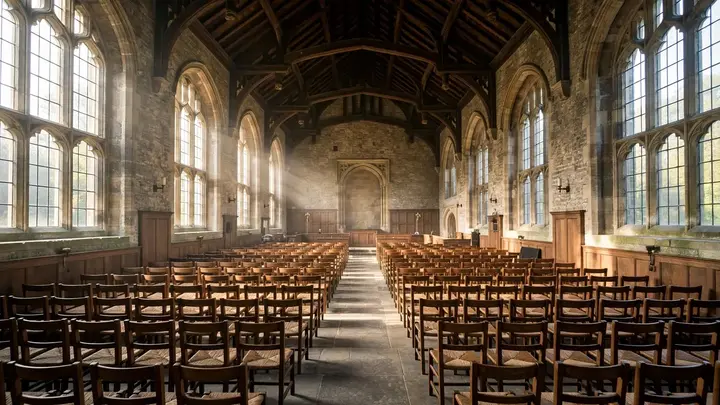
Liberals in the Church of England fell well short of the two-thirds majority they needed in every house of the new General Synod, according to analysis of last month's elections published by The Living Church on November 2, 2026. The results point to another five years of stasis and gridlock on same-sex marriage, and to a parliament of the Church that looks very different from the one its leaders hoped to build.
The arithmatic is brutal, and it is the whole story. After years of arguments over same-sex marriage, the Church of England's Living in Love and Faith project mostly ran into the sand. The House of Bishops had initially hoped to push progressive reforms through on a simple majority, but after taking advice from the church's lawyers and theological advisers, the hierarchy acknowledged last year that further progress would require a more complex and lengthy procedure under canon law.
That procedure needs a two-thirds supermajority in each of the synod's three houses: bishops, clergy, and laity. The liberals did not get it in any of them. Not close, in two of the three.
Church of England Synod elections 2026 results
The elections took place last month, when the five-year term of the old synod expired and each of England's 42 dioceses elected a new slate of priests and lay representatives. The bishops sit primarily ex officio. All licensed clergy could vote for their diocese's representatives to the House of Clergy, and the House of Laity members were elected by lay members of deanery synods.
Counting who won and who lost is not simple, because candidates historically run as independents rather than trumpeting party affiliations. But each candidate submits a two-page election address in advance, and reading all 386 of them gives a rich, if incomplete, sense of where the new members stand. The Living Church analysis, by freelance church journalist Tim Wyatt, did exactly that.
In the House of Clergy, the count is 98 liberals, 75 conservatives, and 20 whose position could not be ascertained from their election statements. Even if every one of those 20 turns out to be a liberal, the wing would still only register at around 61 percent, short of the 66.7 percent two-thirds mark. The gap is not a rounding error.
In the House of Laity, the picture is worse for the liberals. They may even have been outpolled by the conservatives: 83 liberals, 88 conservatives, and 22 whose affiliation remained unclear. Even if all 22 break for the liberals in the end, the progressive wing still sits at around 54 percent.
The House of Bishops has no election statements to judge for most members, but previous votes and public stances suggest 17 liberals, 14 conservatives, and eight whose position is ambiguous. That gives the liberal bishops a maximum strength of around 64 percent: still just short of the two-thirds mark.
Same-sex marriage Church of England blocked for five years
The conclusion is stark. There is no realistic hope of permitting same-sex blessings in standalone services, let alone the true prize for many progressives: rewriting the Church of England's canons to permit same-sex marriage. Blessings may still be offered to same-sex couples during regular worship services, but the standalone services and the canon change are off the table for this quinquennium.
Two leading progressive groups, Inclusive Church and Together for the Church of England, produced lists of approved candidates in advance for their supporters. On the other side were dozens of conservative candidates who made their commitment to traditional marriage doctrine explicit in their statements.
Save the Parish and the new General Synod
Beyond sexuality, the new synod will wrestle with questions that cut across the usual divides. Save the Parish, the movement battling to redirect national funding toward frontline parochial ministry, had just been founded when the last synod was elected in 2021. This time, about 20 percent of clergy and lay members signaled their allegiance to the cause in their statements, and the group itself believes informally that as many as 100 of the newly elected members back it.
Support for the group was significantly stronger among the laity than the clergy, and the message is clear: the backlash in favor of the parish is now the mainstream.
That shift connects directly to Archbishop Sarah Mullally, who replaced Justin Welby earlier this year. Mullally made clear that the era of top-down reforms and innovative nationally driven schemes was largely over, as covered in Sarah Mullally Leads Remembrance as First Female Archbishop. It was anger over Welby-era nationally funded church planting that drove the launch of Save the Parish five years ago, and the new synod will likely be even more hostile to that kind of strategy. The scale of the change is underlined by the ceremony that opens the new synod's term, with the King inaugurating the assembly, as reported in King to Inaugurate 12th General Synod as Archbishop Sarah Mullally Begins New Era.
Having spent a decade or more trying to turn around decline by trying new things, Wyatt writes, the pendulum will probably swing back to investing more heavily in what the Church of England has done for millennia. The new synod meets for the first time in London on November 16-18, 2026, and will be inaugurated by King Charles on November 17, as reported in Latest: King Charles to Inaugurate Church of England General Synod on November 17.
Clergy burnout and safeguarding reform ahead
Another theme ran through the winning candidates' election statements: clergy well-being, and the impossible burden of managing multiple parishes as a single, overburdened priest. Almost everyone, whether liberal or conservative, evangelical or Anglo-Catholic, seems to accept that the current model is broken, and breaks those who try to serve within it. The last synod pushed the hierarchy into introducing major bumps to clergy pay and pensions; the new one may resume the battle to make vicars' lives easier.
Safeguarding featured on almost everybody's campaign material too. The church is already committed in principle to outsourcing most of its safeguarding investigations and oversight to a new independent body, having lost the nation's trust thanks to a slew of abuse scandals and cover-ups. The finer details are yet to be worked out, let alone turned into legislation, but turning that aspiration into reality will be central to the new synod's agenda.
The urgency is not theoretical. Even as the polls were open over the last month, one bishop, Stephen Conway of Lincoln, resigned in the face of a police abuse inquiry, while another, Stephen Lake of Salisbury, was charged with disciplinary offenses relating to both safeguarding and financial misconduct. The new synod, Wyatt notes, will likely be even less patient with these kinds of missteps than those who came before them.
Five years of gridlock on sexuality, a parish movement now holding the balance of power, a new archbishop who has already declared the top-down era over, and a safeguarding reform that has to become real. That is the synod England has just elected, and the numbers leave no doubt about what happens next: nothing on same-sex marriage, and everything else up for a fight.
Frequently asked questions
Elections in October 2026 chose a new General Synod for the 2026-2031 term. Analysis of the 386 candidates' election addresses by The Living Church found liberals fell short of the two-thirds supermajority needed in all three houses: bishops, clergy, and laity.
No. The new synod's numbers leave no realistic hope of permitting same-sex blessings in standalone services, let alone rewriting the canons to permit same-sex marriage. Blessings may still be offered to same-sex couples during regular worship services.
Save the Parish is a movement battling to redirect national funding toward frontline parochial ministry. About 20 percent of newly elected clergy and lay members signaled allegiance to it, and the group believes as many as 100 of the new members back it.
The new General Synod meets for the first time in London on November 16-18, 2026, and will be inaugurated by King Charles III on November 17, 2026, the first such inauguration in his reign and in Archbishop Sarah Mullally's tenure.
Dame Sarah Mullally is the 106th Archbishop of Canterbury and the first woman to hold the position. She succeeded Justin Welby, who resigned in November 2024 over his handling of the John Smyth abuse case, and she has said the era of top-down reforms is largely over.
🔔 Don't Miss the Next Story!
Get breaking Christian news on your phone before everyone else — allow notifications when prompted, or join our newsletter below!
But the most surprising part of this story is yet to come — keep reading.
🙏 Have a Testimony to Share?
Has God done something amazing in your life? Or want us to cover a specific story? Send your testimony or story request via WhatsApp — your story could encourage thousands!
💬 Comments
Share your thoughts below. Be kind and respectful. If this story touched you, let us know in the comments!