🎧 Listen to This Story (Audio Mode)
Saved for offline reading — text only; photos need the internet.
Senior Bishop Warns Conversion Bill Risks Criminalising Conservative Views
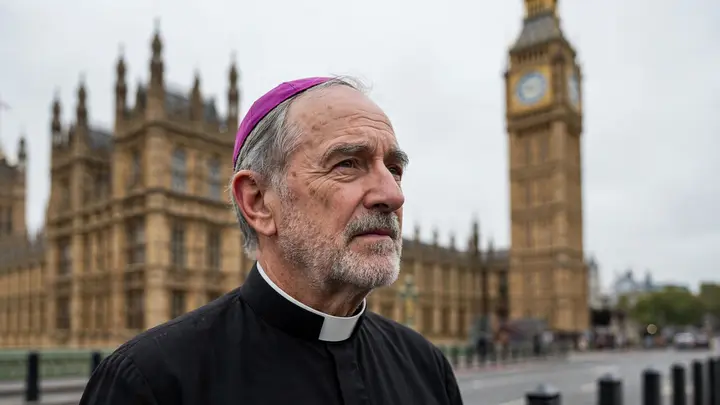
The Rt Rev Philip North, the Bishop of Blackburn, has warned that the draft Conversion Practices Bill risks criminalising conservative views — calling it state overreach with "very alarming implications for family life". North spoke to The Telegraph on 26 November, a day after taking his seat in the House of Lords, in his first major intervention since joining Parliament's upper chamber.
His warning is blunt. "I'm concerned about the overreach of the state into conversations within families," North said. "Parents could be prosecuted, even imprisoned, because of interpretations of conversations they have with their children."
North is one of the Church of England's most senior bishops, and his words carry weight precisely because they come from inside the institution — not from a campaign group, but from a bishop who now sits in the Lords and will have a vote on the legislation he is warning about.
The Telegraph reported North's warning on 26 November, in a report by Joe Burgis, Cameron Henderson and Tim Sigsworth, under the headline "Senior bishop: Trans law risks criminalising conservative views". North spoke to the paper a day after taking his seat in the Lords on 25 November — a first intervention that sets the tone for how he intends to use his place in Parliament.
Print it, pray through it, and share it with your family or small group.
Bishop Philip North: 'Overreach of the State Into Conversations Within Families'
The draft bill, currently in pre-legislative scrutiny, would make it a criminal offence to carry out so-called conversion practices. Under the proposals as reported, parents, therapists, clinicians and teachers could face up to five years in prison for conversations with gender-questioning children. Religious leaders who share their faith's teachings on sex, gender and marriage would also be at risk.
North says the danger is not in what the bill claims to target, but in how widely it could be read. The bill "could really disincentivise parents from having ordinary conversations with their children who are exploring gender and sexuality", he said — and the chill would fall on everyone, "not just for people of faith... but for any responsible parent having open conversations with their child."
That last line is the heart of his argument. North is not framing this as a Christians-only concern. He is framing it as a parents' concern — and as a question about where the state stops and the family begins.
Conversion Practices Bill: What the Churches Have Said
North's intervention does not come out of nowhere. Earlier this month, more than 1,300 church leaders warned the Conversion Practices Bill will criminalise Christian teaching, writing to equalities minister Bridget Phillipson to say the bill targets "normal, responsible Christian parenting". That letter set the terms of the debate; North's Lords intervention is its latest and most senior development.
The Church of England has said legislation must not "unintentionally criminalise" prayer and pastoral support. The Catholic Church in England and Wales has gone further, calling for the bill to be scrapped altogether. Both churches argue that the line between harmful coercion and ordinary pastoral care is far harder to draw than the draft bill admits.
Prayer for wisdom, for courage and for leaders who listen is not a retreat from the debate; it is the way believers have always entered it.
The debate has been running for months, and the bill has already been the subject of fierce argument in Parliament and beyond. The Church has warned before that a conversion bill could criminalise prayer, and Labour MPs have told the leadership to scrap the bill as Tory support collapsed — a sign of how far the political ground has shifted under it.
What the Government Says in Response
The goverment, for its part, says ordinary parenting and open conversations will not be criminalised. Its position, as reported, is that the bill targets coercive practices, not the everyday conversations of families — and that parents who talk honestly with their children have nothing to fear.
North's answer, in effect, is that good intentions are not enough. A law that depends on how a conversation is "interpreted" after the fact — by a complainant, a police officer or a court — leaves parents guessing about what they are allowed to say in their own homes. Parents should not need a lawyer to know whether they may comfort their own child, he argues — and a law that leaves them guessing has already failed, whatever its authors intended.
It is a concern that reaches beyond any one faith. Families pray together, talk together and disagree together — and the freedom to have those conversations without fear is something Christians, and parents of every belief and none, hold in common. Prayer for wisdom, for courage and for leaders who listen is not a retreat from the debate; it is the way believers have always entered it.
For now, the bill remains a draft, in scrutiny rather than on the statute book. But North's warning — delivered from the Lords benches on only his second day there — has put the question squarely before Parliament: can a state that wants to protect vulnerable children write a law that does not, at the same time, frighten the very parents those children trust most? The answer, and the amendments that follow it, will shape family life in Britain for years to come.
🙏 Did this part inspire you?
Frequently asked questions
The Rt Rev Philip North is the Bishop of Blackburn, one of the Church of England's senior bishops. He took his seat in the House of Lords on 25 November 2026.
Speaking to The Telegraph on 26 November 2026, North warned the draft bill is state overreach with "very alarming implications for family life", saying parents "could be prosecuted, even imprisoned, because of interpretations of conversations they have with their children".
Under the draft bill in pre-legislative scrutiny, parents, therapists, clinicians and teachers could face up to five years in prison for conversations with gender-questioning children. Religious leaders sharing their faith's teachings on sex, gender and marriage would also be at risk.
The Church of England has said legislation must not "unintentionally criminalise" prayer and pastoral support. The Catholic Church has called for the bill to be scrapped. Earlier, 1,314 ministers and pastoral workers wrote to equalities minister Bridget Phillipson saying the bill targets "normal, responsible Christian parenting".
The government's position is that ordinary parenting and open conversations will not be criminalised, and that the bill targets coercive practices rather than everyday family conversations.
Print it, pray through it, and share it with your family or small group.
🔔 Don't Miss the Next Story!
Get breaking Christian news on your phone before everyone else — allow notifications when prompted, or join our newsletter below!
But the most surprising part of this story is yet to come — keep reading.
🙏 Have a Testimony to Share?
Has God done something amazing in your life? Or want us to cover a specific story? Send your testimony or story request via WhatsApp — your story could encourage thousands!
💬 Comments
Share your thoughts below. Be kind and respectful. If this story touched you, let us know in the comments!