Veteran Finds Faith Testimony: Peace After the Battlefield
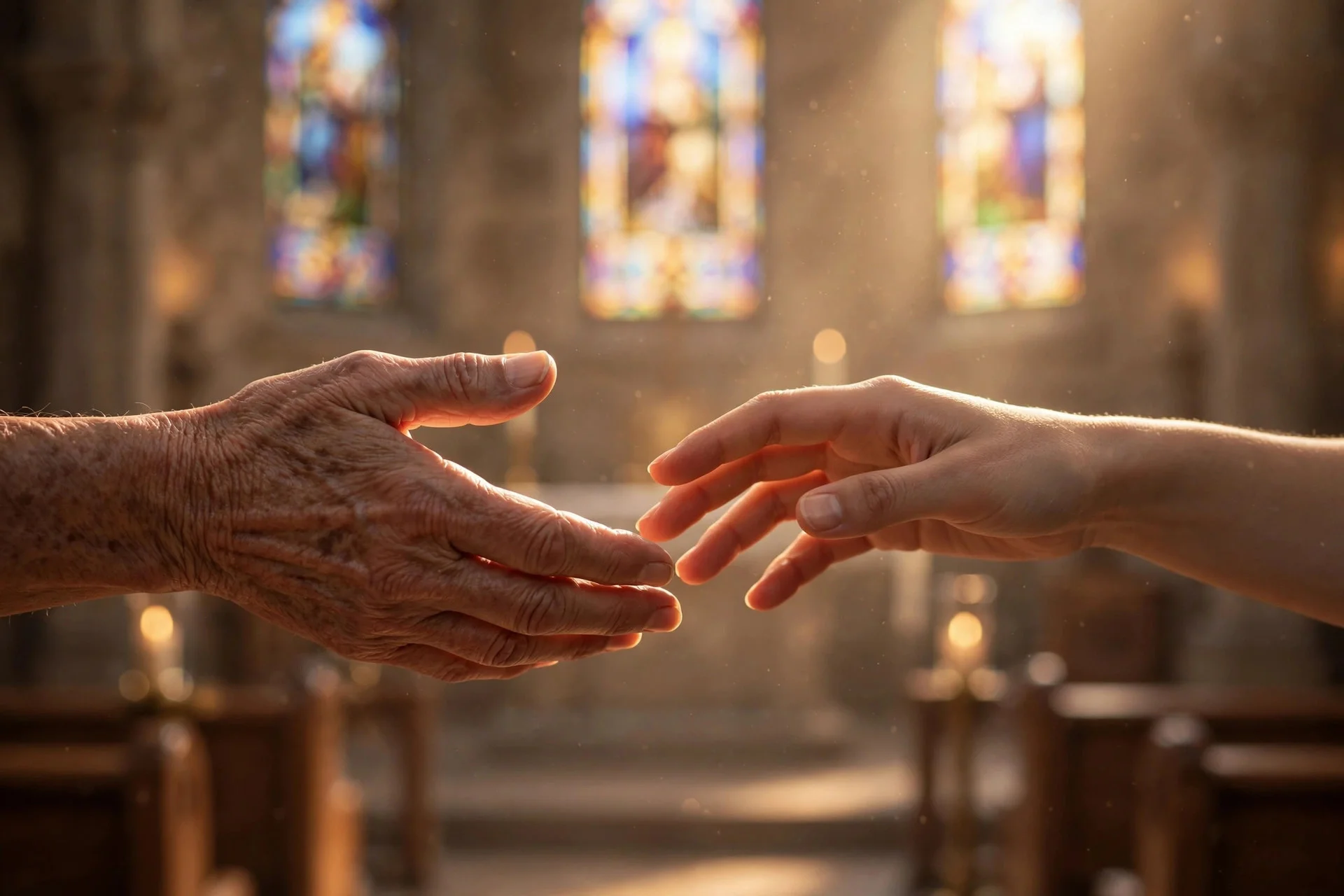
The nightmare always started with the dust. Bill Tanner would wake at 3:12 a.m. — always 3:12 — sheets damp, heart hammering, the taste of Afghan dust in his mouth though he hadn't been there in nine years. He'd sit on the edge of the bed in his dark house in Millbrook, Alabama, while Ranger, his old Lab, pressed a warm head against his knee. This veteran finds faith testimony doesn't start in a church. It starts with a man who survived the war but couldn't survive the peace.
Two tours. That's what the VA paperwork said, neat and insufficient. It didn't mention the convoy, the IED, the buddy — Martinez — who'd been laughing about his daughter's birthday ten minutes before. It didn't mention the homecoming, either: the flags at the airport, and then the slow discovery that nobody back home wanted the real stories, so Bill stopped telling any stories at all. He worked at the auto parts store. He drank too much on weekends.
His wife, Linda, had died of a stroke four years back. After that, the house got too quiet and the nights got too loud. His daughter in Texas called every Sunday and tried not to sound worried. Bill tried not to sound like a man coming apart. They both failed politely.
The church found him through a casserole. Earl Whitfield — seventy-two, retired mailman, deacon at Grace Chapel — showed up on Bill's porch one Saturday with a still-warm dish and a proposition. "Men's breakfast, first Saturday of the month. Biscuits and gravy." Bill went for the biscuits. He stayed because nobody asked him about the war — and then, easy as passing the syrup, one of them said, "I still have the dreams sometimes," and another nodded, and just like that Bill wasn't the only haunted man at the table.
Earl didn't push. Earl just kept showing up — on the porch, at the parts store, once with jumper cables when Bill's truck died. "Church Sunday," Earl would say. "Sit with me. Leave when you want." For three months Bill said no. On the fourth month, a Sunday after another 3:12 a.m., he said yes, mostly to shut Earl up.
Grace Chapel held maybe eighty people and smelled of old hymnals and lemon polish. Bill sat in the back pew, arms crossed, ready to bolt. The pastor preached on fear — not the battlefield kind, the 3 a.m. kind — and read a verse Bill's grandmother had stitched on a pillow he'd forgotten about:
"So do not fear, for I am with you; do not be dismayed, for I am your God. I will strengthen you and help you; I will uphold you with my righteous right hand." — Isaiah 41:10
Bill stared at the little American flag by the pulpit, folded in its triangular case, and felt something he hadn't felt in nine years: not happiness — held. Like a hand at his back. He sat very still and let the verse sit in him like water in dry ground.
He kept coming. That was the whole miracle at first — just showing up. Earl saved him the end of the pew. He started praying in the truck before work: "God, it's Bill. I don't know how this works." He read the Psalms — David, the warrior-king, writing about fear and sleepless nights. This man gets it, Bill thought.
The nightmares didn't vanish in a blaze of glory. They faded the way winter fades — still cold snaps, but the direction was spring. First one good night a week. Then three. Then a whole month where 3:12 a.m. came and went and Bill slept through it, waking at six to Ranger's cold nose and actual sunlight.
Today, Bill ushers at Grace Chapel — second pew from the front now, not the back. He leads a small group for veterans at the church, eight men around a table with coffee, where the only rule is honesty. His daughter visited last fall and cried watching her father grilling burgers on the porch and laughing with Earl.
The war is still part of him. But peace didn't come from forgetting. It came from finally bringing the battlefield to the One who'd been in it with him all along.
What This Story Teaches Us
- You can't outrun what you won't face — but you don't have to face it alone. Bill's healing started the day he sat at a table where other men said "me too." Isolation is PTSD's best friend; community is its reckoning.
- God is not scared of your nightmares. The 3:12 a.m. terrors, the anger, the numbness — none of it shocked Him. He met Bill in the back pew, arms crossed, and stayed until the arms uncrossed.
- Healing is usually gradual, and gradual still counts. No lightning bolt, no instant cure — just a slow spring after a long winter. Don't despise the slow work of peace.
Frequently Asked Questions
Q: Can faith really help with PTSD? A: Faith works alongside community and, where needed, professional help. It addresses the spiritual wounds — guilt, fear, purposelessness — beneath PTSD's symptoms. Many veterans find surrendering their trauma to God brings a peace coping strategies alone couldn't reach.
Q: I'm a veteran who feels forgotten by God after what I've seen. Is He still there? A: Bill felt exactly that for nine years. The Isaiah verse that reached him says "I am with you" — present tense, including the battlefield and the 3 a.m. aftermath. Feeling abandoned and being abandoned are different things.
Q: How can churches better welcome veterans? A: Do what Earl did: show up consistently, invite without pressure, and create spaces where veterans can be honest. A men's breakfast did more for Bill than a hundred sermons ever could.