Healing Testimony Christian Woman: Hannah's Miracle
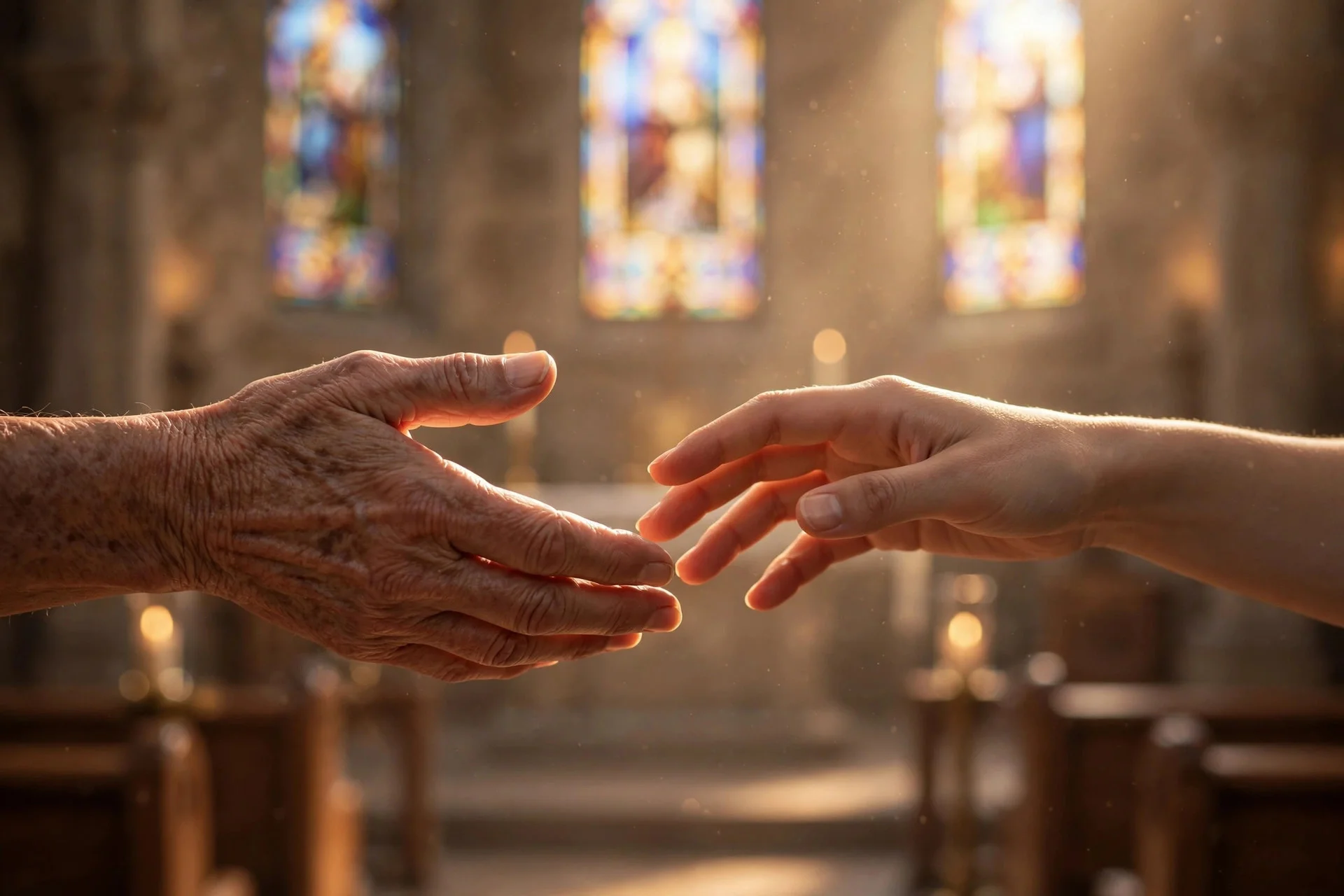
This healing testimony Christian woman story begins with something small and scary: a Tuesday morning in Portland, Oregon, when Hannah Brooks, thirty-three, woke up and could not feel her left hand. It tingled, went numb, came back by lunch. She told herself she had slept on it wrong. She was a graphic designer, a marathon runner, a woman who meal-prepped on Sundays. Bodies like hers did not just stop working.
The Unraveling
Within three months the numbness spread, then bone-deep fatigue, joint pain, brain fog that stole words mid-sentence, dizzy spells that sent her sliding down walls. Hannah went from half-marathons to needing a nap after showering.
The medical odyssey would fill a filing cabinet: four GPs, two neurologists, a rheumatologist, an immunologist. MRIs, a lumbar puncture, nerve studies, vials of blood. The results formed a maddening pattern: abnormal enough to prove something was wrong, normal enough to prove nothing specific.
The closest thing to a diagnosis was a shrug with a Latin name: an atypical autoimmune condition, possibly. The medications helped a little, hurt a little, never enough. By year two Hannah used a cane on bad days; by year three, a hated wheelchair sat folded in her apartment corner.
Her giant pill organizer sat on the kitchen counter next to her hiking boots, which she could not give away — a daily measure of the distance between the woman she was and the woman she had become.
The Dark Valley
Hannah does not romanticize those years. She was angry — at her body, at doctors with careful non-answers, and yes, at God. Raised in church, she had believed faithfulness came with basic protection, and she resented finding out alone.
She stopped going to church for eleven months — first out of exhaustion, then out of desire, until one Sunday she realized she had not missed it, and that scared her most.
What brought her back was not a sermon but her neighbor Mrs. Chen, a seventy-year-old widow who brought soup every Thursday and once said, "You don't have to be okay to be loved." Hannah cried into that soup, then started attending Mrs. Chen's small church — at first just for the company.
Slowly the anger thawed into something livable: trusting God without a diagnosis. "I stopped demanding He explain Himself," she says, "and asked Him to sit with me in the unexplained."
The Night of Prayer
In year four, Mrs. Chen's church held a night of prayer — congregation, guitars, open invitation. Hannah almost skipped it; her legs were bad that week. When the pastor invited anyone needing prayer forward, she surprised herself: she stood, gripped the pew, and walked haltingly to the front.
People gathered, laying hands on her shoulders, praying simply. Nobody shouted or promised anything. And Hannah felt warmth spreading from her chest outward, like sunlight through a forgotten window.
She went home and slept ten hours — her first unbroken sleep in years. She woke to find her left hand simply felt like a hand.
Over six weeks the symptoms receded like a tide. She kept waiting for the cruel reversal; it never came. At her next appointment, her neurologist reviewed the panel twice: "I can't explain this. Whatever was happening isn't happening anymore."
Her chart reads "sustained remission." Hannah's version: "Healed."
"But I will restore you to health and heal your wounds," declares the Lord. — Jeremiah 30:17
Walking Again
Hannah did not sprint back to her old life — she walked into a new one, gratefully. First she laced up the hiking boots. They still fit. She walked a flat mile and cried the whole way, scaring a jogger.
She started volunteering with a chronic illness support group — not as the success story, but as someone who remembered the dark valley. "I don't tell people God will heal them," she says. "That's not my promise to make. I tell them He's worth trusting whether He does or not."
She keeps the pill organizer on her shelf, empty, beside a framed photo of herself on Mount Hood — fourteen miles round trip, boots dusty, grin enormous. Under it, a small brass plate: "The God of the unexplained."
Today
Hannah is thirty-nine. She designs, runs sunrise miles along the river — slowly, joyfully — and leads the support group that once kept her afloat. Mrs. Chen, seventy-six, still brings soup Thursdays, though these days Hannah usually cooks and Mrs. Chen critiques.
Her neurologist told her at the last visit: "Medically, I have no explanation. I'm just glad." Hannah smiled. "I have an explanation. You just can't test for it."
She is honest that she does not know why she was healed when others were not — friends from the group still suffer, and she carries that mystery tenderly. "Healing is God's business," she says. "Trust is mine. I finally learned which is which."
What This Story Teaches Us
- Faith does not require a diagnosis. Hannah learned to trust God without answers — from doctors or heaven. Some of the deepest faith is built in the unexplained.
- God works through soup as well as miracles. Before the healing came eleven months of Thursday soup — small kindnesses that thawed her heart. Never underestimate ordinary love.
- Healed people become healers. Hannah's suffering now equips her to sit with others in theirs. Your hardest chapter may be someone else's lifeline.
Frequently Asked Questions
What illness did Hannah have? In the story, doctors never reached a definitive diagnosis — an atypical autoimmune condition. Her healing is presented as medically unexplained, which is the point.
Does this story promise God will heal everyone? No. Hannah tells her group that healing is God's decision, not a formula. The story celebrates her healing while honoring those who still wait.
Is Hannah Brooks a real person? No. Hannah and the other characters are fictional, created for this inspirational story — meant to encourage readers facing illness, not document real medical events.