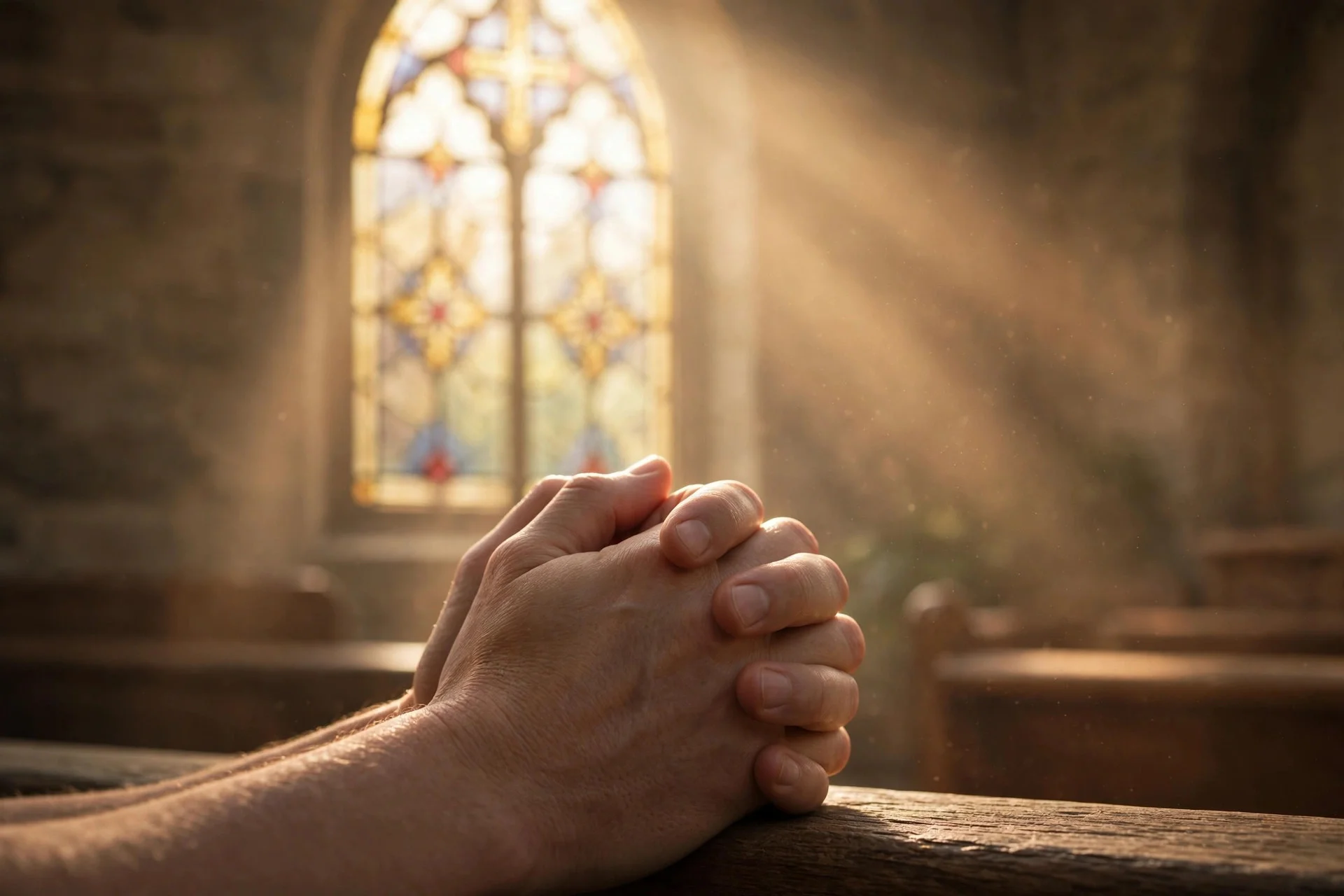
If you've spent any time around church folks, hospital chaplains, or military families, you've run into Psalm 91. It's the psalm people tape inside lockers, tuck into worn Bibles, and whisper in waiting rooms at two in the morning. My friend Daniel carried a creased index card with Psalm 91:1 in his wallet for fifteen years — through nursing school, ER night shifts, and the birth of his twins. He told me once, "I don't carry it because I'm superstitious. I carry it because it reminds me where I actually live."
That sentence stuck with me, because that's what Psalm 91 is really about: not a magic charm, but an address. A place to live. So let's unpack what this beloved psalm actually means, in plain language.
What Is Psalm 91 About?
At its heart, Psalm 91 is a confession of trust. The writer looks at a dangerous world — disease, violence, nighttime terrors, arrows flying by day — and answers every threat with the same calm reply: God is bigger.
The psalm moves like a call and response. One voice declares, "I will say of the Lord, He is my refuge and my fortress." Another voice answers back with promises: no evil will come near you, angels will guard your steps, God Himself will answer when you call. It's sixteen verses long, and nearly every line is either a declaration ("God is my fortress") or a promise ("He will cover you with His feathers").
That's the whole engine of the psalm: you declare who God is, and God promises what He will do. It was written for people who were actually afraid.
Who Wrote Psalm 91?
Honest answer: we don't know for sure. The psalm carries no title naming its author, which is unusual — most psalms tell you who wrote them. Jewish tradition often credits Moses, since Psalm 90 right before it is "a prayer of Moses," and the wilderness imagery of shelter and shadow fits a man who led people through a desert. Others hear David's voice in it — the warrior-poet who hid in caves and knew exactly what it meant to need a hiding place.
The mystery is part of the gift, really. Whoever wrote it, they wrote from experience, not theory. This isn't a theologian's essay about protection. It's someone who needed protection and found it — and then wrote it down so the rest of us could find it too.
What Does "The Secret Place of the Most High" Mean?
The opening line is the key that unlocks the whole psalm: "He that dwelleth in the secret place of the most High shall abide under the shadow of the Almighty."
The "secret place" isn't a location on a map. It's a relationship. To dwell there means to live close to God on purpose — not visiting on Sundays, but staying. Think about Daniel's wallet card. He didn't pull it out only during emergencies. The promise belongs to people who make God their home address, not just their emergency contact.
And notice the image the psalm chooses: a shadow. You don't have to climb into a shadow or earn it. You just have to stay close enough that it falls on you. A chick doesn't negotiate with the mother hen — it just runs under her wings and stays there. That's the posture Psalm 91 invites.
Is Psalm 91 a Promise or Just Poetry?
Both — and that's where people get tripped up. The psalm makes sweeping promises: "no evil shall befall thee," "with long life will I satisfy him." Does that mean nothing bad ever happens to people who love God? We all know faithful people who have suffered deeply.
Here's how I read it: Psalm 91 promises God's presence and ultimate protection, not a trouble-free life. The psalmist isn't saying you'll never walk through the valley. He's saying you won't walk through it alone — and the valley won't get the final word. The protection is real (ask anyone who has prayed this psalm through a crisis and they'll tell you stories), but it's the protection of a Father, not the bubble-wrap of a guarantee. God promises to be with you in trouble and to deliver you — sometimes from the fire, sometimes through it.
How Can Psalm 91 Change Your Daily Life?
Start small. Read it out loud once a day for a week — with your morning coffee, on your commute, wherever you get a quiet minute. There is something about hearing your own voice say "He is my refuge" that rewires an anxious brain.
Pick one verse and carry it like Daniel's index card. Pray it over your house before you walk out the door. When the 3 a.m. worries come circling, answer them with verse 2: "I will say of the Lord, He is my refuge and my fortress: my God; in him will I trust."
You don't have to feel brave. You just have to say it until you start to believe it. That's not denial — that's faith doing its slow, steady work.