Forgiving Parents: Healing Childhood Wounds With Grace
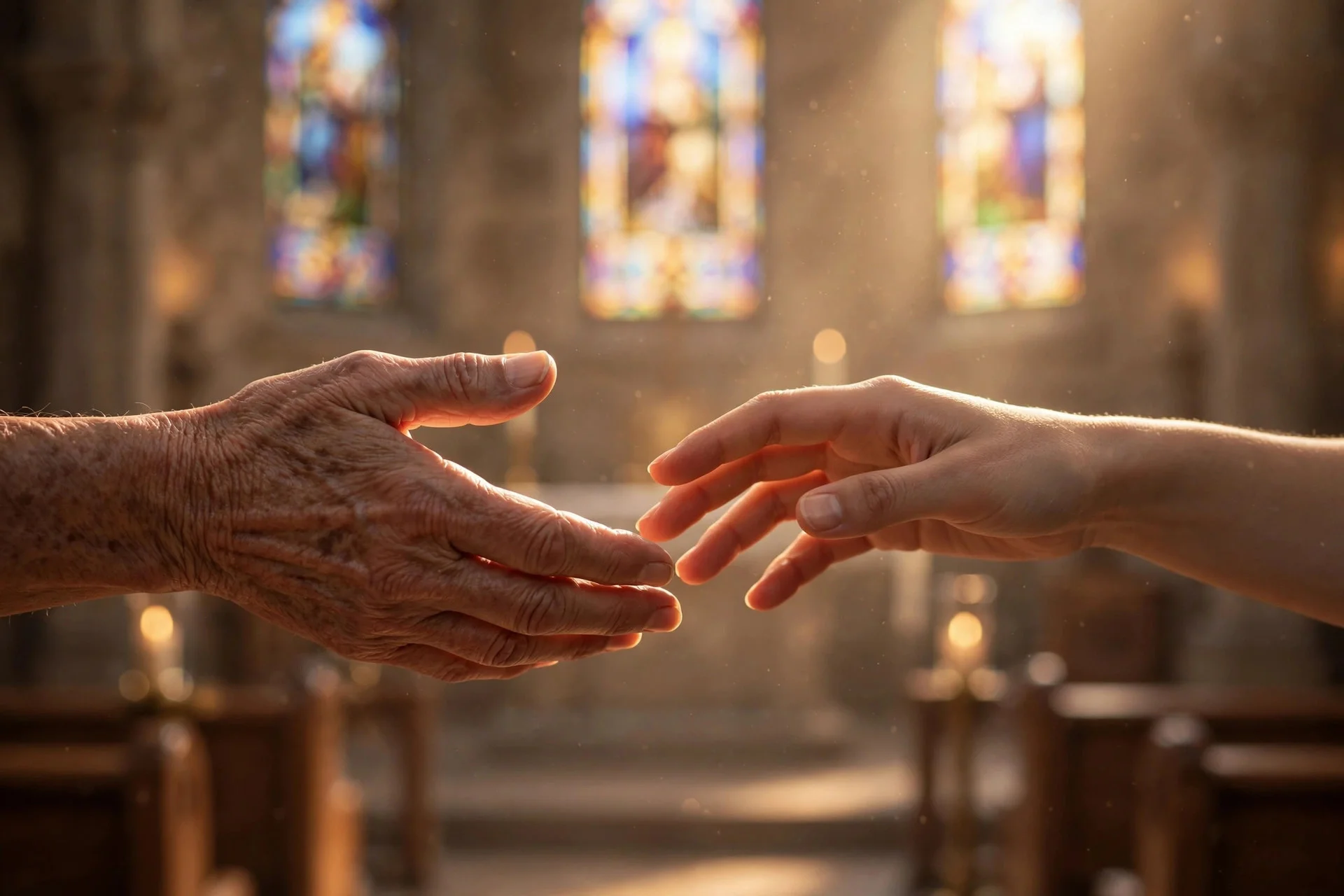
Nobody shapes us like our parents do — and nobody can wound us quite like them either. Forgiving parents for childhood wounds is one of the most tender, complicated kinds of forgiveness there is. They were supposed to protect you. Sometimes they did not. Sometimes they were absent, harsh, distracted, or broken themselves. And now you are an adult carrying a child's pain, wondering if letting go means betraying that little kid who deserved better.
My mother Helen worked nights my entire childhood. She was a nurse keeping us fed and housed — I understand that now, decades later. But what I felt as a child was simpler: she missed my school plays, slept through my games, and was too exhausted for bedtime stories. I told myself she chose work over me, and that story hardened into resentment. I was polite. I called on Sundays. But there was a wall, and we both knew it.
The wall started cracking the year I became a parent myself. My daughter had a fever at 2 a.m., and I sat up with her all night, then dragged myself to work the next morning running on nothing. Somewhere in that exhausted haze, I thought of my mother — doing that for years, alone, after my father left. For the first time, I saw her not as the woman who failed me, but as a tired young mother doing her best with empty hands. That night, I cried for both of us. And I began to forgive her.
Why Is Forgiving Parents So Complicated?
Because the wound and the love live in the same house. You can be furious at your mother and still ache when she hurts. That tangle makes forgiveness feel like disloyalty — as if letting go means the child you were did not matter.
It is also complicated because your parents are human in ways you only see as an adult. The all-powerful parent of your childhood turns out to have been twenty-six, scared, or repeating what was done to them. That does not excuse real harm — but forgiveness gets easier when you stop forgiving a monster and start forgiving a flawed person.
And sometimes it is complicated because they will never apologize. They may not remember. They may rewrite history. They may be gone. Forgiving your parents often means doing the work without their participation — and that is okay. Your healing does not require their confession.
What Does the Bible Say About Forgiving Parents?
The command to honor your father and mother sits right in the Ten Commandments — and honoring does not mean pretending. True honor can include honest grief about what was missing. The Bible is full of imperfect parents: David's failures, Eli's passivity, Jacob's favoritism. Scripture never asks us to call harm good.
And here is a quiet promise: as you release your parents, you free your own heart. Unforgiven childhood wounds do not stay in childhood — they move into your adult relationships wearing different clothes. Forgiveness evicts them.
Bible Verses for Healing Childhood Wounds
- Exodus 20:12 — "Honour thy father and thy mother: that thy days may be long upon the land which the LORD thy God giveth thee."
- Ephesians 6:4 — "And, ye fathers, provoke not your children to wrath: but bring them up in the nurture and admonition of the Lord." (God sees when parents fail this.)
- Psalm 27:10 — "When my father and my mother forsake me, then the LORD will take me up."
- Colossians 3:13 — "Forbearing one another, and forgiving one another, if any man have a quarrel against any: even as Christ forgave you, so also do ye."
- Genesis 50:20 — "But as for you, ye thought evil against me; but God meant it unto good." (Joseph's words over family betrayal.)
- Joel 2:25 — "And I will restore to you the years that the locust hath eaten."
- 2 Corinthians 5:17 — "Therefore if any man be in Christ, he is a new creature: old things are passed away; behold, all things are become new."
How Do I Forgive a Parent Who Will Never Apologize?
You grieve, you release, and you let God be the one who sees. Let yourself feel what the child in you felt — the disappointment, the loneliness, the anger. You cannot forgive what you will not admit hurt you.
Then decide: "I release my parent from the debt." You are not saying it was fine — you are handing it to God and refusing to carry it into your own future. Some write an unsent letter; some pray it at the graveside. The method matters less than the release.
Finally, set the relationship at its true size. Forgiveness may lead to closeness with your parents, or it may lead to kind, boundaried distance. Both can be holy. You can forgive your mother and still limit holiday visits. You can forgive your father and still protect your kids. Forgiveness is about your heart; boundaries are about wisdom.
5 Practical Steps to Forgive Your Parents Today
1. Name the specific wounds. "She was never there" is hard to forgive. "She missed my tenth birthday and I cried myself to sleep" can be grieved and released. Get specific with God.
2. See them as people, not just parents. Ask what their childhood was like. What were they carrying? Understanding is not excusing — but it softens the heart toward mercy.
3. Grieve what you did not get. You deserved present, attentive parents. It is okay to mourn that. Grief is the bridge between pain and forgiveness.
4. Decide to break the cycle. Name one pattern you will not repeat with your own children or loved ones. Turn the wound into wisdom.
5. Pray blessing over them regularly. Even if they are gone, even if they never change — bless them in prayer. Blessing is the opposite of bitterness, and it keeps your heart soft.
Frequently Asked Questions
Does forgiving my parents mean I have to be close to them?
No. Forgiveness is an act of your heart; closeness is a matter of trust and safety. You can fully forgive while keeping healthy boundaries — or even no contact, if the relationship is harmful.
What if my parent has died?
You can still forgive. Pray it out loud, write the letter, visit the grave if it helps. Death ends the relationship, not your healing.
Is it disrespectful to admit my parents hurt me?
No. Honesty is not dishonor — the Bible records parents' failures plainly. You can love your parents and still name what was wrong.
What if I am afraid of becoming like them?
That fear is actually a gift — it means you are awake. Forgiveness plus intentional choices breaks cycles. Consider counseling, and lean on God's promise to make you a new creation.